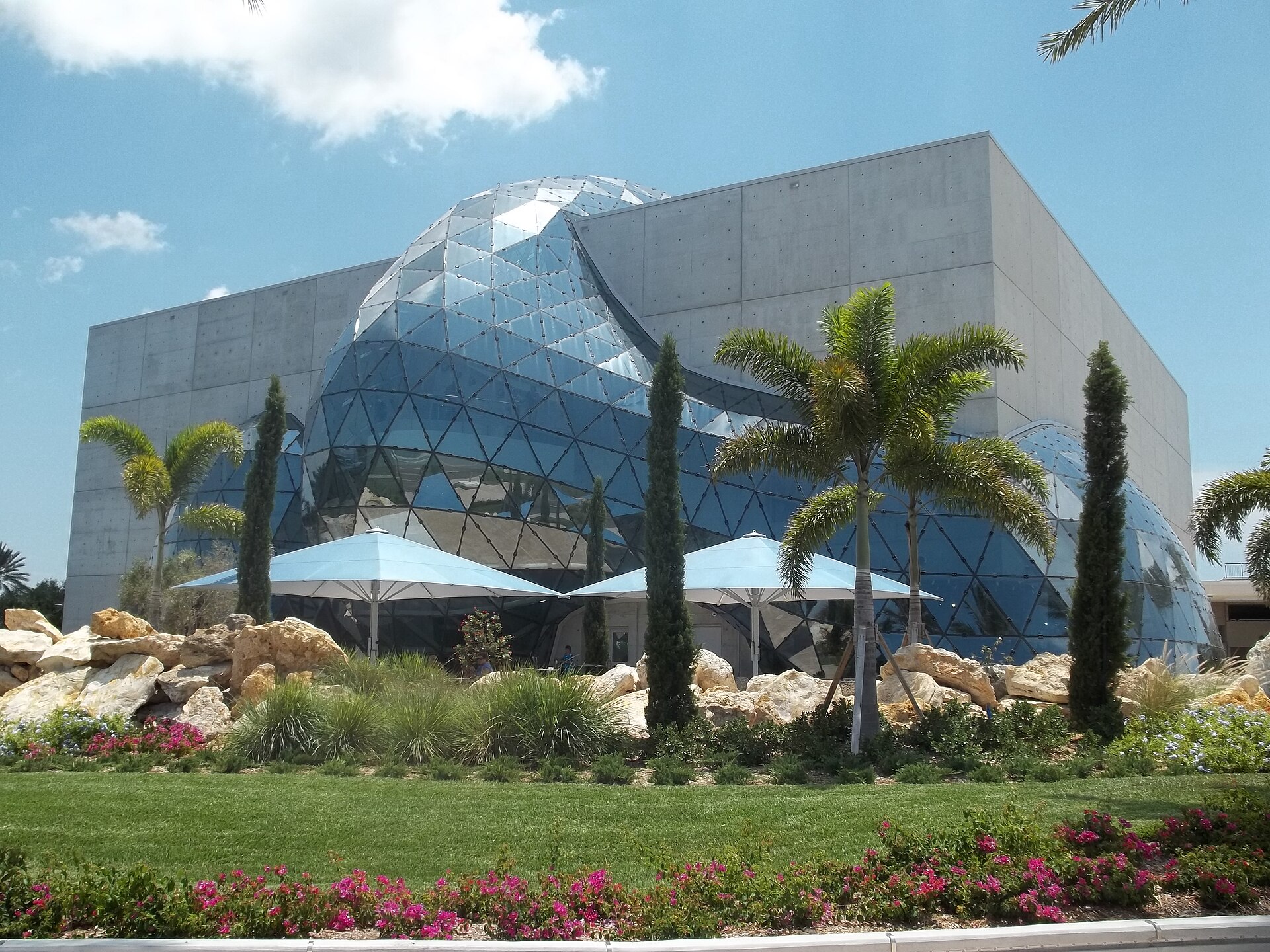
The most famous Salvador Dalí painting, the one with the melting clocks, is not in St. Petersburg. It hangs in the Museum of Modern Art in New York. Most visitors find that out at the ticket desk, which says something about how little planning the Dalí Museum usually gets. Everything in this Dali Museum St Petersburg guide is meant to fix that: what is actually in the collection, when tickets cost half price, how long to allow, what to skip, and how to fit the museum into a day across the bay from Tampa. Prices and hours were checked against the museum’s own published information in September and October 2026.
The short version of why it is worth the trip anyway: the museum holds more than 2,400 works by Dalí, the largest collection of his work outside Europe, in a building that is a piece of surreal architecture in its own right. It is the most important single-artist museum in the region and, for anyone with an interest in 20th-century art, the best reason to cross the bay.
The short answer
- Where: One Dali Boulevard, St. Petersburg, FL 33701, on the downtown waterfront.
- When: daily 10am–6pm, and until 8pm on Thursdays.
- Cost: $32 for adults aged 18 to 64. On Thursdays after 5pm it is $16 for adults and seniors, one of the best-value museum hours in the region.
- Book ahead: the museum recommends buying in advance. Online tickets release about 30 days ahead, all sales are final, and on-site sales are card only.
- Allow: two to three hours for the galleries, the building and the garden.
- Skip on a first visit: the $15 Dome shows, which are projection experiences, not the collection.
- From Tampa: about 25 miles, typically 30 to 45 minutes by car, across the bay.
Why the Dalí is in St. Petersburg
Visitors often ask why the largest collection of a Catalan artist’s work outside Europe is in a Florida city better known for its beaches and its baseball. The answer is a couple, not a plan. Reynolds and Eleanor Morse, collectors from Ohio, bought Dalí’s work over decades and became friends with the artist. By the time they looked for a permanent public home for the collection, it was too large and too important for a private building, and St. Petersburg offered one on its waterfront. The collection moved in 1982.
For nearly three decades it hung in that first building, a converted waterfront structure. The current museum, opened in 2011, was built to do two things the old one couldn’t. It gives the masterworks the space and light they need, and it protects them. This is a hurricane coast, and the heavy concrete box that contains the galleries is there for a reason. The glass Enigma is the flourish; the concrete is the vault.
The result is a museum that is both an important art collection and a local landmark, and the city’s arts district has grown up partly around it. It is why St. Petersburg can credibly sell itself as an art destination, alongside the Museum of Fine Arts, the James and the mural-covered streets of the Central Avenue districts.
Tickets, and the cheapest time to go
The Dalí’s prices, as published on its ticket page and checked in September 2026:
| Ticket | Gallery admission | Notes |
|---|---|---|
| Adult, 18–64 | $32 | |
| Senior 65+, educator, fire, police, military | $29 | ID required |
| Local adult (Pinellas or Hillsborough ID) | $29 | On site only |
| Local discounted adult | $26 | On site only |
| Student, 13–17 or college | $22 | |
| Youth, 6–12 | $12 | |
| Children 5 and under | Free | |
| Thursday after 5pm, adult or senior | $16 | IDs checked |
| Thursday after 5pm, age 6–17 or college | $10 | Under 6 free |
| Dome show add-on | $15 per show | Charged to everyone, members included |
The Thursday evening
Because the museum stays open until 8pm on Thursdays, the $16 evening ticket buys you three hours, which is enough to see the collection properly. For two adults that is $32 saved against the daytime price. It is the single best piece of cost advice for the Dalí, and the museum’s own price list is where it comes from. The galleries can be busier then than on a weekday morning, so buy ahead.
The discounts most visitors don’t ask about
- Local residents with a Pinellas or Hillsborough County ID pay $29, or $26 for the discounted categories, but only when buying on site.
- Museums for All: the Dalí takes part in the national program that offers reduced admission to people receiving food assistance.
- Blue Star Museums: the museum participates in the summer program for active-duty military families.
- NARM: members of museums in the North American Reciprocal Museum Association get reciprocal admission. If you belong to a museum at home, check your card.
The fine print
On-site ticket sales are card only, with no cash. All sales are final, with no exchanges or refunds, so be sure of your date before you buy online. Tickets release online about 30 days ahead.
What is actually in the collection
The museum’s collection began as the private collection of Reynolds and Eleanor Morse, Ohio collectors who bought Dalí’s work over decades and became friends of the artist. In 1982 the collection moved to St. Petersburg, and it has been here since, first in a converted waterfront building and, since 2011, in the current one.
It now numbers more than 2,400 works: nearly 300 oil paintings, watercolors and drawings, and more than 2,100 prints, photographs, posters, textiles, sculptures and objects. That range is the museum’s strength. You see Dalí’s whole career, from early work through the surrealist years to the vast late canvases, not a greatest-hits wall.
The masterworks
The biggest paintings hang in their own skylit galleries. Two to look for in particular:
- The Hallucinogenic Toreador, one of Dalí’s most complex double images, in which a bullfighter’s face emerges from repeated figures of the Venus de Milo.
- The Discovery of America by Christopher Columbus, an enormous canvas that rewards standing well back and then very close.
The free Bloomberg Connects app, which the museum offers as its mobile guide, is the best way to find the major works and hear the stories behind them. Download it before you arrive.
What isn’t here
The Persistence of Memory, the 1931 painting of melting clocks that most people picture when they hear Dalí’s name, belongs to the Museum of Modern Art in New York. The melting clock appears throughout Dalí’s work, and you will see plenty of his time-bending imagery in St. Petersburg, but not that canvas. Knowing this in advance will spare you a disappointment at the desk.
Special exhibitions
The museum runs special exhibitions alongside the permanent collection, included in gallery admission. Its 2026 exhibition, Dalí in America, opened in May 2026. Exhibition dates change, so check the museum’s current program before you go if a particular show is the reason for your visit.
How to look at a Dalí: a short field guide
Dalí is easy to enjoy and surprisingly easy to misread. A few ideas make the galleries far more rewarding, especially for a first-time visitor.
Double images
Dalí called his way of working the “paranoiac-critical method”: training himself to see one thing as another, then painting both at once. Many of his most celebrated pictures are built on double images, where a group of figures is also a face, or a landscape is also a body. The trick is to stand back until the second image appears, then walk close to see how he made it. The Hallucinogenic Toreador is the collection’s great example. It is worth five minutes on its own, and it rewards children as much as adults.
The recurring cast
Certain images appear again and again across Dalí’s work, and spotting them gives you a way into almost any picture in the building:
- Soft, melting watches, his most famous image, about time losing its hard edges.
- Crutches, propping up things that shouldn’t need support.
- Ants, usually signaling decay.
- Elephants on impossibly long, thin legs.
- Eggs, for birth and hope.
- Drawers opening out of bodies.
- Gala, his wife and muse, who appears in painting after painting.
- The rocky coast of Catalonia, around Cadaqués and Port Lligat where he lived, which serves as the backdrop to many of the dreamscapes.
The later Dalí
Visitors who know only the 1930s surrealist pictures are often surprised by the later work. From the late 1940s Dalí turned to science and religion, to atomic physics, DNA and Catholic imagery, and to huge, highly finished canvases. The museum’s masterworks include several of these late paintings, and the helical staircase in the building is itself a nod to his fascination with spirals and the double helix. If you find the early work unsettling, the late work can feel almost serene. Seeing both under one roof is the particular strength of this collection.
Prints and objects
Most of the collection’s 2,400 works are prints, photographs, posters, textiles, sculpture and objects rather than paintings. Don’t skip them. Dalí was a showman and a designer as much as a painter, and the smaller works show the commercial, playful and experimental sides of his career that the big canvases don’t.
The building
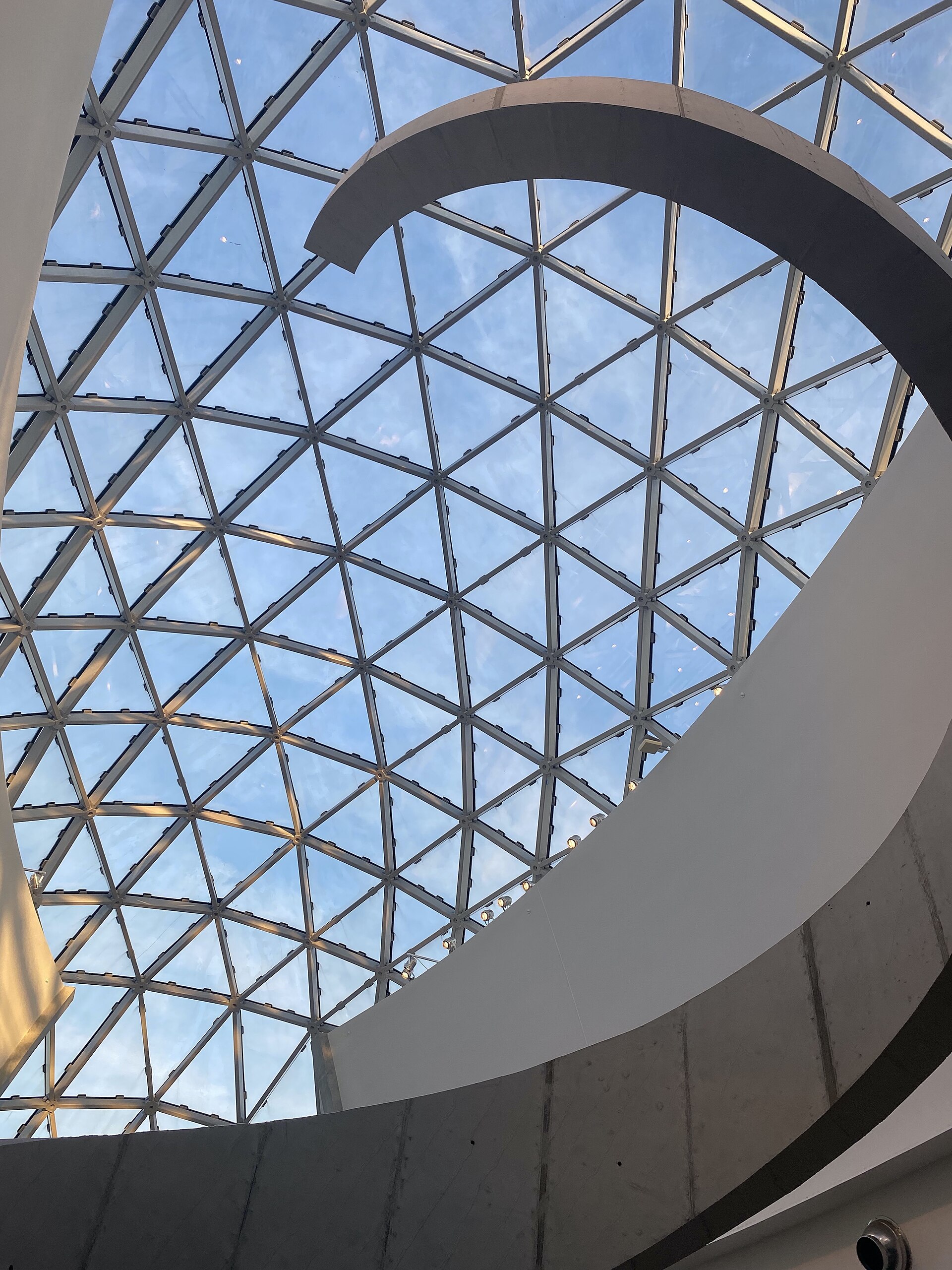
The current museum opened on 11 January 2011, and the building is part of the reason to come. From outside it is a plain concrete box with a free-form bubble of triangular glass panels bursting out of it, a structure the museum calls the Enigma. Inside, a helical concrete staircase spirals up toward the glass, a nod to the spirals and the DNA imagery that fascinated Dalí. The contrast between the hard box and the soft-looking glass is deliberate and very Dalí. It is worth walking all the way around the outside before you go in.
If you have seen photographs of a plain white 1980s building labeled “Salvador Dalí Museum”, they show the museum’s previous home. The current building looks nothing like it.
The Avant-garden
Gallery admission also covers the museum’s Avant-garden, a waterside garden beside the building, and access to the café and the store. On a fine day the garden is the place to sit between galleries. It is easy to miss if you leave straight from the gift shop.
Planning your visit
How long to allow
Two to three hours covers the collection, the special exhibition, the building and the garden at a comfortable pace. Art lovers can spend longer. A visitor with no particular interest in Dalí will have seen what matters in about 90 minutes, and should not feel obliged to stay.
When to go
- Thursday after 5pm for the half-price ticket and three hours until closing.
- A weekday morning at 10am for the quietest galleries.
- A hot or wet afternoon, when the museum is the obvious indoor plan in St. Petersburg, which also makes it busier at those times.
- Holidays: the visit page doesn’t list holiday closures, so check the museum’s hours before a holiday visit.
If you have only an hour
Go straight up to the galleries, find the masterworks in their skylit rooms, give The Hallucinogenic Toreador and The Discovery of America by Christopher Columbus real time, and leave by way of the helical staircase and the garden. An hour done this way is better than three hours drifting through the prints.
If you have a whole day
Do the collection in the morning, have lunch in the café or on Beach Drive, come back for the special exhibition and the garden in the afternoon, and finish with a Dome show if you want one. Or split the day with the St. Pete Pier and the Museum of Fine Arts, both a short distance up the waterfront.
Practical tips
- Download the Bloomberg Connects app at home. It is the museum’s free guide, and it is easier to set up on your own Wi-Fi than in the lobby.
- Do the masterworks first, while you are fresh, then the prints and the special exhibition.
- Use the garden as an interval. Twenty minutes outside resets tired eyes, and children, before the second half.
- Dress for the walk, not the galleries. The museum is air-conditioned, but the waterfront walk from a downtown garage is long and exposed in summer.
- Check the rules on the day. The museum’s visit page does not publish its photography or bag policies, so ask at the desk before you raise a camera or bring a large bag.
The Dome shows: skip them first time
The museum’s Dome offers immersive 360-degree projection shows, Dalí Alive 360° and Surreal Nature, each a $15 add-on that members pay too. They are an entertaining projection experience, not part of the collection, and on a first visit your time and money are better spent on the paintings. On a second visit, or with children who have run out of patience for galleries, they make more sense.
Getting there and parking
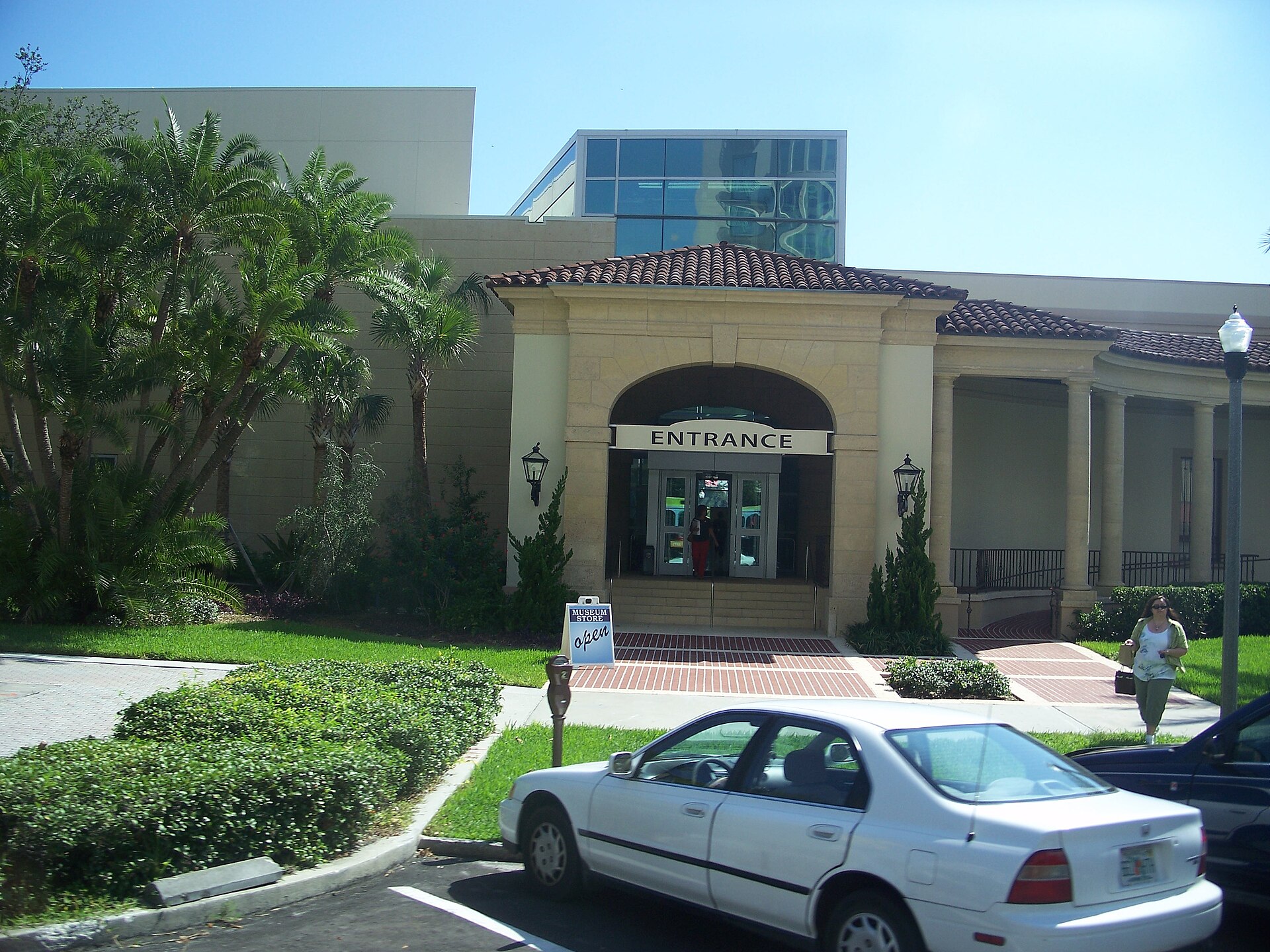
The Dalí is in St. Petersburg, not Tampa, and the two cities are on opposite sides of Tampa Bay.
- From downtown Tampa: about 25 miles via Interstate 275 and the Howard Frankland Bridge, typically 30 to 45 minutes, and longer at rush hour.
- From Tampa International Airport: about 20 miles by the airport’s own figure, also across the bay. The airport’s flat taxi rate does not apply to St. Petersburg.
- By ferry: not currently. The seasonal Cross-Bay Ferry between downtown Tampa and downtown St. Petersburg ended in April 2025, and a planned replacement had not been confirmed as running when we last checked in September 2026.
On parking: the museum’s visit page does not publish its parking arrangements, and we could not confirm a current parking fee at the museum for this update, so check the museum’s site before you go. If you would rather park elsewhere and walk, the St. Pete Pier’s lots charge $2 an hour on weekdays and $2.50 an hour from Friday at 5pm through the weekend, and downtown garages such as the South Core garage near the James Museum charge $2 an hour. Both are a waterfront walk from the Dalí, so wear shoes for it in the heat.
A Dalí day from Tampa
Most visitors staying in Tampa reach the Dalí by car across the Howard Frankland Bridge, and the timing of that crossing shapes the day.
- For a morning visit, leave Tampa by about 9am to be at the door for the 10am opening, after the worst of the morning traffic. Spend the afternoon on the Pier or Beach Drive and drive back after the evening rush.
- For the Thursday evening ticket, don’t plan to leave Tampa at 4:30pm. The westbound crossing at rush hour is the slowest part of the trip. Go across at lunchtime instead, spend the afternoon downtown, and be at the museum for 5pm, then drive home after 8pm when the bridge is clear.
- Without a car, a rideshare each way is the practical option, since there is currently no ferry across the bay and no rail link. Price it against a day’s parking before you decide.
Our guide to getting around Tampa Bay covers the bridges, the toll roads and the buses.
Weather, storms and the museum
The Dalí is the best answer in St. Petersburg to the weather. From May to September the heat and humidity on the waterfront are severe, and most of the region’s rain falls in short, heavy afternoon thunderstorms. An afternoon in an air-conditioned gallery is the obvious plan, which is also why the museum is busiest on hot and wet days. Hurricane season runs from 1 June to 30 November, and like every attraction on this coast the museum can close ahead of a storm. If a storm is forecast, check its website before you set off, and remember that tickets are non-refundable.
Is a membership worth it?
Members get free gallery admission, so if you live in the region or expect to visit more than once in a year, price a membership on the museum’s site against two or three adult tickets at $32. Two things to factor in: the Dome shows are charged at $15 even to members, and Pinellas and Hillsborough residents already get a local discount on site. For a single visit from out of town, a membership rarely makes sense; the Thursday evening ticket is the better saving.
Accessibility
The building is modern and was designed for public use, but the museum’s visit page does not set out its accessibility provisions, so contact the museum before your visit to confirm step-free access between floors, wheelchair loans and seating in the galleries. The helical staircase is the building’s showpiece, and you should not assume it is the only way up. Ask about the elevator. The museum’s participation in Museums for All, Blue Star Museums and NARM is set out under tickets above.
The Dalí with children
Children under 6 are free, children aged 6 to 12 pay $12, and teenagers pay the $22 student price, so the Dalí is a fairly cheap family museum by regional standards. Whether children enjoy it depends on the child. The building, the melting and morphing imagery and the hidden images in the big double-image paintings tend to work well; long rows of prints don’t. Keep the visit short, let them find the hidden faces in The Hallucinogenic Toreador, and use the garden as the break. If attention runs out, a Dome show is the one time the $15 add-on earns its keep with a family. For the rest of a family trip, see our guide to Tampa with kids.
Making a day of it in St. Petersburg
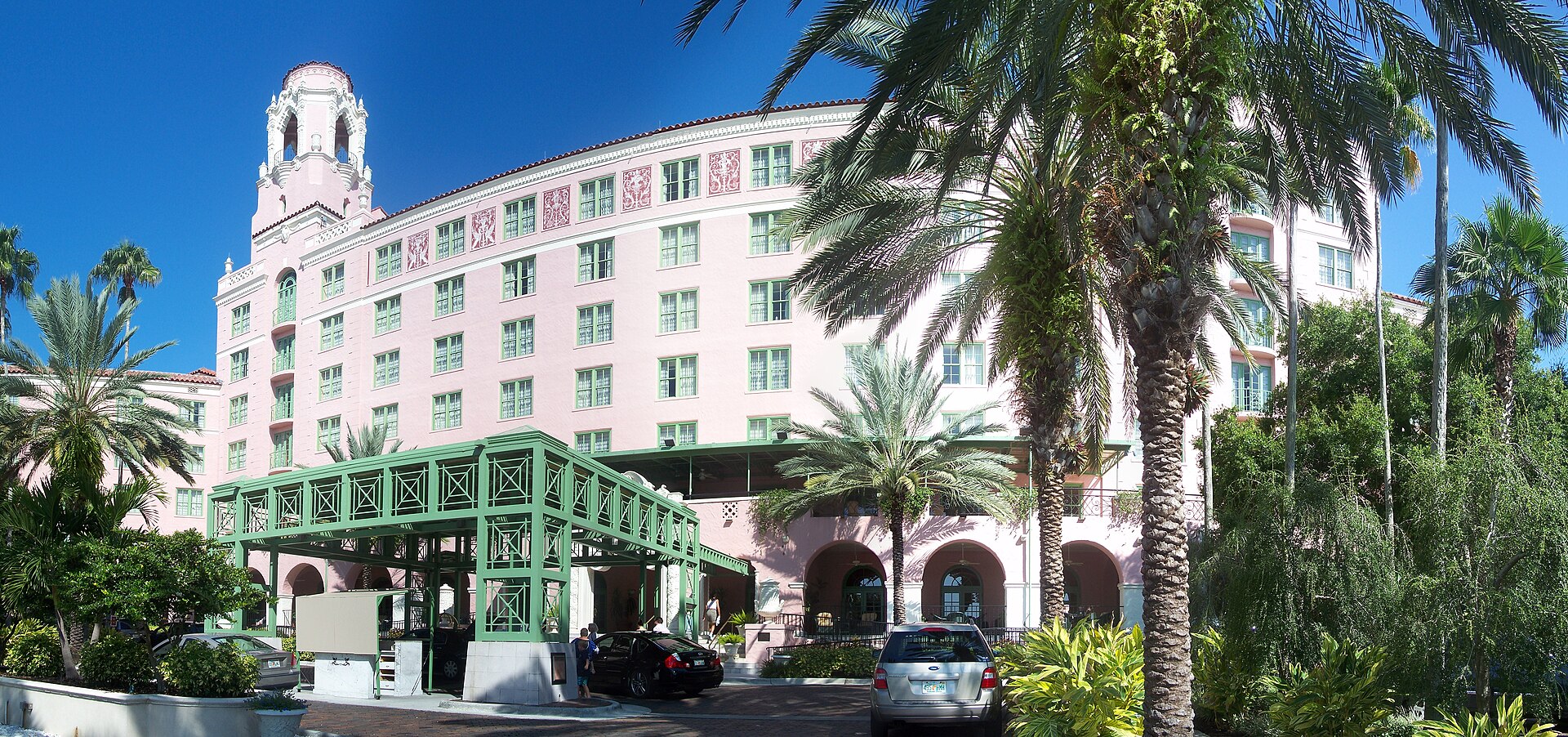
The Dalí sits at the southern end of downtown St. Petersburg’s waterfront, and it is best treated as the anchor of a day there rather than a stand-alone trip across the bay. Good pairings:
- The St. Pete Pier, free, with a beach, a splash pad, restaurants and views back to the city. Our St. Pete Pier guide has the parking rates and the places to eat.
- The Museum of Fine Arts on Beach Drive, the city’s encyclopedic art museum: $24 for adults, closed Mondays, with “Art After Dark” on select Thursday evenings at $16.
- The James Museum of Western & Wildlife Art on Central Avenue: $23, or $10 on Tuesdays, when it is open until 8pm.
- Central Avenue and Beach Drive for restaurants, galleries and the murals.
Two plans that work:
- A Thursday: the Pier and lunch in the middle of the day, the Museum of Fine Arts in the afternoon, and the Dalí from 5pm for $16, with dinner downtown afterward.
- Any other day: the Dalí at 10am opening, lunch on Beach Drive, the Pier in the afternoon, and the waterfront at dusk.
If you are deciding between St. Petersburg’s museums and Tampa’s, our guide to the best museums in Tampa Bay compares them, including the Tampa Museum of Art’s pay-what-you-will Thursday evenings. Our St. Petersburg guide covers the rest of the city.
The Dalí, the Museum of Fine Arts or the James?
St. Petersburg has three serious art museums within walking distance of each other, and visitors short of time often have to choose. Prices and hours as published by each museum, checked September and October 2026:
| The Dalí Museum | Museum of Fine Arts | The James Museum | |
|---|---|---|---|
| What it is | The largest Dalí collection outside Europe | An encyclopedic collection, from antiquity to contemporary | Western and wildlife art |
| Adult ticket | $32 | $24 | $23 |
| Cheap window | Thursday after 5pm, $16 | “Art After Dark”, select Thursdays 5–8pm, $16; free under Museums for All with SNAP EBT | “$10 Tuesdays”, open to 8pm |
| Hours | Daily 10–6, Thursday to 8 | Tuesday to Sunday 10–5, closed Monday | Daily 10–5, Tuesday to 8 |
| Best for | Anyone with an interest in Dalí or surrealism, and architecture fans | A broad art museum and a quieter visit | Families, and visitors who love the American West or wildlife art |
If you can see only one, the Dalí is the one nobody else in the country can match. With two, add the Museum of Fine Arts, which surprises many visitors who came only for the Dalí. On a budget, plan around the cheap evenings: Tuesday at the James, Thursday at the Dalí. Our guide to the best museums in Tampa Bay compares all three with Tampa’s museums.
Honest notes
- The melting clocks aren’t here. The Persistence of Memory is in New York.
- The Dome is not the museum. It is an optional $15 projection show.
- Buy ahead, and be sure of the date. Sales are final, and on-site payment is card only.
- Thursday evening is the deal. Half price for three hours.
- It is worth the drive from Tampa for anyone interested in art, and best combined with the rest of downtown St. Petersburg.
Frequently asked questions
How much are tickets to the Dalí Museum?
$32 for adults aged 18 to 64, $29 for seniors, educators, first responders and military, $22 for students, $12 for children aged 6 to 12, and free for children 5 and under. On Thursdays after 5pm, adults and seniors pay $16. The Dome shows are a $15 add-on each.
When is the Dalí Museum cheapest?
Thursday after 5pm, when adult and senior tickets are $16 and ages 6–17 and college students pay $10. The museum is open until 8pm on Thursdays, so you get three hours.
What are the Dalí Museum’s hours?
Daily 10am to 6pm, and Thursdays 10am to 8pm. Check holiday hours before you go.
Is The Persistence of Memory at the Dalí Museum?
No. The 1931 painting is in the collection of the Museum of Modern Art in New York. The St. Petersburg museum has more than 2,400 other works by Dalí, including major paintings such as The Hallucinogenic Toreador.
How long do you need at the Dalí Museum?
Two to three hours for the collection, the building and the garden. About 90 minutes covers the highlights.
Do you need to book Dalí Museum tickets in advance?
The museum recommends it. Tickets release online about 30 days ahead, all sales are final, and on-site purchases are card only.
Is the Dalí Museum worth it?
For anyone interested in art, yes: it is the largest collection of Dalí’s work outside Europe, in a remarkable building. Visit on a Thursday evening for half price, and skip the Dome shows on a first visit.
Can you take photos in the Dalí Museum?
The museum’s visit page doesn’t publish a photography policy, and rules for special exhibitions often differ from the permanent collection, so ask at the desk when you arrive. The building itself, inside and out, is one of the most photographed in the region.
Is there a café at the Dalí Museum?
Yes. Gallery admission includes access to the museum’s café, its store and the Avant-garden, so you can break up a long visit without leaving. For a fuller meal, Beach Drive and Central Avenue are a short walk or drive away.
How far is the Dalí Museum from Tampa?
About 25 miles from downtown Tampa, typically 30 to 45 minutes by car across Tampa Bay, and about 20 miles from Tampa International Airport.
Related Tampa Guides
- Best Museums, Art and Culture in Tampa Bay — the Dalí against every other museum in the region.
- Best Things to Do in St. Petersburg Florida — the city around the museum.
- St. Pete Pier Visitor Guide — the free waterfront park up the road.
- Getting Around Tampa Bay — crossing the bay from Tampa.
- Best Things to Do in Tampa — the other side of the bay.
Sources and verification
- The Dalí Museum, visit page (thedali.org) — address, daily and Thursday hours, the advance-purchase recommendation and the Bloomberg Connects mobile guide. Checked 1 October 2026.
- The Dalí Museum, tickets page — every admission price, the Thursday evening rates, the Dome add-on, card-only on-site sales, the no-refund policy, the online release window and the Museums for All, Blue Star Museums and NARM programs. Checked 19 September 2026.
- Collection and building — the size and makeup of the collection, the masterworks, the Morse collection and its 1982 move, and the 11 January 2011 opening, from the museum’s press materials and reference sources. Checked 1 October 2026.
- Special exhibition — Dalí in America, opening May 2026, from event listings. Run dates not confirmed. Checked 1 October 2026.
- The St. Pete Pier and City of St. Petersburg parking — Pier lot rates and a downtown garage rate. Checked 19 September and 1 October 2026.
- Museum of Fine Arts and The James Museum — prices, hours and discount evenings, from each museum’s own site. Checked 19 September 2026.
- Tampa International Airport — published distance to St. Petersburg. Cross-Bay Ferry — service status. Checked 19 September 2026.
Not verified for this update: the museum’s parking fee, its guided-tour schedule, its holiday closures and its photography and bag policies, none of which appear on its visit page. We have not visited for this guide; it is built from the museum’s published information. Dalí’s paintings remain in copyright, which is why the photographs on this page show the building rather than the art.
Photo credits
The Dalí Museum and its glass “Enigma”: photo by Ebyabe, CC BY-SA 3.0, via Wikimedia Commons.
The helical staircase and glass “Enigma”: photo by Jennaraehn, CC0, via Wikimedia Commons.
The Museum of Fine Arts, St. Petersburg: photo by Ebyabe, CC BY-SA 3.0, via Wikimedia Commons.
The Vinoy, St. Petersburg: photo by Ebyabe, CC BY-SA 3.0, via Wikimedia Commons.