St. Petersburg has a pier you can walk onto for nothing, a waterfront park chain that runs for most of the downtown shoreline, and more serious museums inside a twenty-minute walk than most cities four times its size. Almost every list of things to do in st petersburg fl opens with the Dalí Museum and then stops thinking. The Dalí is worth it. But nobody tells you the same ticket costs $32 on a Tuesday afternoon and $16 after 5pm on a Thursday, which is the difference between an expensive day and a cheap one for a family of four.
That gap — between what a place costs and what people assume it costs — is the useful part of a guide, and it is where this one spends its time. Below is what is actually here, what each thing charges as of September 2026, which of them are free, and where the money is genuinely well spent.
One thing to settle first, because the marketing blurs it constantly. St. Petersburg is a city on the Pinellas peninsula, on the west side of Tampa Bay. It is not Tampa, it is not Clearwater, and it is not St. Pete Beach. Getting from Tampa to St. Petersburg means crossing the bay.
The short answer
Downtown St. Petersburg is a compact, genuinely walkable waterfront core roughly bounded by Beach Drive on the water and Central Avenue running west. Almost everything a first-time visitor wants is inside that rectangle: the St. Pete Pier, the museum cluster, the waterfront parks, and the restaurant and gallery strip along Central.
If you have one day: the St. Pete Pier in the morning (free), the Dalí Museum in the afternoon, and Central Avenue in the evening. If you can make that day a Thursday, do the Dalí after 5pm and halve the ticket.
If you have half a day: the Pier and the waterfront parks, which cost nothing, and one museum.
If you are coming from Tampa: it is about 25 miles and a bay crossing, typically 30 to 45 minutes and considerably worse at peak. Treat it as a day trip, not an afternoon errand.
What St. Petersburg costs
| What | Cost (checked September 2026) | Notes |
|---|---|---|
| The St. Pete Pier and Pier District | Free | Including the playground, splash pad, Spa Beach, the lawns and the public art |
| Downtown waterfront parks | Free | A near-continuous chain along the downtown shoreline |
| The Dalí Museum, adult 18–64 | $32 | Gallery admission, all galleries |
| The Dalí Museum, Thursday after 5pm | $16 adult and senior · $10 age 6–17 and college · under 6 free | The single best-value hour in the city. ID checked |
| The Dalí Museum, senior 65+, educator, fire, police, military | $29 | $26 for Pinellas and Hillsborough residents, on-site only |
| The Dalí Museum, student 13–17 or college | $22 | Youth 6–12 $12; 5 and under free |
| The Dalí Dome show add-on | $15 per show | Charged to members too. Optional |
| Other downtown museums | Individually ticketed | Check each operator; several offer discounted or free entry windows |
| Downtown parking | Varies by garage, lot and event | Garages are generally the cheap option; check current rates |
A couple can have a full, good day in downtown St. Petersburg for the price of two Thursday-evening Dalí tickets — $32 between them — plus food. That is the version of this city almost no guide describes.
The St. Pete Pier: the best free thing in the city
The Pier District replaced the old inverted-pyramid pier that stood here until 2015, and it is not a pier in the traditional sense — it is a 26-acre waterfront park with a pier attached, and every part of it that matters is free.
What is out there, walking from land toward the water:
- The Gateway and Pier Plaza, the entrance, with the Marketplace and Fresco’s Waterfront Bistro.
- The St. Petersburg Museum of History, at the landward end.
- Benoist Centennial Plaza, which holds the World’s First Airline Monument — see below, because this is the most under-told story in the city.
- Spa Beach Park and Spa Beach, a small swimming beach on the bay side, plus the Glazer Family Playground and the Majeed Foundation Splash Pad. All free.
- The Tampa Bay Watch Discovery Center, a marine science center on the pier.
- The Great Lawn, the Tilted Lawn and the Cultural Grove, with public art including Nathan Mabry’s Myth, Xenobia Bailey’s Morning Stars and Nick Ervinck’s Olnetopia.
- The pier head, five levels: Pier Teaki on the rooftop, Teak below it, the Driftwood Cafe, and Pier Gear & Gifts with Gator Jim’s Tackle at ground level.
- The Fishing Deck and The Point at the far end.
A free tram runs the length of it, there is a marked accessible route, and there are restrooms and parking lots on site.
One honest note: Janet Echelman’s Bending Arc, the huge suspended net sculpture that is the Pier’s signature image and the thing most photographs you have seen are of, is listed by the Pier as temporarily closed. If it is the reason you are going, check before you travel rather than after.
The world’s first airline took off from here
On 1 January 1914, the St. Petersburg–Tampa Airboat Line flew a paying passenger across the bay to Tampa. It was the first scheduled commercial airline flight anywhere in the world, it took about 23 minutes, and it cost $5. The monument on Benoist Centennial Plaza marks it.
It is a genuinely remarkable piece of aviation history sitting on a public pier with no admission charge and very little fuss made about it, and it takes two minutes to look at. Do.
The museums
This is the real reason to come, and the density is the surprising part — five or six substantial collections within walking distance of one another.
The Dalí Museum — $32, or $16 on Thursday evening
The largest collection of Salvador Dalí’s work outside Europe, in a purpose-built 2011 building on the waterfront at One Dalí Boulevard with a geodesic glass structure — the Enigma — bulging out of a concrete box. The building is worth the walk past even if you do not go in. Note that photographs of a plain white 1980s box labeled “Salvador Dalí Museum” show the museum’s previous home; the current building looks nothing like it.
Gallery admission covers the permanent collection, special exhibitions, the cafe, the store and the Avant-garden. The full ticket structure, checked in September 2026:
| Ticket | Gallery admission | Dome add-on |
|---|---|---|
| Adult, 18–64 | $32 | $15 per show |
| Local adult (Pinellas or Hillsborough ID, on-site only) | $29 | $15 |
| Senior 65+, educator, fire, police, military | $29 | $15 |
| Local discounted adult (on-site only) | $26 | $15 |
| Student, 13–17 or college | $22 | $15 |
| Youth, 6–12 | $12 | $15 |
| Child, 5 and under | Free | Free |
| Thursday after 5pm, adult and senior | $16 | $15 |
| Thursday after 5pm, age 6–17 and college | $10 | $15 |
Three practical points the museum states and most guides omit. On-site ticket sales are cards only — no cash. All sales are final, with no exchanges or refunds. And the museum participates in Museums for All, is a Blue Star Museum, and honors NARM reciprocal membership, all of which can reduce or eliminate the price for people who qualify and almost none of whom know to ask.
The Dome shows — Dalí Alive 360° and Surreal Nature — are a $15 add-on per show and are charged even to members. They are an immersive projection experience rather than part of the collection. Skip them on a first visit; see the paintings.
Museum of Fine Arts
On Beach Drive overlooking the waterfront parks, the MFA is the city’s encyclopedic collection — European, American, Asian and ancient works plus a strong photography holding — in a Mediterranean-style building with a later glass wing. It is a calmer, more conventional museum than the Dalí and a good counterweight to it. Check current admission on the museum’s own site; we did not verify it.
The Chihuly Collection
A permanent installation of Dale Chihuly’s glass on Central Avenue, operated by the Morean Arts Center. Small, tightly curated, and far more impressive in person than photographs of glass sculpture ever suggest. The Morean also runs a hot shop where glassblowing demonstrations take place, usually ticketed separately.
The James Museum of Western & Wildlife Art
On Central Avenue, opened in 2018, holding Western American and wildlife art in a purpose-designed building with a slot-canyon entrance passage. It is an unexpected thing to find in coastal Florida and it is better than its premise sounds.
Museum of the American Arts and Crafts Movement
A large purpose-built museum at 355 4th Street North, opened in 2021, devoted to American Arts and Crafts — furniture, ceramics, metalwork, tile and art pottery. The building itself is a statement, and the collection is the kind of thing that normally exists only as a wing of a bigger institution.
The Florida Holocaust Museum
Downtown on 5th Street South, and one of the larger Holocaust museums in the United States. It is a serious, demanding visit rather than a sightseeing stop, and it should be planned as one.
The practical museum advice
Do not try to do more than two of these in a day. They are close enough together that it looks feasible on a map and it is not — these are dense collections and you will stop absorbing anything after the second one. Two museums plus the Pier is a full, good day.
How St. Petersburg got here
The city was laid out at the end of the 1880s by two men with very different backgrounds — John C. Williams, a Detroit landowner who had bought the peninsula, and Peter Demens, a Russian exile whose Orange Belt Railway brought the track that made the place viable. The story told locally is that the two settled the naming rights on a coin toss, that Demens won, and that he named the new town for St. Petersburg in Russia, where he had lived. It is a good story and it is repeated everywhere; treat it as the city’s founding myth rather than as documented fact.
What is not in doubt is what the railway did. A town at the end of a line on a Gulf peninsula had one economic proposition to sell, and it sold it relentlessly: sunshine. The Sunshine City branding dates back more than a century, and for decades a local newspaper gave the paper away free on any day the sun failed to appear.
For much of the twentieth century the downtown was famous for its green benches — thousands of them, lining the sidewalks, where the city’s large retired population sat and watched the street. They were standardized, painted a uniform green, and they became so identified with the city that their removal in the 1960s was genuinely controversial. The reputation they left behind — St. Petersburg as a place people went to retire and not much else — took another thirty years to shake off.
What shook it off was a deliberate decision, made across the 1990s and 2000s, to rebuild the city around its waterfront and its arts institutions rather than around its climate. The Dalí, the pier replacement, the museum cluster, the mural program and the Central Avenue districts are all downstream of that choice. It is one of the more successful downtown turnarounds in the American South, and it is recent enough that plenty of published material about the city still describes the version that came before it.
Sunken Gardens
A tropical garden on 4th Street North that has been here since the early 1900s, built into a drained sinkhole by a plumber named George Turner who started selling produce and ended up with one of Florida’s original roadside attractions. The city bought it in 1999, which is why it survived when almost every comparable attraction in the state did not.
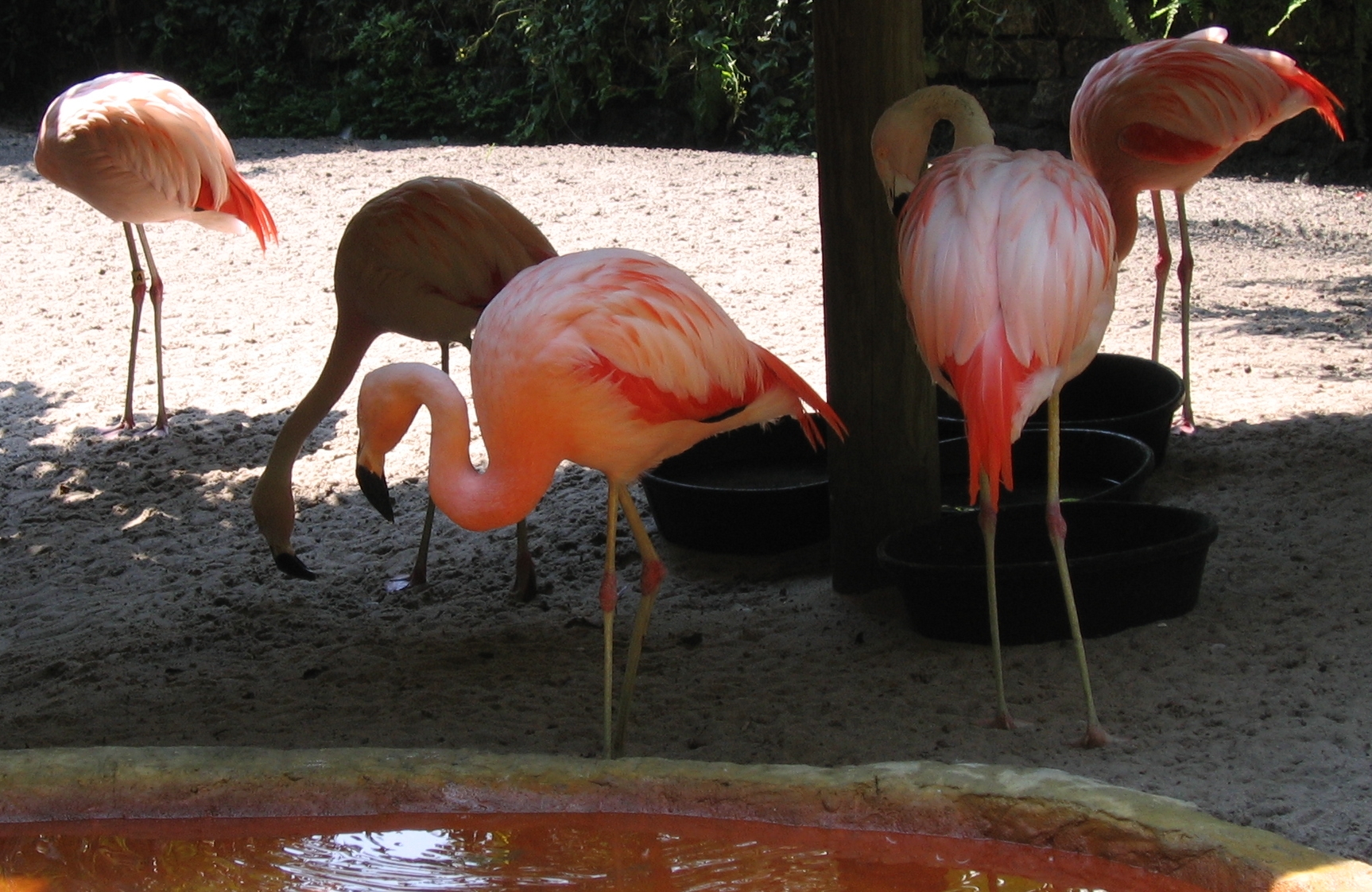
What is there: mature tropical planting, koi ponds, a butterfly garden, and a resident flock of Chilean flamingos that are the main reason most families come. It is small — an hour, maybe ninety minutes — and it is one of the few genuinely old things in a city that rebuilt most of its waterfront in the last decade.
Admission is charged and we could not verify the current rate; check before you go. Great Explorations Children’s Museum shares the site, which makes the two an easy pairing with under-10s.
Central Avenue and the districts
Central Avenue is the spine, running west from the waterfront, and the character changes every few blocks.
- The 200 to 600 blocks — the dense downtown core: restaurants, bars, the James Museum, the Chihuly Collection, galleries.
- The EDGE District, roughly the 1000s — smaller bars, independent shops, live music, a younger crowd.
- The Grand Central District, further west — antique and vintage shops, cafes, and the center of St. Pete’s LGBTQ+ community.
- The Warehouse Arts District, south of Central — working artist studios in converted industrial buildings, best visited when the studios are actually open rather than on a random weekday.
The murals
St. Petersburg has one of the densest concentrations of large-scale street murals in the American Southeast, mostly clustered in the Central Arts, EDGE and Warehouse Arts districts, and added to each year by an annual mural festival. It is free, it is outdoors, and walking a few blocks off Central with your eyes up is a legitimate activity in its own right. Several operators run guided mural walks if you want the stories behind them.
ArtWalk
A monthly evening gallery walk, held on the second Saturday, links the arts districts with free entry to participating galleries and studios and a free shuttle between them. If your dates line up it is the single best evening to be in the city, and it costs nothing. Confirm the current schedule before you plan around it.
Where the food is, in outline
Rather than hand you a list of restaurants that will be half wrong within a year, here is the geography, which changes far more slowly.
Beach Drive, facing the waterfront parks, is the upscale end — white tablecloths, hotel dining, terraces with a view of the bay, and prices to match. The downtown Central Avenue core, in the 200s through 600s, is the densest concentration of mid-range independent restaurants and cocktail bars, and is where most visitors end up eating. The EDGE District is cheaper, louder and younger, with a strong craft beer presence. Grand Central, further west, runs to cafes, brunch and neighborhood spots. The Pier has its own set, from a rooftop bar to a casual cafe, and pays for its view accordingly.
St. Petersburg has an unusually good independent brewing scene for a city its size, concentrated in the EDGE and Warehouse Arts districts, and a farmers market operates downtown on Saturday mornings in season.
Detailed restaurant comparison for the Tampa Bay region lives elsewhere on this site. This page is about the city, not about ranking its kitchens.
Baseball: the Rays are back at Tropicana Field
This needs saying clearly because a lot of published information is out of date.
Hurricane Milton destroyed the roof of Tropicana Field in October 2024, and the Tampa Bay Rays played the entire 2025 season at George M. Steinbrenner Field in Tampa. After roughly $60 million of repairs — a new roof, new turf, an upgraded video board, rebuilt suites and locker rooms — the Rays returned to Tropicana Field on 6 April 2026.
So: the Trop is open, it is in St. Petersburg, and it is a domed stadium, which in a Florida summer is not a small advantage. If you read somewhere that the Rays play in Tampa, that information is from 2025.
Longer-term stadium plans remain unsettled and have been for years. For a visitor in 2026 that is noise; check the schedule and buy a ticket.
The water, and the beaches question
St. Petersburg proper sits on Tampa Bay, not on the Gulf. The city’s own waterfront is a park system, a marina and a small bay beach at Spa Beach on the Pier — pleasant, swimmable, and not what anyone means by a Florida beach.
The Gulf beaches are on the barrier islands a few miles west. St. Pete Beach is a separate city on Long Key, reached across the Intracoastal, and Fort De Soto Park is a Pinellas County park on a group of islands at the southern tip of the peninsula. Both are genuinely excellent and both are a drive or a bus ride from downtown.
The SunRunner bus rapid transit line links downtown St. Petersburg with St. Pete Beach along the Central Avenue corridor, which makes the beach reachable without a car. Check the current fare and schedule with the transit operator before relying on it; the service has changed its fare arrangements since it opened.
Detailed beach comparison — which sand, which parking, red tide, which island suits whom — belongs on our beaches guide rather than here, and we are not going to do it badly in three paragraphs.
Getting here from Tampa
This is where the geography genuinely matters.
- From downtown Tampa: about 25 miles via Interstate 275 and the Howard Frankland Bridge. Typically 30 to 45 minutes, and materially longer at rush hour or in bad weather. This crosses Tampa Bay.
- From Tampa International Airport: about 20 miles by the airport’s own published figure. Also a bay crossing. See our airport guide for transfer options and costs — note that the flat taxi rate published for downtown Tampa does not apply here.
- From Clearwater: about 22 miles north, on the same peninsula, so no bay crossing.
- From Busch Gardens: around 30 miles, across the bay and then some. Not a natural pairing in one day.
There is no passenger rail and no bridge you can walk. A cross-bay ferry has operated seasonally in the past between downtown Tampa and downtown St. Petersburg; it has started and stopped more than once, so check whether it is running for your dates rather than assuming.
The practical implication: if you are staying in Tampa, give St. Petersburg a whole day rather than an afternoon. If you are staying in St. Petersburg, the reverse applies — our Tampa Riverwalk guide and Ybor City guide cover the two things on the Tampa side most worth crossing for.
Getting around once you are here
Downtown St. Petersburg is walkable in a way most Florida cities are not. The core is flat, the blocks are short, the sidewalks are wide and shaded in places, and the distance from the Pier to the far end of the downtown Central Avenue strip is about a mile.
Park once and leave the car. Downtown garages are generally cheaper than metered street parking for anything longer than an hour, and they solve the problem of moving between the Pier, the museums and Central Avenue. Rates vary by facility and rise for events, so check before you commit.
For the beaches, the SunRunner along Central Avenue is the obvious option if the schedule suits. For everything else downtown, walk.
Accessibility
Downtown St. Petersburg is one of the easier Florida destinations for anyone with limited mobility, largely because the geography cooperates: it is flat, the blocks are short, and the main sights cluster.
The St. Pete Pier publishes a marked accessible route across the district, and the free tram that runs its length removes the longest walk. Restrooms are provided at multiple points along the Pier and in the parking lots.
The museums are modern or recently renovated buildings with step-free entrances and elevators; the Dalí states a specific commitment to accessibility and publishes its available services, and it offers a free mobile guide through Bloomberg Connects that can be used with your own device and headphones.
The constraints are the ones common to the whole region. Shade is patchy on the Pier and along the waterfront, and summer heat and humidity are severe from May through September — plan the outdoor legs for early morning or evening. Downtown sidewalks are generally in good condition but the older side streets west of the core are less consistent.
When to come
November through April is the comfortable season: warm, dry, low humidity, and the busiest time for festivals and outdoor events. It is also when prices and crowds peak.
May through September is hot and humid with near-daily afternoon thunderstorms. The museums are air-conditioned and the Pier is exposed, so plan indoor things for the middle of the afternoon and outdoor things for the morning and evening.
Hurricane season runs from June 1 to November 30. St. Petersburg sits on a low-lying peninsula and is genuinely exposed to storm surge; Hurricane Milton’s destruction of the Tropicana Field roof in October 2024 was not an abstract risk. If a named system is in the Gulf, check local advisories and take evacuation guidance seriously.
The city’s nickname — the Sunshine City — comes from a genuinely long record run of consecutive days with sunshine recorded here in the late 1960s. The sunshine is real; so is the August humidity.
What we would skip, and other honest notes
- The Dalí Dome add-on, on a first visit. $15 a head on top of a $32 ticket for a projection show, while the actual paintings are in the next room. See the collection first and decide whether you want more.
- Trying to do three museums in a day. The map says yes. Your attention span says no.
- Assuming Bending Arc is up. It is the Pier’s signature image and it is currently listed as temporarily closed. Check.
- Coming for a beach day and basing yourself downtown. Downtown St. Petersburg is a bay-front city, not a Gulf-front one. The beaches are a separate trip.
- Booking a Tuesday when a Thursday was available. The Dalí’s Thursday-evening pricing halves the headline ticket. It is the best-known money-saver in the city among locals and essentially unknown to visitors.
- Believing 2025 information about the Rays. They are back at Tropicana Field.
Itineraries
Half a day
The St. Pete Pier and the waterfront parks, on foot, with a coffee. Look at the World’s First Airline Monument, walk the Great Lawn, and finish on Beach Drive. Cost: nothing but the coffee.
One day
Pier in the morning. Lunch on Beach Drive or Central. One museum in the afternoon — the Dalí if it is your first visit. Central Avenue and the murals in the late afternoon, dinner in the EDGE or downtown core. If it is a Thursday, flip it: murals and Pier by day, Dalí after 5pm at half price.
Two days
Day one as above. Day two: Sunken Gardens in the morning, a second museum after lunch — the Museum of Fine Arts, the James, or the Arts and Crafts museum depending on taste — and the Grand Central or Warehouse Arts districts in the afternoon. Add a Rays game in season.
With children
The Pier does most of the work: free playground, free splash pad, Spa Beach, the Tampa Bay Watch Discovery Center and the free tram. Add Sunken Gardens and Great Explorations, which share a site. The Dalí is free for under-6s and $12 for 6–12, which makes it more family-viable than its reputation suggests.
Frequently asked questions
Is St. Petersburg worth visiting?
Yes, and particularly if you like museums, walkable downtowns and waterfront public space. The museum density downtown is unusual for a city this size, the Pier District is genuinely good and free, and the whole core can be covered on foot. If you want beaches and nothing else, you want the barrier islands rather than downtown.
How far is St. Petersburg from Tampa?
About 25 miles via Interstate 275 and the Howard Frankland Bridge, typically 30 to 45 minutes and longer at peak. It crosses Tampa Bay. From Tampa International Airport it is about 20 miles, also across the bay.
How much does the Dalí Museum cost?
$32 for adults 18–64, $29 for seniors 65+ and for educators, fire, police and military, $22 for students aged 13 and over, $12 for youth 6–12, and free for children 5 and under. Pinellas and Hillsborough residents pay $29 or $26 with ID, on site only. On Thursdays after 5pm it drops to $16 for adults and seniors and $10 for ages 6–17 and college students. Dome shows are a $15 add-on. Checked September 2026.
Is the St. Pete Pier free?
Yes. The Pier and the surrounding Pier District — the lawns, Spa Beach, the playground, the splash pad, the public art and the free tram — cost nothing. You pay only inside the individual restaurants, shops and the Tampa Bay Watch Discovery Center. Note that Bending Arc, the large suspended net sculpture, is currently listed as temporarily closed.
Do the Tampa Bay Rays still play in St. Petersburg?
Yes. After Hurricane Milton destroyed the Tropicana Field roof in October 2024, the Rays played the 2025 season at Steinbrenner Field in Tampa, but they returned to a repaired Tropicana Field on 6 April 2026 following about $60 million of work including a new roof, new turf and an upgraded video board.
Is St. Petersburg the same as St. Pete Beach?
No. St. Petersburg is a city on the Pinellas peninsula facing Tampa Bay. St. Pete Beach is a separate, much smaller city on Long Key, a barrier island on the Gulf a few miles west across the Intracoastal Waterway. Downtown St. Petersburg has no Gulf beach.
How many days do you need in St. Petersburg?
One full day covers the Pier, one museum and Central Avenue. Two days lets you do the museum cluster properly and add Sunken Gardens and the outer districts. More than two days is really a beach holiday with a city attached.
Can you get from downtown St. Petersburg to the beach without a car?
Yes, via the SunRunner bus rapid transit line along the Central Avenue corridor to St. Pete Beach. Check the current fare and timetable with the transit operator, because the service’s fare arrangements have changed since it launched.
What is St. Petersburg known for?
The Dalí Museum, the downtown museum cluster, the waterfront park system and the St. Pete Pier, a large and growing collection of street murals, the Tampa Bay Rays at Tropicana Field, and the nickname the Sunshine City. It is also where the world’s first scheduled commercial airline flight departed, on 1 January 1914.
Is downtown St. Petersburg walkable?
Unusually so for Florida. The core is flat, the blocks are short, and the Pier, the museums, the waterfront parks and the Central Avenue restaurants are all within about a mile of one another. Park once and walk.
What is free to do in St. Petersburg?
The entire Pier District including Spa Beach, the playground, the splash pad, the public art and the tram; the downtown waterfront parks; the street murals across the Central Arts, EDGE and Warehouse Arts districts; walking Central Avenue; and the monthly second-Saturday ArtWalk, which includes free gallery entry and a free shuttle.
Related Tampa Guides
- Tampa Riverwalk and Downtown Visitor Guide — the equivalent free waterfront walk on the Tampa side of the bay.
- Ybor City Visitor Guide — Tampa’s historic cigar district, and the best single reason to cross the bay eastbound.
- Tampa International Airport Visitor Guide — about 20 miles away, and the arrival point for most visitors to St. Petersburg.
- Best Things to Do in Tampa — the other city, and how the two compare.
- Busch Gardens Tampa Bay Vacation Guide — around 30 miles away, and a full day of its own.
- Best Beaches Near Tampa — every Gulf beach compared, with verified parking fees and real drive times.
- Best Things to Do in Clearwater Florida — 22 miles north on the same peninsula, beach-first rather than museum-first.
- Getting Around Tampa Bay — how to cross the bay, and the truth about the ferry.
- Best Museums, Art and Culture in Tampa Bay — the three downtown museums here, compared and priced with their discount nights.
- Best Restaurants and Food in Tampa Bay — the Tampa side of the bay: Cuban sandwiches, the Columbia in Ybor City and stone crab in season.
Sources and verification
Checked in September 2026:
- The Dalí Museum (thedali.org, tickets page) — the complete gallery admission table including local and discounted rates, the Dome add-on price, the Thursday-after-5pm pricing, the cards-only on-site policy, the no-refund policy, and participation in Museums for All, Blue Star Museums and NARM. Checked 19 September 2026.
- The St. Pete Pier (stpetepier.org) — the full list of Pier District features, venues and public artworks, the free tram, parking, restrooms and accessible route, and the current temporarily closed status of Janet Echelman’s Bending Arc. Checked 19 September 2026.
- Tropicana Field and the Tampa Bay Rays — the Hurricane Milton roof destruction in October 2024, the 2025 season played at Steinbrenner Field in Tampa, the approximately $60 million repair program, and the return to Tropicana Field on 6 April 2026. Checked 19 September 2026.
- Tampa International Airport (tampaairport.com) — the published 20-mile distance from the airport to St. Petersburg. Checked 19 September 2026.
What we did not verify, and are flagging rather than guessing: current admission prices for the Museum of Fine Arts, the Chihuly Collection, the James Museum, the Museum of the American Arts and Crafts Movement, the Florida Holocaust Museum, Sunken Gardens and Great Explorations; the current SunRunner fare and timetable; downtown parking rates; the current status of any cross-bay ferry service; and the current ArtWalk and mural festival schedules. All of these change, several of them seasonally.
We have not visited these venues on your behalf, interviewed anyone, tested any attraction or taken original photographs, and nothing here should be read as implying that we did. This is a desk-researched guide built from operators’ own published figures and openly licensed photography, dated so you can judge how current it is. Confirm anything you are budgeting around on the operator’s own site before you travel.
A note on the photographs: openly licensed images of St. Petersburg’s headline sights are unusually out of date, because the city replaced its pier in 2020 and the Dalí Museum moved buildings in 2011. We have deliberately not used images of either, rather than show you something you will not recognize when you arrive.
Photo credits
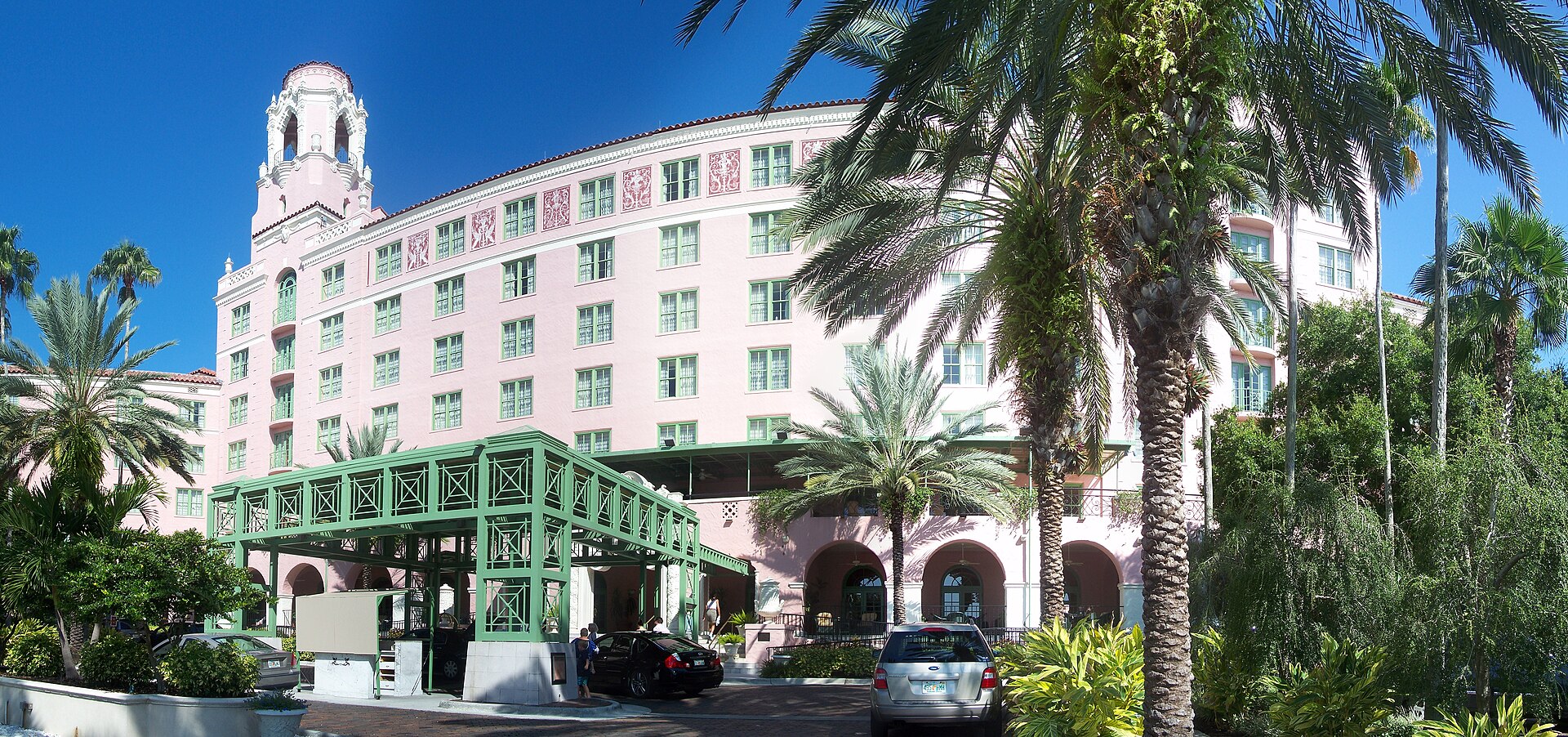
The Vinoy, St. Petersburg: photo by Ebyabe, CC BY-SA 3.0, via Wikimedia Commons.
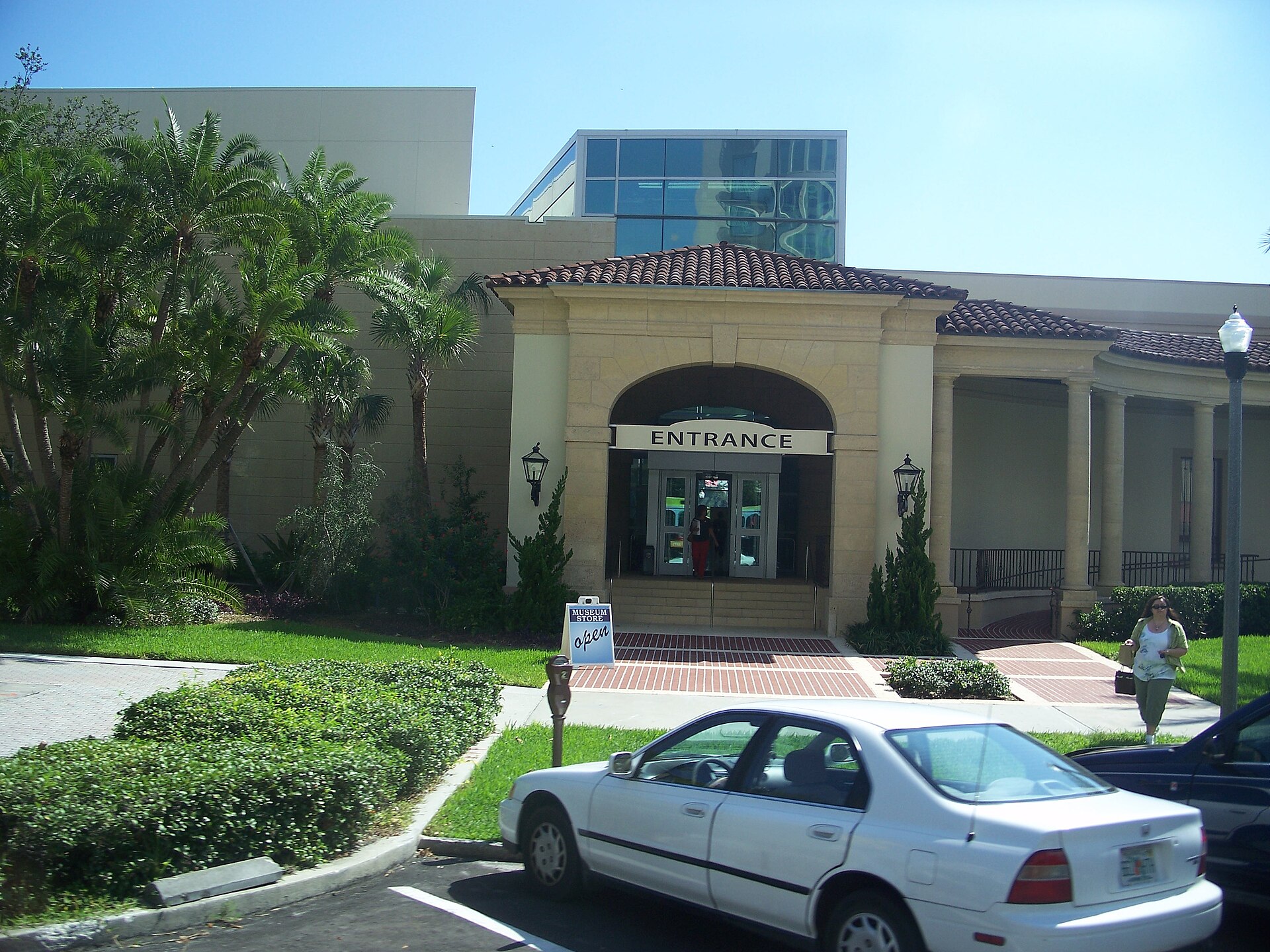
The Museum of Fine Arts, St. Petersburg: photo by Ebyabe, CC BY-SA 3.0, via Wikimedia Commons.
Chilean flamingos at Sunken Gardens: photo by LaggedOnUser, Public domain, via Wikimedia Commons.