Tampa has four Michelin-starred restaurants and almost nobody outside Florida knows it. That is the honest starting point for any list of the best restaurants in tampa: a city with a genuine fine-dining tier, a much better mid-market than its reputation suggests, and a set of signature dishes — a Cuban sandwich with salami in it, deviled crab, Spanish bean soup — that exist nowhere else in quite the same form.
It is also a city where most published restaurant lists are unreliable, because they are assembled from press releases and each other rather than from anything verifiable. So this page does something different, and says so up front.
How this list was made, and what it is not
We have not eaten at these restaurants. We have not visited Tampa to research this page, conducted interviews, been hosted by anyone, or taken any of the photographs on it. Nothing below should be read as implying otherwise.
What we have done is build the recommendations on externally verifiable awards and the operators’ own published information, and tell you exactly which is which. The spine of this page is the MICHELIN Guide Florida, whose Tampa selection for 2026 was published in late May 2026 — an independent, anonymous, professionally inspected assessment, which is a far better basis for a stranger’s recommendation than a blogger’s afternoon.
Where we describe a neighborhood, a dish or a cost, that is general and checkable. Where we name a restaurant, it is because a named body has recognized it. Where we do not know something — an address, a cuisine, a price point — we say so rather than filling the gap, which is the single biggest difference between this page and the ones ranking above it.
Restaurants close, move and change hands faster than any guide can track. Check the current address, hours and booking situation on the restaurant’s own site or the Michelin Guide before you plan an evening around anything here.
The Michelin picture, 2026
The Michelin Guide arrived in Florida in 2022 and the 2026 statewide selection runs to around 200 restaurants. Tampa’s standing in it, as reported when the list was published:
| Recognition | Restaurants | What it means |
|---|---|---|
| One MICHELIN Star | Ebbe · Kōsen · Koya · Rocca | All four retained their star in the 2026 guide |
| Lost its star, still selected | Lilac | Dropped from starred to recommended. Still in the guide |
| Bib Gourmand | Psomi · Streetlight Taco · Rooster and the Till · Gorkhali Kitchen | Michelin’s “exceptionally good food at moderate prices.” Retained in 2026 |
| MICHELIN Green Star | Fat Beet Farm Kitchen and Bakery, 13830 W. Hillsborough Ave | Awarded for sustainable practice, not for cooking level |
Two things worth understanding about that table.
The Bib Gourmand list is the useful one. A Bib is Michelin telling you a restaurant cooks well above what it charges. For a visitor choosing where to spend one evening’s budget, it is a more actionable signal than a star, and Tampa’s four Bibs are the most reliable mid-price recommendations anyone can give you about this city.
A lost star is not a bad restaurant. Lilac dropped from starred to recommended in 2026 and remains in a guide of roughly 200 restaurants across the whole of Florida. Inspectors’ judgments move year to year and the difference between a star and a recommendation is not the difference between good and bad.
We are deliberately not describing the cooking at any of these, because we have not eaten it and we are not going to paraphrase someone else’s dinner as though it were ours. Look them up, read the guide’s own notes, and book.
What eating in Tampa costs
A rough orientation, because American restaurant pricing confuses visitors and the menu price is not the bill.
| Meal | Typical spend per person, before tax and tip |
|---|---|
| Cuban sandwich and a coffee at a counter | Under $15 |
| Food hall lunch at Armature Works or Sparkman Wharf | $15–25 |
| Bib Gourmand dinner, two courses | $35–60 |
| Good neighborhood restaurant, three courses with a drink | $55–85 |
| Michelin-starred tasting menu | Substantially more; check the restaurant’s own published price |
| Stone crab claws, in season | Market price, and it moves weekly |
Tax and tipping, plainly
Florida charges state sales tax on restaurant meals, and counties add a discretionary surtax on top, so the tax line on a Tampa check is a little higher than the state rate alone. It is added at the till, not included in the menu price.
Tipping is not optional in the United States. Standard is 18 to 20 percent of the pre-tax total for table service, and servers’ wages are structured around it. Counter service and food halls are more relaxed — a dollar or two, or a tip on the card screen. Large groups often have gratuity added automatically; read the check before you add more.
Practical arithmetic: a menu showing $60 of food will cost you roughly $75 by the time tax and a 20 percent tip are on it. Budget accordingly rather than being surprised.
The dishes that are actually Tampa’s
This is the part worth reading even if you ignore every restaurant name. These are not generic Florida foods; they are specific to this city and its history.
The Tampa Cuban sandwich — the one with salami
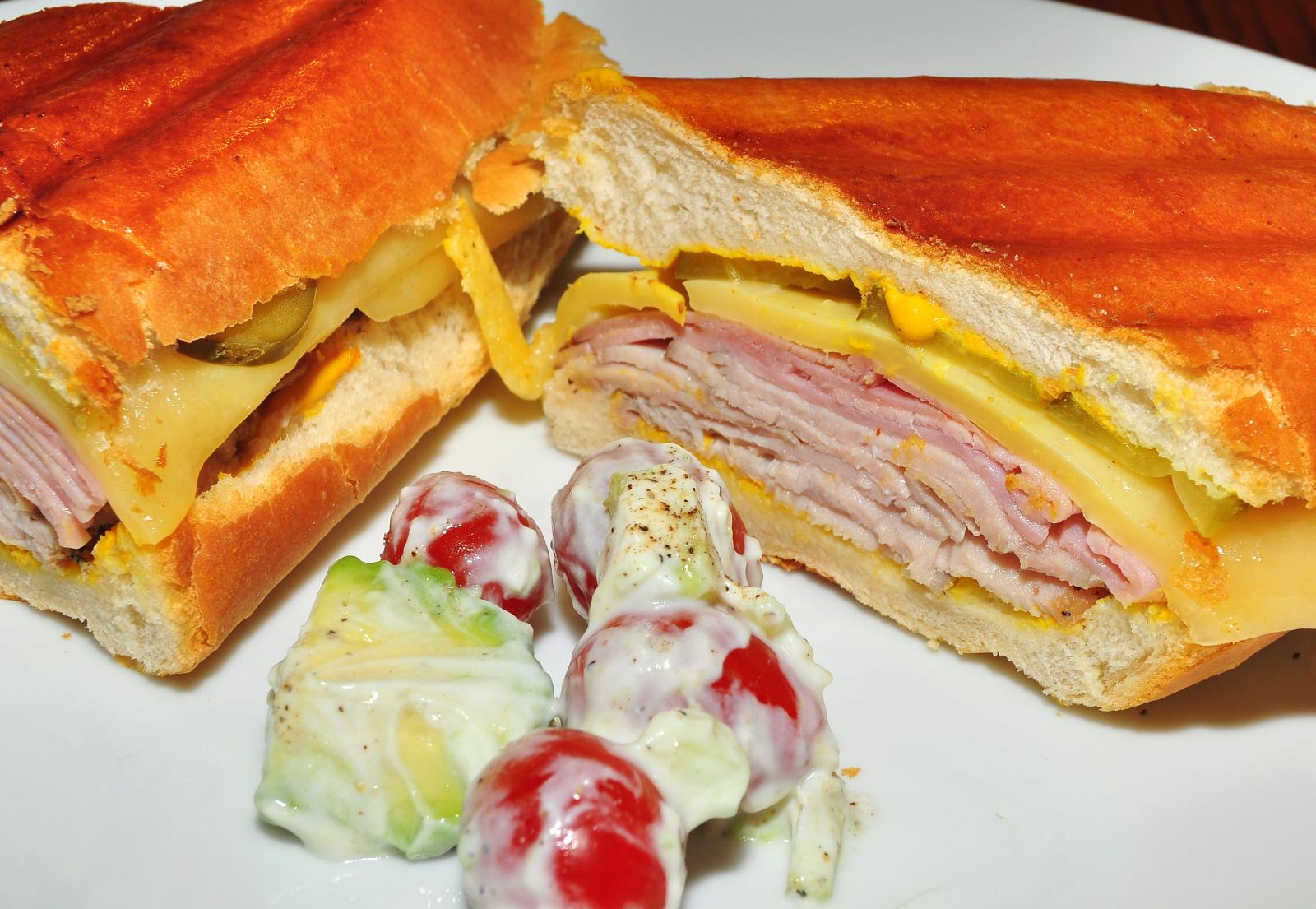
Cuban bread, roast pork, ham, Swiss cheese, yellow mustard, pickle — and Genoa salami, which the Miami version does not include. The salami is the Sicilian contribution to a sandwich invented in a neighborhood where Cuban, Spanish and Italian immigrants worked in the same cigar factories. The argument between the two cities over which is correct has run for the better part of a century and is not going to be settled here.
The bread matters as much as the filling: a long, soft-crumbed loaf traditionally baked with a palmetto frond laid along the top, which splits the crust as it rises. La Segunda Central Bakery, open in Ybor City since 1915, still supplies much of the region.
Deviled crab
The most Tampa thing on any menu and the one visitors never order because they have never heard of it. A football-shaped croquette of seasoned crab in a Cuban-bread crumb casing, deep fried, originally a cheap hand-held lunch for cigar workers and sold from carts and corner windows. Spelled croqueta de jaiba on some menus. Spicy, dense, portable, and roughly the size of your fist.
If you see it, order it. It is the single best test of whether a Tampa restaurant is cooking the city’s food or somebody else’s.
Spanish bean soup
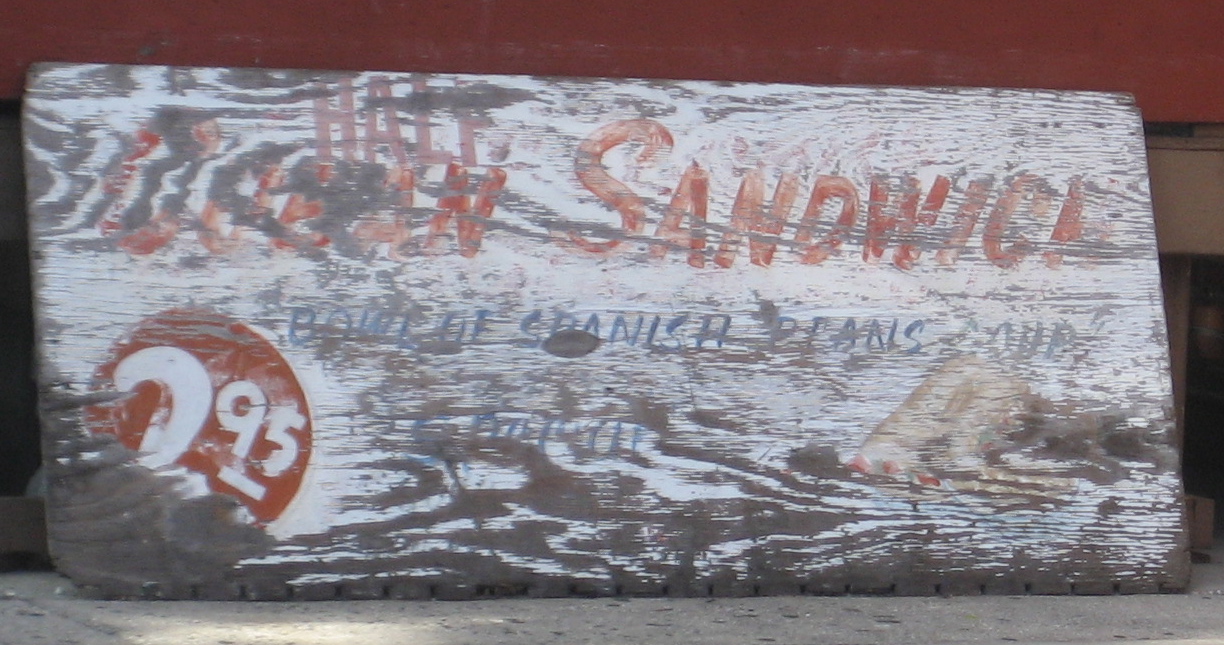
Garbanzo beans, potato, chorizo and saffron. A staple of the Ybor City restaurants for more than a century and still on the menu at the older Spanish places. Enormously comforting, and, as that weathered sign above suggests, historically cheap.
Grouper
Florida’s Gulf coast signature fish, and in Tampa Bay the default is a grouper sandwich — a thick fillet, blackened, grilled or fried, on a bun. It is on practically every waterfront menu in the region and the quality varies enormously.
One honest warning: grouper is expensive, and seafood fraud is a documented problem in Florida, with cheaper fish substituted on menus. A grouper sandwich priced well below everything around it is a reasonable thing to be suspicious of. Restaurants that are proud of their sourcing will tell you the species and where it landed.
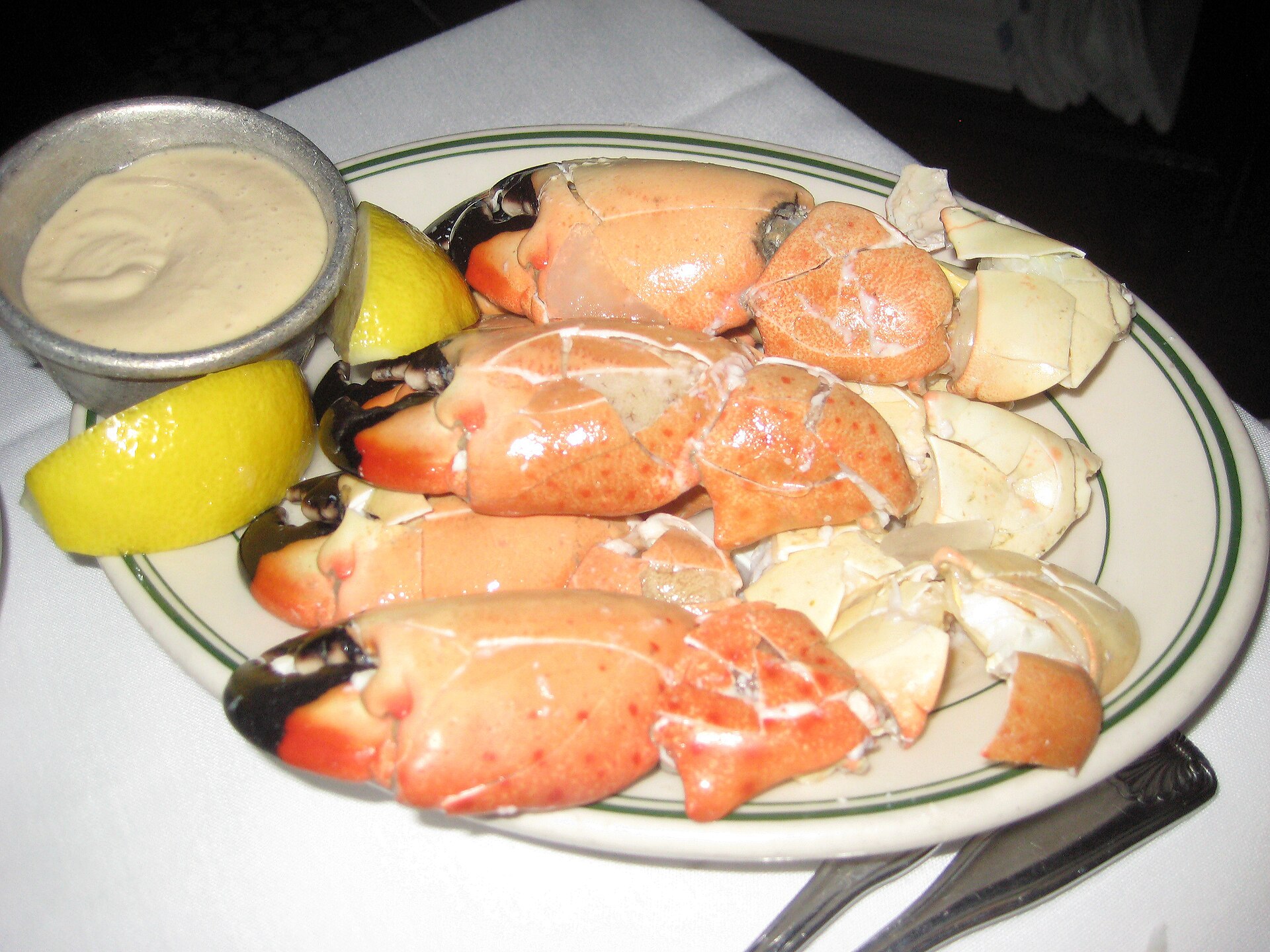
Stone crab, in season only
Florida stone crab claws are a genuine delicacy and they have a hard legal season: 15 October to 1 May. For the coming season that is 15 October 2026 to 1 May 2027. Outside those dates, fresh Florida claws are not legally available, and anything on a menu in July is frozen, imported or both.
The fishery is unusual. Only the claws are harvested — the minimum legal claw is 2 7/8 inches — and the crab is returned to the water alive to regrow them. That is why they are sold cooked and chilled rather than live, and why they are priced by the pound at whatever the market is doing that week rather than at a fixed menu price.
Served cold, cracked, with mustard sauce and lemon. Expensive, seasonal, and worth it once.
The rest of the Gulf catch
Beyond grouper and stone crab, the seafood worth looking for on a Tampa menu is local in a way that a lot of Florida coastal dining is not.
- Gulf shrimp. Pink shrimp from the Gulf are sweeter and firmer than most imported farmed shrimp, and restaurants that use them generally say so on the menu. If it does not say, it probably is not.
- Mullet. An old Florida cracker fish, usually smoked, and served as a dip with crackers and hot sauce at waterfront bars. Cheap, oily, excellent, and almost entirely absent from tourist menus.
- Mangrove snapper and hogfish. Both local, both good, and both a better-value order than grouper on a menu that carries all three.
- Florida spiny lobster. Clawless, sweeter than a Maine lobster, and seasonal — the regular season generally runs from early August to the end of March, with a short recreational mini-season in late July. Dates are set by the state and worth confirming with the Florida Fish and Wildlife Conservation Commission for your travel window.
The general rule on a Gulf coast: the restaurants that care will name the species, the season and often the boat. The ones that write “fresh catch” and nothing else are telling you something too.
Cuban coffee
Strong, short, and sweetened during the brew rather than after it. A colada is a communal shot served with small plastic cups, meant to be shared around an office or a work crew. A cortadito is the same coffee cut with steamed milk. A café con leche is the breakfast version, usually taken with buttered, pressed Cuban bread — pan con mantequilla — for dunking.
It costs a couple of dollars at a window and it is one of the better cheap pleasures in the city.
Guava and cheese pastelitos, and flan
Flaky pastry with guava paste and cream cheese, sold by the tray at Latin bakeries across Tampa and eaten at any time of day. Flan is the standard dessert at the Spanish and Cuban restaurants. Neither needs explaining once you have had one.
Where to eat, by occasion
A special occasion
Tampa’s four starred restaurants — Ebbe, Kōsen, Koya and Rocca — plus Lilac, which held a star until the 2026 guide. These are the top of the city’s dining, they are small, and they book out. Reserve well ahead, particularly for a weekend in season.
Eating well without spending heavily
The Bib Gourmands: Psomi, Streetlight Taco, Rooster and the Till and Gorkhali Kitchen. This is where we would send a visitor with one evening and a normal budget. Michelin’s whole point with the Bib is that these restaurants cook above their price bracket.
The historic meal
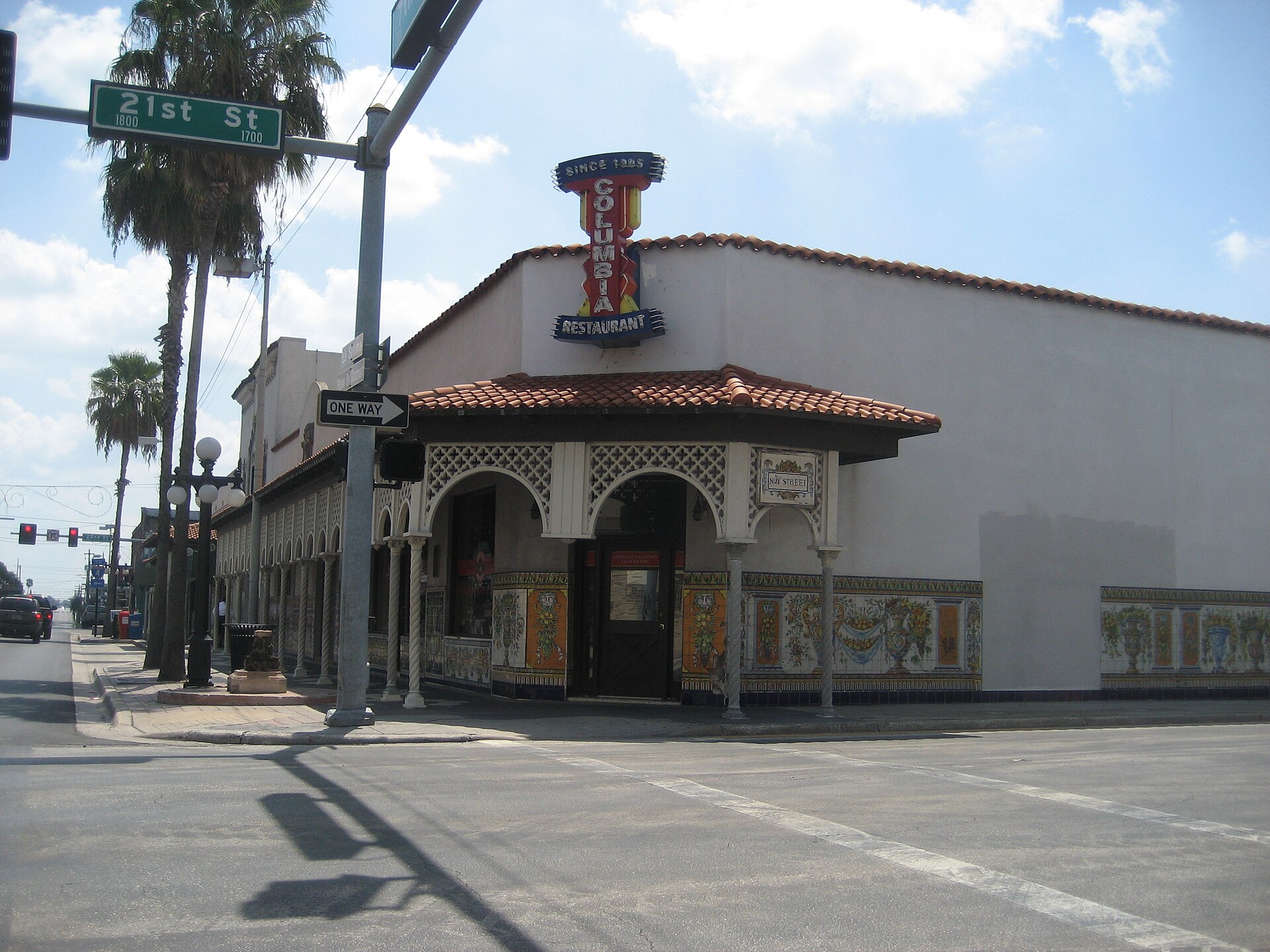
The Columbia Restaurant in Ybor City opened in 1905, is Florida’s oldest restaurant, occupies an entire city block with around 1,700 seats across 15 dining rooms, and is run by the fifth generation of the founding family. It also runs a nightly flamenco show, Monday to Saturday, in the Siboney Room, ticketed separately from dinner.
Ybor City dining in detail belongs on our Ybor City guide rather than here, but the Columbia is a regional institution rather than a neighborhood restaurant, and it is the answer to “where should we eat that we could not eat anywhere else.”
A meal with a view
The waterfront options cluster along the Hillsborough River and the Channel District. Detailed coverage of the riverfront and Sparkman Wharf sits on our Tampa Riverwalk guide, which walks the corridor end to end. The general rule for waterfront dining anywhere applies here too: you are paying something for the view, and the ratio of view to cooking varies a great deal.
A quick, cheap, genuinely local lunch
A Cuban sandwich and a cortadito at a counter, for under $15. Every neighborhood has somewhere doing this and the good ones are rarely the ones with the largest sign.
Breakfast and brunch
The genuinely local breakfast is café con leche and pan con mantequilla — strong Cuban coffee with steamed milk, and a length of Cuban bread split, buttered, pressed on a plancha and cut into sections for dunking. It costs a few dollars, it is eaten standing up at a counter, and it is better than it has any right to be.
Beyond that, Tampa does American brunch enthusiastically, particularly on Sundays, and the popular rooms in Seminole Heights, Hyde Park and the downtown districts fill. If brunch matters to you, book; if it does not, go at 9am rather than 11.
Latin bakeries across the city sell guava and cheese pastelitos by the tray from early morning, which is the cheapest good breakfast in Tampa by a distance.
Feeding a group with different opinions
Food halls. Heights Public Market at Armature Works in Tampa Heights is a 22,000-square-foot hall with around 22 vendors inside a 1910 streetcar barn — everyone orders separately and eats together. Sparkman Wharf in the Channel District does the same thing outdoors, in converted shipping containers around a lawn. Neither charges anything to walk in.
Where to eat, by neighborhood
Tampa’s food is not concentrated in one district, which is the main thing visitors get wrong. Here is the geography.
Seminole Heights
The most interesting eating neighborhood in the city, and the one least likely to appear in a visitor guide. North of downtown along Florida and Nebraska Avenues, in a grid of 1920s bungalows, with a dense concentration of independent restaurants, craft breweries and coffee roasters occupying converted gas stations and corner stores. Prices are lower than downtown and the cooking is frequently better. If you have a car and one evening, this is where we would go.
Tampa Heights
Immediately north of downtown and anchored by Armature Works, the 1910 Tampa Electric streetcar barn now holding the Heights Public Market food hall with roughly 22 vendors, event space and a riverfront lawn. Entry is free; you pay for what you eat. It opens from 7:30am on weekdays with later closes on Friday and Saturday — check the day, because the building’s hours and the individual vendors’ hours are not the same thing.
Downtown and Water Street
Water Street Tampa is the newest of the city’s districts, built out over the past decade, and it carries a lot of hotel and restaurant frontage — polished, comfortable and priced accordingly. Downtown proper thins out in the evening outside the Water Street and Riverwalk corridors.
Channel District and Sparkman Wharf
Between downtown and the cruise terminals. Sparkman Wharf is the anchor: independent food vendors in converted shipping containers around a lawn and beer garden, facing the working port channel. Casual, outdoors, good for a group, and about as close as you can eat to a cruise ship.
Hyde Park and SoHo
South of downtown along Bayshore Boulevard and South Howard Avenue. Hyde Park Village is an open-air retail and restaurant district in one of the city’s oldest and prettiest neighborhoods; SoHo, along South Howard, is the bar-and-restaurant strip that gets loud at night. Expensive, busy, and the default answer when a local is asked where to take a visitor.
South Tampa and Westshore
Further south and west toward the airport, and more residential. Westshore is Tampa’s business district, so the restaurants skew toward corporate lunches and hotel dining. South Tampa proper has good neighborhood restaurants scattered along its avenues and very little that announces itself.
Ybor City
Tampa’s historic Latin quarter, two miles east of downtown and reachable on the free TECO Line Streetcar. It has the Columbia, La Segunda Central Bakery and a set of long-established Spanish, Cuban and Italian places, alongside a very large bar district. The neighborhood in full — including the history that produced the food — is covered on our Ybor City guide.
Across the bay
St. Petersburg has its own food geography along Beach Drive and Central Avenue, and it is 25 miles and a bay crossing away — see our St. Petersburg guide. It is not a Tampa dinner option on a weeknight.
Craft beer, and where the drinking is
Tampa’s craft brewing scene is genuinely strong and it is a real part of the city’s food culture rather than an afterthought.
Cigar City Brewing, founded in Tampa in 2009 and named for the city’s cigar heritage, is the best-known name to come out of it, and its Jai Alai IPA is the beer most visitors will recognize. It is not the only one — Tampa and the surrounding county hold a large number of independent breweries and taprooms, concentrated in Seminole Heights, the Ybor City fringes and the industrial blocks around them.
Two practical notes. First, brewery taprooms in Florida are generally family-friendly in the afternoon and food-truck-fed rather than kitchen-fed, which makes them a cheap and relaxed way to spend a few hours. Second, Ybor City’s bar district is a different proposition entirely — 7th Avenue after 10pm on a weekend is one of the largest concentrated nightlife strips in Florida, with street closures and large crowds. Our Ybor City guide is straight about what changes there after dark.
If you are drinking anywhere in Ybor or the Channel District, the free TECO Line Streetcar runs until 2am on Friday and Saturday nights and connects both to downtown. It is the single best answer to the drink-driving problem in this city and it costs nothing.
Eating well in Tampa without spending much
The gap between the cheapest good meal in this city and the most expensive one is very wide, and a visitor can sit anywhere on it deliberately rather than by accident.
- Counter Cuban. A Cuban sandwich and a cortadito for under $15, at a counter, in almost any neighborhood. This is the city’s best cheap meal and it is not a compromise.
- Food halls. Armature Works and Sparkman Wharf both let a group eat different things at different price points at the same table, and neither charges to walk in.
- Lunch instead of dinner. A lot of Tampa’s better restaurants price lunch substantially below dinner for broadly the same kitchen. If you want to eat at a good restaurant on a modest budget, go at midday.
- Happy hour. Widely observed, typically late afternoon on weekdays, and often includes discounted food rather than only drinks.
- Bakeries. Pastelitos and Cuban bread cost very little and travel well.
- Brewery taprooms. Food trucks rather than kitchens, and priced accordingly.
A couple can eat genuinely well in Tampa for $40 a day between them if they want to. The same couple can spend that on two cocktails on Water Street. Both are available; the point is to choose.
Reservations
Tampa is not New York, and you can walk into most restaurants in this city on most nights. The exceptions are worth knowing:
- The starred restaurants — book as far ahead as they release tables, especially for weekends between November and April.
- The Bib Gourmands — small rooms, strong local followings. A few days to a week for a weekend table is sensible.
- Anything on a Gasparilla weekend — the Seminole Hard Rock Gasparilla Pirate Fest falls on the last Saturday in January, 30 January 2027 for the next edition, with Children’s Gasparilla on 23 January. Downtown and Bayshore are given over to it and around 300,000 people are in town.
- Anything near Benchmark International Arena on a Lightning game night — the Channel District fills, and so does the parking.
- Sunday brunch — Tampa takes brunch seriously and the popular rooms fill.
Conversely: food halls do not take reservations and do not need them, and walking into a counter-service Cuban place at 1pm on a Tuesday requires no planning at all.
Opening hours, and eating early
Americans eat earlier than most Europeans and Tampa is no exception: the dinner peak runs roughly 6pm to 8pm, and a lot of kitchens close by 9pm or 10pm on a weeknight. If you are used to sitting down at 9.30pm, adjust or you will find yourself in the few late rooms by default.
Many independent restaurants close one day a week, often Monday or Tuesday, and some close for a stretch in late summer when the city empties out and the weather is at its worst. Between June and November, a named storm in the Gulf can close restaurants at short notice regardless of what any website says.
Check the day you are going on the restaurant’s own page rather than a third-party listing, which is very often wrong about hours.
Dietary needs
Vegetarian is straightforward across the city, and the newer independent restaurants in Seminole Heights and the food halls tend to do it properly rather than grudgingly. Vegan is more variable — plenty available, but concentrated in specific places rather than assumed everywhere, and thin on the ground at the traditional Spanish and Cuban restaurants, where pork is close to a structural ingredient.
Gluten-free is widely understood and widely labeled; American restaurants are generally good at this. The Cuban sandwich and the deviled crab are both built on Cuban bread and there is no useful substitution.
Shellfish and fish allergies need stating clearly on a Gulf coast where cross-contamination is a real risk in kitchens that fry seafood constantly.
American restaurants are, as a rule, comfortable with substitutions and questions in a way that some European kitchens are not. Ask.
Honest notes
- Order the deviled crab. It is the city’s most distinctive dish and almost no visitor tries it.
- Do not order stone crab out of season. The legal season is 15 October to 1 May. In August you are paying a premium for frozen.
- Be wary of the cheap grouper sandwich. Seafood substitution is a documented Florida problem, and grouper is expensive to buy honestly.
- The Bib Gourmands are better advice than the stars for most visitors, because they are the restaurants Michelin thinks are punching above their price.
- Get out of downtown for one meal. Seminole Heights is fifteen minutes north and is where the city actually eats.
- A menu price is not the bill. Add tax and 18 to 20 percent.
- Do not trust a Tampa restaurant list that reads like it was written without leaving a desk. Including, on the parts where we say so, this one — which is why we have told you exactly what each recommendation rests on.
Frequently asked questions
Does Tampa have Michelin-starred restaurants?
Yes. In the 2026 MICHELIN Guide Florida, four Tampa restaurants hold one star each: Ebbe, Kōsen, Koya and Rocca. Lilac held a star previously and remains in the guide as a recommended restaurant. Four Tampa Bay restaurants hold a Bib Gourmand: Psomi, Streetlight Taco, Rooster and the Till, and Gorkhali Kitchen.
What food is Tampa known for?
The Tampa Cuban sandwich, which adds Genoa salami to the ham, roast pork, Swiss, mustard and pickle that Miami’s version has; deviled crab, a fried crab croquette in a Cuban-bread crust; Spanish bean soup; Cuban bread from Ybor City bakeries; grouper sandwiches; stone crab claws in season; and Cuban coffee in its various forms.
What is the difference between a Tampa and a Miami Cuban sandwich?
Salami. Tampa’s includes Genoa salami, reflecting the Sicilian community that worked alongside the Cuban and Spanish communities in Ybor City’s cigar factories. Miami’s does not. Both cities regard the other as wrong.
What is deviled crab?
A Tampa specialty: seasoned crab meat formed into a football-shaped croquette, coated in Cuban-bread crumbs and deep fried. It began as cheap portable food for cigar workers and it is still sold from counters and windows across the city. Also written croqueta de jaiba.
When is stone crab season in Florida?
15 October to 1 May. The 2026–27 season runs from 15 October 2026 to 1 May 2027. Only the claws are harvested — minimum legal size 2 7/8 inches — and the crab is returned to the water to regrow them, which is why claws are sold cooked and chilled at a market price that moves week to week.
How much should I tip in Tampa?
18 to 20 percent of the pre-tax total for table service. Servers’ pay is structured around tips and it is not optional. Counter service and food halls are more relaxed. Check whether gratuity has already been added for a large group before adding more.
Which Tampa neighborhood has the best food?
For independent restaurants at sensible prices, Seminole Heights, north of downtown along Florida and Nebraska Avenues. For history and a meal you could not have anywhere else, Ybor City. For food halls and groups, Tampa Heights at Armature Works or the Channel District at Sparkman Wharf. For polished and expensive, Water Street and SoHo.
Do I need reservations in Tampa?
For the starred restaurants, yes, and well ahead. For the Bib Gourmands, a few days for a weekend. For most other places, no — Tampa is generally a walk-in city. Gasparilla weekend in late January and Lightning game nights at Benchmark International Arena (called Amalie Arena until August 2025) are the exceptions that catch people out.
Where can I eat near the cruise terminals?
Sparkman Wharf in the Channel District is the closest concentration, with independent vendors in converted shipping containers around a lawn. The southern end of the Riverwalk runs to it. See our Port Tampa Bay guide for the terminal addresses and what else is within walking distance.
Is Tampa good for vegetarians?
Yes, comfortably so at the newer independent restaurants and the food halls. Vegan is available but more concentrated in particular places, and thin at the traditional Spanish and Cuban restaurants, where pork runs through most of the menu.
Where can I get Cuban bread in Tampa?
La Segunda Central Bakery, open in Ybor City since 1915, is the best-known supplier and serves much of the region. Latin bakeries across the city sell it, along with guava and cheese pastelitos.
Related Tampa Guides
- Ybor City Visitor Guide — where the Cuban sandwich, the deviled crab and the Spanish bean soup came from, and the neighborhood that still cooks them.
- Tampa Riverwalk and Downtown Visitor Guide — the riverfront corridor, Armature Works at one end and Sparkman Wharf at the other.
- Best Things to Do in Tampa — the rest of the city, and how much of it is free.
- Best Things to Do in St. Petersburg Florida — a separate food geography, 25 miles and a bay crossing away.
- Cruises from Tampa and Port Tampa Bay Guide — for eating before you sail.
- Tampa Bay Itineraries for Every Trip — day plans in map order, so dinner lands where you already are rather than a cross-town drive away.
- Tampa Nightlife and Live Entertainment Guide — where the evening goes after dinner, and how to get home from it.
Sources and verification
Checked in September 2026:
- MICHELIN Guide Florida 2026, as reported on publication in late May 2026 — Tampa’s four retained one-star restaurants (Ebbe, Kōsen, Koya, Rocca), Lilac’s loss of its star and retention in the guide, the four retained Tampa Bay Bib Gourmands (Psomi, Streetlight Taco, Rooster and the Till, Gorkhali Kitchen), the MICHELIN Green Star for Fat Beet Farm Kitchen and Bakery at 13830 W. Hillsborough Ave, and the roughly 200-restaurant statewide selection. Note: the Michelin Guide’s own website blocks automated access, so these were verified through contemporaneous news reporting of the guide’s publication rather than read directly from the guide. Confirm current status at guide.michelin.com.
- Florida Fish and Wildlife Conservation Commission — stone crab season dates of 15 October to 1 May, the 2 7/8-inch minimum claw size, and the recreational bag limit. Checked 19 September 2026.
- Columbia Restaurant — the 1905 opening, the full-block footprint, roughly 1,700 seats across 15 dining rooms, fifth-generation family ownership, and the nightly Monday-to-Saturday flamenco in the Siboney Room. Checked September 2026.
- Armature Works — the 1910 streetcar barn origin, the 22,000-square-foot Heights Public Market with around 22 vendors, and the 7:30am weekday opening. Checked September 2026.
What we did not verify, and are flagging rather than guessing: individual restaurant addresses, opening hours, menu prices, cuisine descriptions and current booking arrangements for any of the Michelin-recognized restaurants; the current Hillsborough County discretionary sales surtax rate; and the specific vendor line-ups at Armature Works and Sparkman Wharf, which turn over regularly.
To restate what this page said at the top: we have not eaten at any restaurant named here. No visits, no interviews, no testing, no hosted meals, no original photography. Every recommendation rests on an independent award or on an operator’s own published information, and we have said which. Restaurants in any city close, move and change chefs faster than a guide can follow — check before you book.
Photo credits
A pressed Cuban sandwich: photo by jeffreyw, CC BY 2.0, via Wikimedia Commons.
A Cuban sandwich and Spanish bean soup sign in Ybor City: photo by Infrogmation of New Orleans, CC BY-SA 3.0, via Wikimedia Commons.
A plate of stone crab claws: photo by FoodOfMiami, Public domain, via Wikimedia Commons.