The north end of the tampa riverwalk is a 1910 electric streetcar barn that now sells poke bowls and craft beer. The south end is a row of converted shipping containers on a working port channel. In between run 2.6 miles of continuous paved path along the Hillsborough River, past four museums, an NHL arena, a convention center, a dog run and a fountain that children fall into fully clothed on a weekly basis. The whole corridor costs nothing to walk, has no gate, and never closes.
That last sentence is the part most guides bury under a paragraph about “Tampa’s crown jewel.” It matters more than anything else on this page. The Riverwalk is the single best-value thing to do in the city, and the only way to spend real money on it is to choose to — on a museum ticket, a food-hall lunch, or a boat ride you almost certainly do not need. This guide walks the path end to end, tells you what each segment actually looks like, what the paid attractions along it cost as of September 2026, and where the money is genuinely worth spending.
The short answer
The Tampa Riverwalk is a free, continuous, paved pedestrian path running 2.6 miles (4.2 km) along the east bank of the Hillsborough River through downtown Tampa. It links Armature Works in Tampa Heights at the north end with Sparkman Wharf in the Channel District at the south end. It is open 24 hours, has no admission charge, and is flat and step-free for its entire length.
Walking it straight through, without stopping, takes about 50 minutes to an hour at a normal pace. Nobody does that. With a coffee, a museum, a look at the river and a meal, budget three to five hours. It is a linear route, not a loop, so plan how you are getting back before you set off — the free TECO Line Streetcar covers the southern half, and the walk back along the same path is genuinely pleasant in a way that most return legs are not.
If you have one afternoon in downtown Tampa and no fixed plan, walking the Riverwalk from Curtis Hixon Waterfront Park south to Sparkman Wharf, stopping at the Tampa Bay History Center on the way, is the highest-return use of the time. It costs $18.95 and about three hours.
What a day on the Riverwalk actually costs
All prices checked September 2026 against the operators’ own published rates. Florida attraction pricing changes seasonally and several of these venues use date-based dynamic pricing, so treat the figures as the shape of the cost rather than a quote.
| What | Cost (checked September 2026) | Notes |
|---|---|---|
| The Riverwalk path itself | Free, open 24 hours | No ticket, no gate, no seasonal closure |
| Curtis Hixon Waterfront Park, MacDill Park, Water Works Park, Cotanchobee Fort Brooke Park | Free | Lawns, splash fountain, dog run, playground |
| TECO Line Streetcar | Free | Fare-free since 2018. 11 stations, every 15 minutes |
| Tampa Bay History Center | $18.95 adult · $16.95 senior 60+ · $14.95 youth 7–17 · free under 6 | 801 Water Street, daily 10am–5pm |
| Tampa Museum of Art | $25 adult · $15 senior 65+ · $5 K–12 · free under 6 | Pay-what-you-will Thursdays 4–8pm |
| The Florida Aquarium | $45.95–$47.95 adult · $39.20–$40.95 child | 701 Channelside Drive, a short walk east of Sparkman Wharf |
| Pirate Water Taxi all-day pass | $34 adult · $24 child 2–12 | 10 stops. Mon–Thu 11:30am–6:30pm, Fri–Sun 11:30am–9:30pm |
| Parking (downtown garage or meter) | Varies by garage, event and time of day | Check current rates at tampa.gov before you travel |
A couple walking the full length, stopping at the History Center and buying two coffees and a food-hall lunch, will spend somewhere around $80 to $100 for the day including parking. The same couple can do a genuinely good version of the same day for under $20 by walking, using the free streetcar, packing water and visiting the Tampa Museum of Art on a Thursday evening when it is pay-what-you-will.
The route, segment by segment
The Riverwalk is usually described as a single 2.6-mile line, which is true but unhelpful when you are standing on it deciding whether to keep going. It is easier to think of it as seven stretches, each with a different character and a different reason to stop. The distances below are approximate walking distances measured along the path and rounded to the nearest tenth of a mile; the City of Tampa publishes its own official map, and it is worth pulling up on your phone before you start.
The description runs north to south, which is the direction most visitors walk it — you start at the food hall, finish at the waterfront, and the light is behind you rather than in your eyes for most of the afternoon.
1. Armature Works to Water Works Park — about 0.4 miles
Armature Works is the reason the north end of the Riverwalk is worth starting from rather than skipping. The building went up in 1910 as the Tampa Electric Company’s streetcar storage and maintenance barn — the place where the city’s original streetcars were repaired, a century before the modern TECO Line started running a mile to the south. It sat derelict for decades. It now holds the Heights Public Market, a 22,000-square-foot food hall with roughly 22 vendors, plus event space and a lawn that runs down to the water.
Entry is free. You pay only for what you eat. On a weekday morning it is quiet and the outdoor tables along the river are the best free seat in Tampa Heights; on a Saturday evening it is loud, crowded and hard to park near. Opening hours run from 7:30am on weekdays with later closes on Friday and Saturday — check the day you are going, because the building’s hours and its individual vendors’ hours are not the same thing.
South of Armature Works the path drops down to the riverbank and runs into Water Works Park, a narrow green strip built around a restored municipal water pumping station that now houses a restaurant. This stretch has the most shade on the entire Riverwalk, which in a Tampa July is not a trivial observation. There is a splash pad here and a small dog area.
2. Water Works Park to the Straz Center — about 0.5 miles
This is the segment that surprises people. The path ducks under the elevated lanes of Interstate 275, and for two or three minutes you are walking in permanent concrete shade with traffic roaring overhead. It is not scenic. It is also well lit, heavily used and perfectly fine to walk, and it is the only unattractive part of the whole route, so push through it rather than turning back.
On the far side the river opens up and the downtown skyline appears properly for the first time. The David A. Straz Jr. Center for the Performing Arts occupies the bank here — a multi-theater complex that is one of the largest performing arts venues on Florida’s Gulf coast. Unless you have tickets there is nothing to do inside, but the plaza and the riverfront terrace in front of it are public and make a good pause point.
Across the water on the west bank is Julian B. Lane Riverfront Park, rebuilt and reopened in 2018 with athletic courts, a rowing center and a large open lawn. It connects to the Riverwalk by the road bridges rather than by the path itself, so treat it as a detour rather than part of the route.
3. The Straz Center to Curtis Hixon Waterfront Park — about 0.4 miles
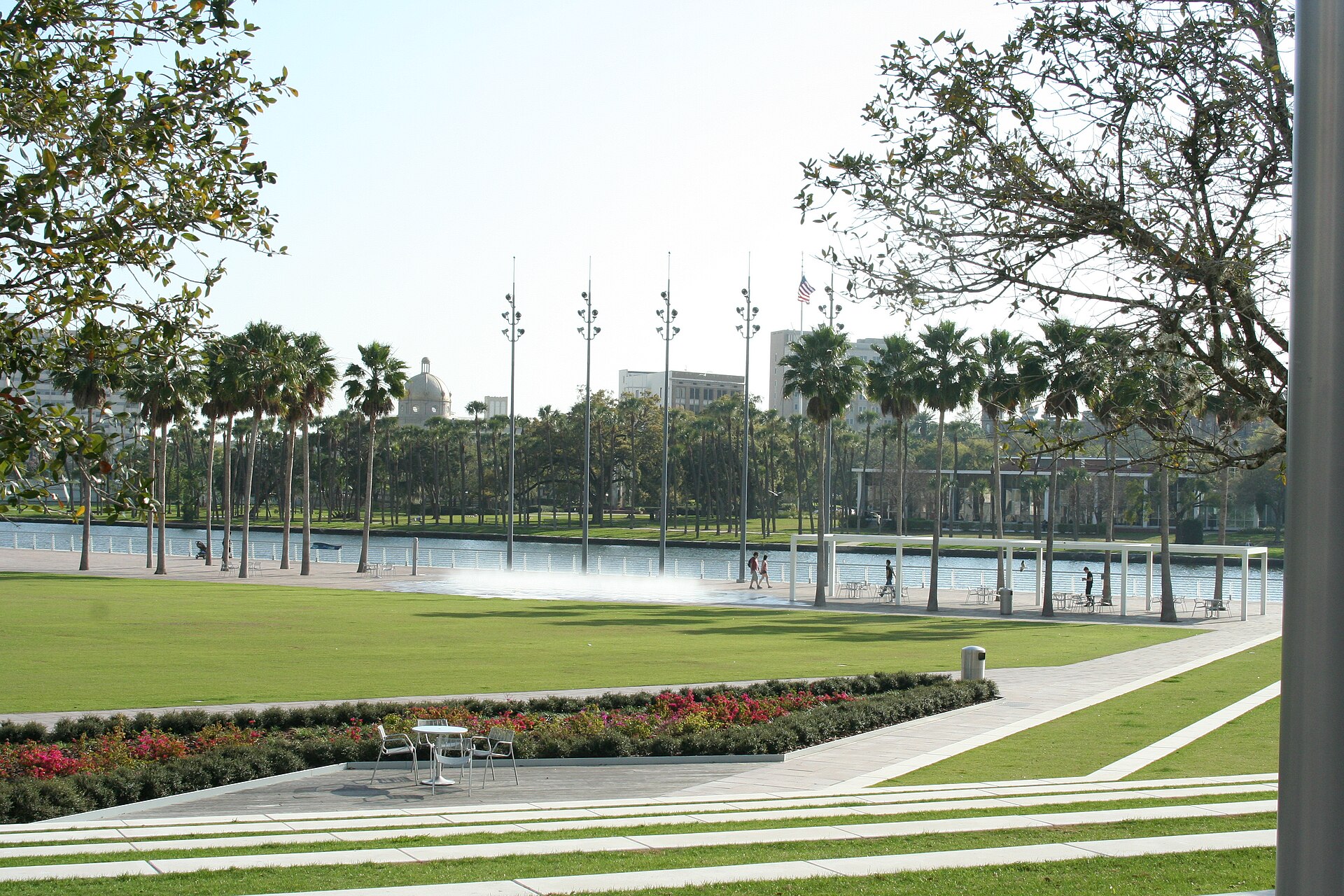
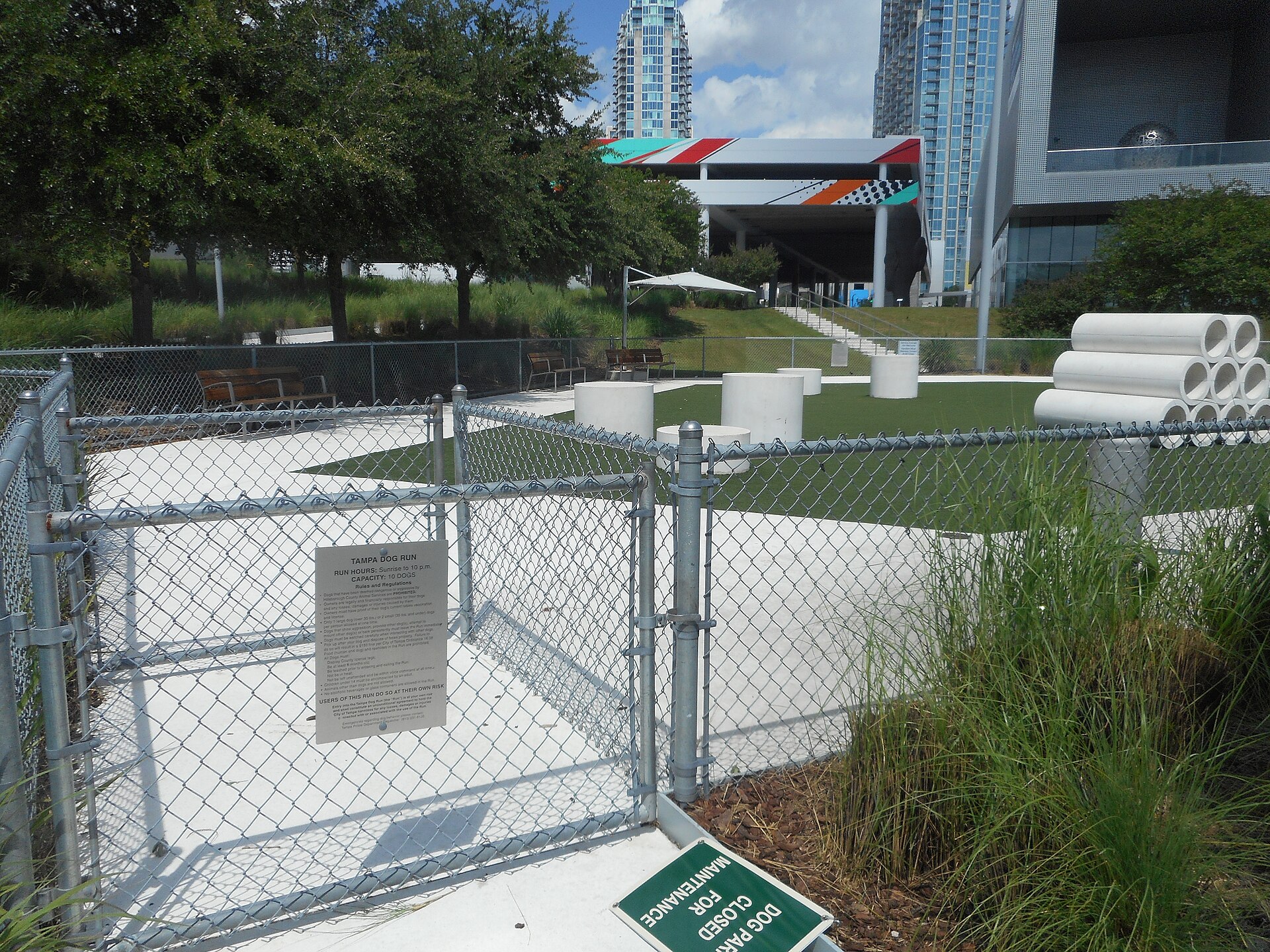
This is the cultural center of the walk and the segment where most visitors spend the largest share of their time. Curtis Hixon Waterfront Park is a stepped, terraced lawn running down to the river, with a splash fountain that children treat as a swimming pool, the fenced dog run pictured above, and a wide plaza used for festivals most weekends of the cooler months.
The Tampa Museum of Art sits at the north edge of the park at 120 West Gasparilla Plaza. Adult admission is $25, seniors 65 and over pay $15, K–12 students pay $5, and under-6s are free. College students with valid ID get in free, and the museum admits SNAP and EBT cardholders free. The single most useful thing to know about it is the pay-what-you-will window on Thursday evenings from 4pm to 8pm — the museum stays open until 8pm on Thursdays specifically, and during those four hours you set your own admission. If your schedule has any flexibility at all, build the Riverwalk around a Thursday afternoon.
The Glazer Children’s Museum shares the plaza. It is aimed squarely at under-10s and is not a general-interest museum; if you are traveling without children you can skip it without guilt.
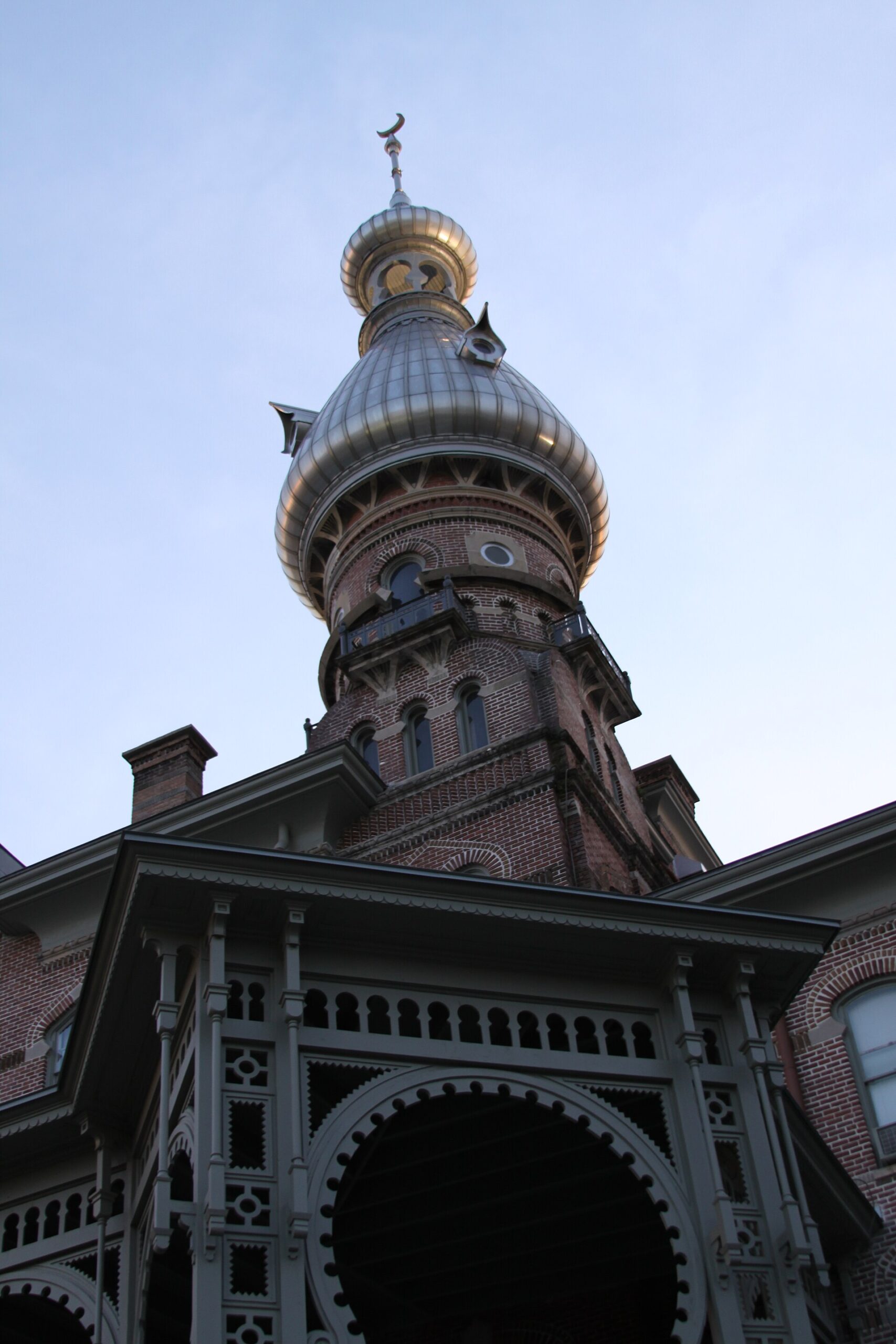
Look across the river from the Curtis Hixon lawn and the silver minarets on the far bank belong to Plant Hall at the University of Tampa — the former Tampa Bay Hotel, built by railroad magnate Henry B. Plant and open from 1891 to 1932. It is a National Historic Landmark and served as US Army headquarters during the Spanish-American War. The Henry B. Plant Museum occupies part of the ground floor at 401 West Kennedy Boulevard and preserves original furnishings from the hotel. It opens Tuesday to Saturday 10am–5pm and Sunday noon–5pm, closed Mondays, and also closes on Independence Day, Thanksgiving, Christmas Eve and Christmas Day and during the Gasparilla invasion and parade. Check the current admission price on the museum’s own site; we could not verify it at the time of writing.
4. Curtis Hixon to MacDill Park and Kennedy Boulevard — about 0.3 miles
South of the museums the path threads past Kiley Garden, a modernist landscape terrace laid out above a parking structure beside Rivergate Tower — the cylindrical office block every local calls the Beer Can Building, for reasons that become obvious the moment you look at it. The garden has been restored, allowed to decline and restored again more than once; how good it looks depends heavily on when you visit.
MacDill Park is the open riverfront plaza just north of the Kennedy Boulevard bridge and is one of the main venues for downtown Tampa’s outdoor events — food truck rallies, live music, and riverfront staging for larger festivals. On an ordinary weekday it is an empty paved apron with benches and a good view up the river.
5. Kennedy Boulevard to the Tampa Convention Center — about 0.3 miles
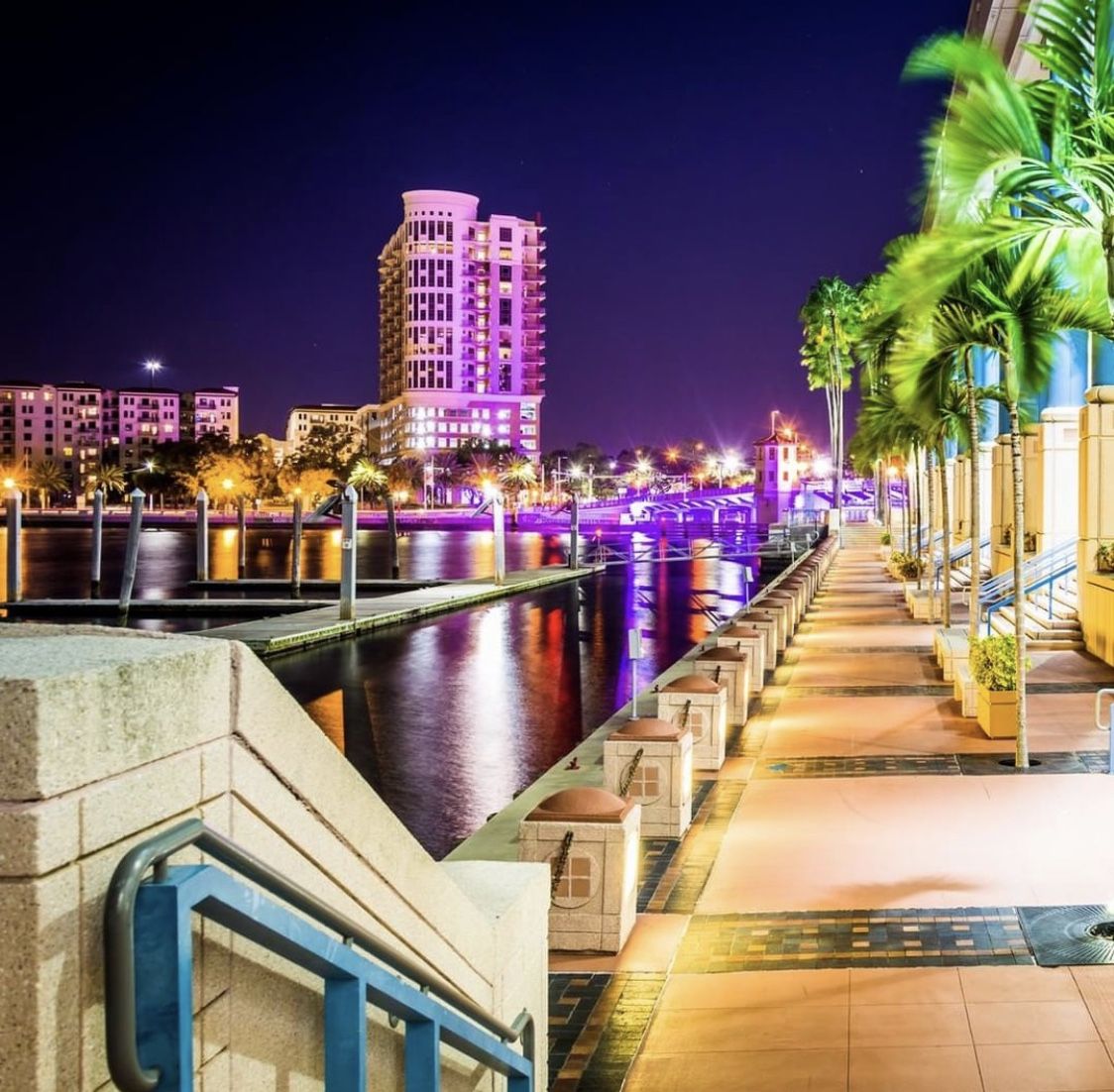
Here the river widens toward its mouth and the walk feels less like a park path and more like a promenade. The Tampa Convention Center’s riverfront terrace is public space and carries the Riverwalk across the building’s frontage. This is also the home dock for the Pirate Water Taxi, which boards at the convention center as Stop 7.
The stretch in front of the convention center is where the Riverwalk photographs best after dark. The buildings light up, the water goes still, and the path stays busy enough to feel comfortable well into the evening.
6. Convention Center to Cotanchobee Fort Brooke Park — about 0.4 miles
Cotanchobee Fort Brooke Park is a quiet waterfront green between the convention center and Benchmark International Arena (called Amalie Arena until August 2025), named for the Seminole settlement that stood near this site before the US Army built Fort Brooke here in the 1820s. It carries interpretive markers about that history, and it is markedly less busy than Curtis Hixon — the better of the two if you want to sit down and not be near a splash fountain.
Benchmark International Arena backs onto the park. It is the home of the Tampa Bay Lightning and the city’s main indoor concert venue. On a game night the entire southern half of the Riverwalk changes character: the path fills, the bars around it fill, and parking within half a mile becomes both scarce and expensive. If you were planning a quiet evening walk, check the Lightning schedule first. If you were planning a lively one, a game night is exactly when to come.
7. Water Street to Sparkman Wharf — about 0.3 miles
The last stretch runs through Water Street Tampa, a large mixed-use district built out over the past decade on what was mostly surface parking. It is glossy, new and deliberately walkable, with wide sidewalks and a lot of hotel and restaurant frontage. Opinion locally is divided on whether it has any character yet. It is undeniably comfortable to walk through.
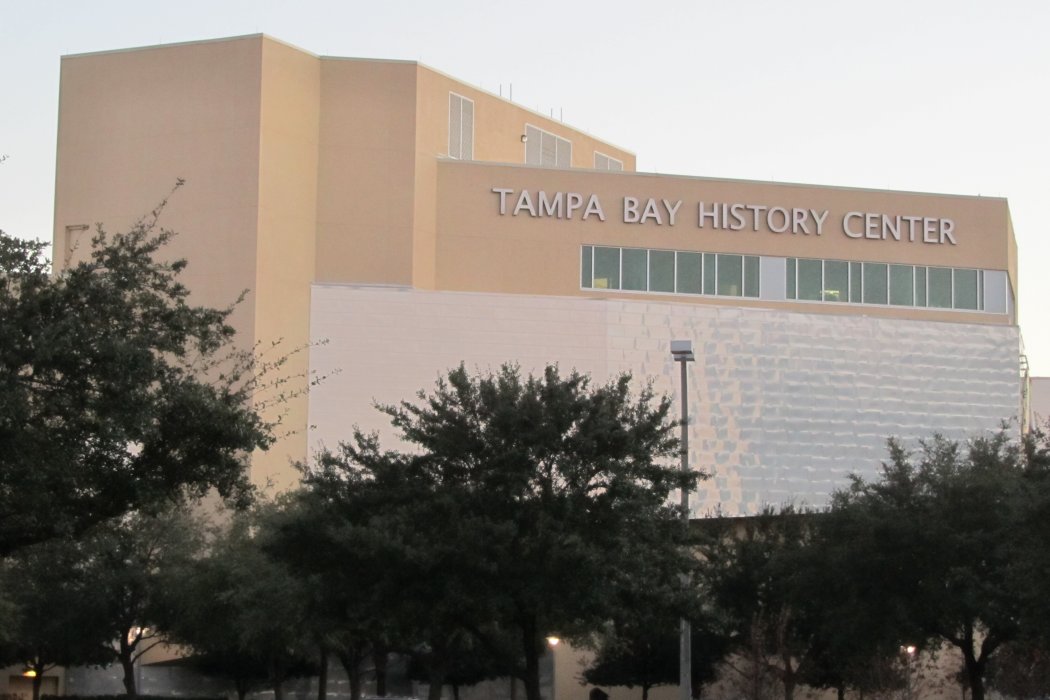
The Tampa Bay History Center sits at 801 Water Street, right on the path, and is the paid attraction on the Riverwalk we would put money on first. Adult admission is $18.95, seniors 60 and over pay $16.95, college students pay $16.90, youth 7–17 pay $14.95 and under-6s are free. It holds roughly 90,000 artifacts across three floors covering thousands of years of Florida history — Indigenous Florida, Spanish contact, the cattle and cigar economies, and a well-executed section on Tampa Bay’s sports franchises. The Touchton Map Library holds an unusually good collection of early Florida cartography. Columbia Cafe, an offshoot of the Columbia Restaurant in Ybor City, operates on site and is a legitimate lunch option rather than a museum canteen.
Sparkman Wharf marks the southern end. It opened in late 2018 on the site of the former Channelside Bay Plaza and is built around a row of converted shipping containers housing independent food vendors, arranged around a lawn with games and a beer garden. It faces the working channel of the Port of Tampa, so the view includes cruise ships and cargo cranes rather than open water. It is a good place to finish a walk and a slightly odd place to make a destination in its own right.
The Florida Aquarium is a few minutes further east at 701 Channelside Drive, past the end of the Riverwalk proper. Adult admission ran $45.95 to $47.95 and child admission $39.20 to $40.95 in mid-September 2026 under the aquarium’s date-based “Plan-Ahead Pricing,” with box office prices generally higher than online. It is a genuinely good aquarium, but it is a half-day commitment and a substantial extra cost — treat it as a separate outing rather than an add-on to a Riverwalk afternoon.
Distances at a glance
| Segment | Approx. distance | Approx. walking time | Anchor |
|---|---|---|---|
| Armature Works → Water Works Park | 0.4 mi | 8 min | Food hall, shade, splash pad |
| Water Works Park → Straz Center | 0.5 mi | 10 min | Underpass, then skyline view |
| Straz Center → Curtis Hixon | 0.4 mi | 8 min | Art museum, children’s museum, dog run |
| Curtis Hixon → MacDill Park | 0.3 mi | 6 min | Kiley Garden, Rivergate Tower |
| MacDill Park → Convention Center | 0.3 mi | 6 min | Water taxi Stop 7, night photography |
| Convention Center → Cotanchobee | 0.4 mi | 8 min | Quiet park, Benchmark International Arena |
| Water Street → Sparkman Wharf | 0.3 mi | 6 min | History Center, food containers |
| Full length | 2.6 mi | 50–60 min without stops |
Plans by how much time you have
One hour
Park or get dropped near Curtis Hixon Waterfront Park and walk south to the Tampa Convention Center and back. That is roughly 1.2 miles round trip and gives you the best skyline views, the widest stretch of river, the museum plaza and the terraced lawn. Skip everything with a ticket price. If the fountain is running and you have children with you, budget forty of the sixty minutes for the fountain and accept it.
Half a day, three to four hours
Start at Armature Works mid-morning, eat there or take coffee to go, and walk south. Stop at the Tampa Bay History Center for ninety minutes. Finish at Sparkman Wharf. Take the free TECO Line Streetcar back toward downtown, or walk back along the river if the weather is kind. This is the version of the Riverwalk day we would recommend to almost anyone, and it costs $18.95 plus food.
A full day
The same route, but add the Tampa Museum of Art in the morning and the Florida Aquarium in the afternoon, or swap the aquarium for a longer lunch and an evening at Sparkman Wharf. A full day with both museums and the aquarium runs roughly $90 per adult in admissions alone, which is the point at which it is worth asking whether you would rather spend that money on a single day at a major attraction instead.
An evening
Arrive around 5pm. Walk the convention center to Curtis Hixon stretch while the light goes, eat at Sparkman Wharf or on Water Street, then walk the lit path back. The Riverwalk is well lit end to end and busy enough to feel comfortable through the evening, particularly on the southern half. On a Thursday, start at the Tampa Museum of Art during the pay-what-you-will window and let the walk follow.
With young children
Curtis Hixon is the anchor: splash fountain, open lawn, the Glazer Children’s Museum on the plaza and the dog run to look at. Water Works Park at the north end has the best shade and its own splash pad. Distances between these are short enough to manage with a stroller, and the path is fully step-free, so a pram or a wagon works on every section.
If it rains
Tampa’s summer rain typically arrives as a heavy afternoon thunderstorm that clears in under an hour rather than as a day of drizzle. The Riverwalk has almost no cover, so the practical plan is to be inside something during the storm window: the History Center, the Tampa Museum of Art, the Heights Public Market at Armature Works, or one of the Water Street restaurants. Lightning near open water is a genuine hazard, not an inconvenience — get off the path.
Getting there, parking and transit
The free streetcar
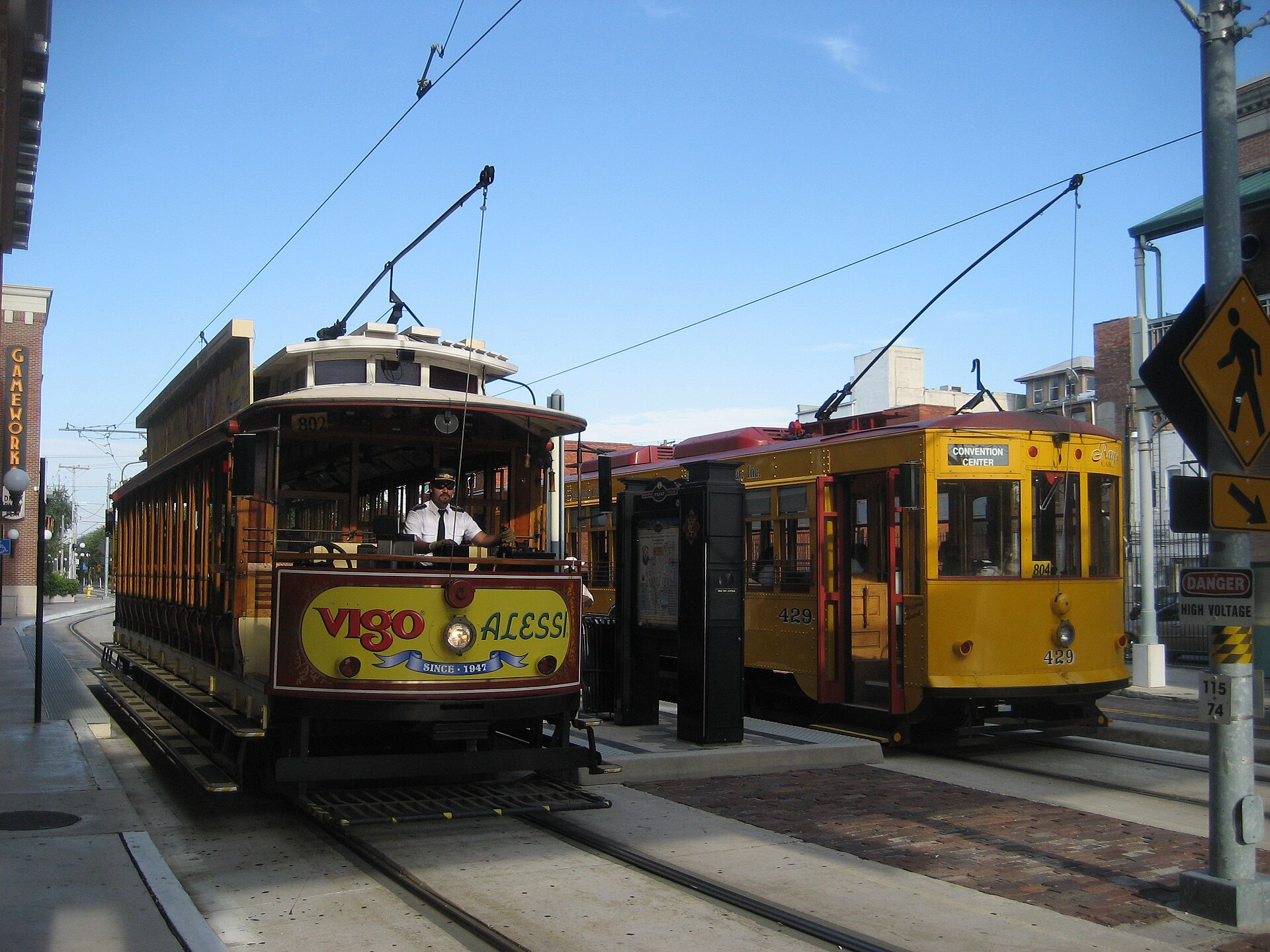
The TECO Line Streetcar is the most underused piece of visitor infrastructure in Tampa. It has been fare-free since 2018, runs 11 stations between Centennial Park in Ybor City and the Hattricks stop in downtown Tampa, comes about every 15 minutes and takes roughly 25 minutes end to end. Service runs Monday to Thursday 7am–11pm, Friday 7am–2am, Saturday 9am–2am and Sunday 8:30am–11pm.
Crucially for Riverwalk planning, the streetcar parallels the southern half of the walk and stops near the convention center, the Channel District and Ybor City. That makes the standard problem of a linear route — how to get back to the car — largely solvable for free. It does not reach the northern end at Armature Works, so a full-length walk still needs a plan for the Tampa Heights end.
Driving and parking
Downtown Tampa has a mix of city-owned garages, private garages and metered street parking. Rates differ between all three, change over time, and rise sharply for events at Benchmark International Arena or the convention center. We are not going to print a number here that will be wrong by the time you read it. Check the current rates on the City of Tampa’s parking pages before you travel, and if there is an event on, assume both scarcity and a premium.
Two practical points that do not change. First, the garages nearest Curtis Hixon and the convention center put you within a few minutes’ walk of the middle of the Riverwalk, which is the right place to start if you are not doing the full length. Second, metered street parking downtown is generally handled through a phone app rather than coins, so install whichever app the meters specify before you arrive rather than standing at the meter reading the small print.
Arriving from elsewhere in the region
The Riverwalk is in Tampa, on the Hillsborough River, on the east side of Tampa Bay. It is not in St. Petersburg and not in Clearwater, and the difference matters because getting between them means crossing the bay.
- From Tampa International Airport: about 9 miles by the airport’s own published figure, 15–25 minutes by car depending on traffic. No bay crossing.
- From Ybor City: about 2 miles. The free TECO Line Streetcar covers this in around 25 minutes end to end, which is usually easier than driving and parking twice.
- From St. Petersburg: roughly 25 miles via the Howard Frankland Bridge on I-275, typically 30–45 minutes and considerably longer in peak traffic. This crosses the bay.
- From Clearwater Beach: roughly 25 to 30 miles, typically 45–70 minutes depending on the route and the season. Also a bay crossing, and Gulf-side beach traffic on a weekend can make it worse again.
If you are staying on the Gulf beaches and want one day in downtown Tampa, do not underestimate the return trip on a Sunday afternoon.
Accessibility
The Riverwalk is one of the more genuinely accessible attractions in the region, and this is not marketing language. The path is paved for its full 2.6 miles, is flat with no stairs on the main route, and is wide enough for wheelchairs, mobility scooters and strollers to pass one another comfortably. Grade changes at bridge approaches are handled with ramps rather than steps.
Restrooms are available at the major parks and inside the public buildings along the route — the convention center, the History Center, the museums and Armature Works. They are not evenly spaced, and the longest gap is on the northern segments, so plan around the Water Works Park and Curtis Hixon facilities if that matters to you.
Shade is the real accessibility constraint. Large stretches of the southern half have very little of it, and Tampa’s summer heat and humidity are severe from roughly May through September. For anyone heat-sensitive, walk the route before 10am or after 6pm, carry more water than feels necessary, and use the air-conditioned buildings along the way as staging posts.
Benches and shaded seating exist but are not abundant. The parks are where you will find them.
Water taxi, streetcar or your own feet?
This is the decision most visitors get wrong, so it is worth laying out plainly.
| Option | Cost | Covers | Best for |
|---|---|---|---|
| Walking | Free | All 2.6 miles | Almost everyone. You see the whole corridor and stop where you like. |
| TECO Line Streetcar | Free | Downtown, Channel District and Ybor City | The return leg, and connecting the Riverwalk to Ybor City. |
| Pirate Water Taxi | $34 adult, $24 child 2–12 | 10 stops on the river and channel, including Davis Islands | Hot days, tired legs, small children, and seeing downtown from the water. |
The Pirate Water Taxi is a hop-on hop-off boat service with its home dock at the Tampa Convention Center, Stop 7. The all-day pass was $34 for adults and $24 for children aged 2 to 12 when we checked the operator’s rates page in September 2026, with an annual membership at $199.95. It runs Monday to Thursday 11:30am–6:30pm and Friday to Sunday 11:30am–9:30pm, and the operator notes that prices vary with timing and availability.
Our honest read: most visitors should not buy it. It is a pleasant boat ride, and the view of downtown from the water is genuinely different from the view from the path. But you are paying $34 a head to travel alongside a free, flat, fully paved walkway that takes under an hour to cover on foot, with a free streetcar available for the return. For a family of four that is $116 substituting for something that costs nothing.
Where it does earn its price: a July afternoon when the heat index is brutal and walking is genuinely unpleasant; a group including someone who cannot manage 2.6 miles but wants to see the whole corridor; a first visit where the boat itself is the point rather than the transport. Those are real cases. “Getting from one end of the Riverwalk to the other” is not one of them.
When to walk it
The Riverwalk is open year-round and never closes, but the experience varies enormously by season and time of day.
November through April is the comfortable window, and it is also when downtown hosts most of its outdoor events. Daytime temperatures are pleasant, humidity drops, and the parks along the path are in regular use for festivals and markets.
May through September is hot and humid, with afternoon thunderstorms that are near-daily in high summer. The path is still perfectly walkable, but do it early in the morning or in the evening. The middle of a July afternoon on the unshaded convention center stretch is not enjoyable and can be genuinely unsafe for anyone vulnerable to heat.
Hurricane season officially runs from June 1 to November 30. The practical implication for a Riverwalk visit is that storm systems can close waterfront venues and cancel events at short notice, and that the low-lying parts of the corridor are exposed to storm surge. Check local advisories if a named system is anywhere in the Gulf.
One fixed date to know: the Seminole Hard Rock Gasparilla Pirate Fest falls on the last Saturday in January — January 30, 2027 for the next edition, with Children’s Gasparilla on January 23, 2027. The parade draws crowds in the region of 300,000 people and closes large parts of downtown and Bayshore Boulevard. The Riverwalk on Gasparilla day is an event, not a walk. Some venues along it, including the Henry B. Plant Museum across the river, close entirely.
Things we would tell a friend
- Walk it north to south. You finish at the water and the food rather than at a parking structure, and the light works better.
- Go on a Thursday if you can. The Tampa Museum of Art’s pay-what-you-will window from 4pm to 8pm turns a $25 ticket into whatever you decide, and the walk afterward lands at the best time of day.
- It is not a loop. Sort out the return before you commit to the full 2.6 miles. The free streetcar handles the southern half; the northern end does not have an equivalent.
- Check the Lightning schedule. A home game at Benchmark International Arena transforms the southern half of the walk and the parking around it. Either lean into it or avoid it.
- Do not build the day around the Florida Aquarium. It is excellent and it is a half day on its own at $45.95 and up. Bolting it onto a Riverwalk afternoon usually means doing both badly.
- Carry water. Fountains exist but are not everywhere, and shade is thin on the southern segments.
- The underpass is fine. The two minutes beneath I-275 look worse than they are and put people off continuing north to Armature Works, which is a mistake.
Where the Riverwalk fits in a Tampa trip
The Riverwalk is the spine of downtown Tampa, and almost everything worth doing in the central city either sits on it or sits within a few minutes of it. That makes it a good first day: you orient yourself, you see the river, you work out where things are, and you spend very little doing it.
What it is not is a substitute for the region’s headline attractions, which are all somewhere else. Busch Gardens is about eight miles north of downtown and is a full-day commitment with its own ticket economics. ZooTampa is on Sligh Avenue, also north of downtown. The Gulf beaches are across the bay. The Riverwalk complements those; it does not replace them.
If you are building a broader itinerary, our guide to the best things to do in Tampa sets the Riverwalk against the rest of the city’s options and covers where the free tier is genuinely strong. If a theme park day is on the list, the ticket math in our Busch Gardens Tampa Bay guide is worth reading before you buy anything, because the gap between the cheapest and the most expensive way to buy the same day runs to close to $100 per person.
Frequently asked questions
Is the Tampa Riverwalk free?
Yes. The path itself is free, has no gate or ticket, and is open 24 hours a day, every day. The parks along it — Curtis Hixon Waterfront Park, MacDill Park, Water Works Park and Cotanchobee Fort Brooke Park — are also free. You only pay for the museums, the aquarium, food, boat rides and parking.
How long is the Tampa Riverwalk?
2.6 miles, or about 4.2 kilometers, running from Armature Works in Tampa Heights at the north end to Sparkman Wharf in the Channel District at the south end. Walking it end to end without stopping takes roughly 50 to 60 minutes.
Is the Riverwalk safe at night?
The path is lit for its full length and is well used into the evening, particularly the southern half near the convention center, Water Street and Benchmark International Arena. The northern segments toward Tampa Heights get quieter after dark. Standard city-center judgment applies: stay on the lit path, keep to the busier stretches late, and be aware that a river runs alongside you the whole way.
Can you bike or scooter on the Tampa Riverwalk?
Wheeled use is permitted on parts of the corridor and restricted on others, and dockless scooter operators serve downtown Tampa. The rules are posted on signage along the route and have changed more than once. Read the signs on the segment you are on rather than assuming a blanket policy, and yield to pedestrians on the narrower stretches.
Are dogs allowed on the Tampa Riverwalk?
Yes, on a leash. There is a fenced dog run at Curtis Hixon Waterfront Park with posted hours and a capacity limit, and a smaller dog area at Water Works Park. Individual restaurants and food halls along the route set their own policies for their outdoor seating.
Where should I park for the Tampa Riverwalk?
The garages near Curtis Hixon Waterfront Park and the Tampa Convention Center put you in the middle of the route, which is the right place to start unless you are walking the full length. Rates vary by garage and by event and rise for Benchmark International Arena and convention center events — check current rates on the City of Tampa’s parking pages before you travel.
Is the Tampa Riverwalk wheelchair accessible?
Yes. The full 2.6 miles is paved, flat and step-free, with ramped approaches at bridge crossings, and the path is wide enough for comfortable two-way passing. The practical limitations are shade and bench spacing rather than the surface.
What is at each end of the Riverwalk?
The north end is Armature Works, a 1910 streetcar barn converted into the Heights Public Market food hall with around 22 vendors and a riverfront lawn. The south end is Sparkman Wharf, a collection of converted shipping-container food vendors around a lawn and beer garden facing the port channel, opened in late 2018.
Can you swim in the Hillsborough River downtown?
Not along the Riverwalk. This is an urban working waterway with boat traffic, seawalls and no swimming access. The splash fountain at Curtis Hixon Waterfront Park is the water feature children actually use.
Do I need the Pirate Water Taxi to see the Riverwalk?
No. The Riverwalk is a walkway, and walking it is free. The water taxi is a separate paid attraction at $34 adult and $24 child that offers a different view and a rest for tired legs. Treat it as an optional experience, not as transport you need.
Is the Tampa Riverwalk worth visiting?
Yes, without much qualification. It is free, it is well maintained, it connects most of what is worth seeing in downtown Tampa, and it is the cheapest genuinely good few hours in the city. Whether the paid attractions along it are worth it is a separate question, and the answer varies: the Tampa Bay History Center at $18.95 is good value, the Tampa Museum of Art is excellent on a pay-what-you-will Thursday, and the water taxi is a luxury rather than a necessity.
Related Tampa Guides
- Best Things to Do in Tampa — the full picture, including how much of the city’s best is free.
- Busch Gardens Tampa Bay Vacation Guide — the ticket math, the Quick Queue trap, and when the Fun Card beats a day ticket.
- Tampa International Airport Visitor Guide — the Airside system explained, garage rates side by side, and the $40 flat taxi rate to downtown.
- Ybor City Visitor Guide — the other end of the free streetcar, free to walk, and a National Historic Landmark district.
- Best Things to Do in St. Petersburg Florida — the free Pier District, the museum cluster, and the Thursday-evening Dali discount.
- Best Beaches Near Tampa — there is no Gulf beach in Tampa. Here is where the sand actually is, and what parking costs.
- Cruises from Tampa and Port Tampa Bay Guide — the terminals are minutes from the south end of the Riverwalk.
- Best Restaurants and Food in Tampa Bay — the food halls at both ends of the walk, plus the Michelin picture and real costs.
- Tampa Bay Events and Festivals Guide — what happens in the riverfront parks, and the January closures to plan around.
- Tampa Nightlife and Live Entertainment Guide — the Riverwalk after dark, and everything programmed along it.
- Getting Around Tampa Bay — how the Riverwalk connects to the streetcar, the buses and everything else.
- Tampa Bay Water Activities, Boating and Fishing Guide — paddling the river, and everything else on the water here.
- Best Museums, Art and Culture in Tampa Bay — the museums along this path, and how to do three in a day on foot.
- Gasparilla Parade Route and Parking — when Curtis Hixon and MacDill Park become festival stages.
- Tampa New Year’s Eve Events — the free fireworks launched over this stretch of river.
Sources and verification
Prices, hours and operating details on this page were checked against the operators’ and the city’s own published information in September 2026. Specifically:
- City of Tampa, Parks and Recreation — Riverwalk length, route endpoints, connected parks, free access and 24-hour opening. Checked September 2026.
- Tampa Bay History Center (tampabayhistorycenter.org) — admission tiers and daily 10am–5pm opening. Checked September 2026.
- Tampa Museum of Art (tampamuseum.org) — admission tiers, Thursday 10am–8pm opening, and the pay-what-you-will window from 4pm to 8pm. Checked September 2026.
- The Florida Aquarium (flaquarium.org) — date-based “Plan-Ahead Pricing” range of $45.95–$47.95 adult and $39.20–$40.95 child, mid-September 2026.
- Pirate Water Taxi (piratewatertaxi.com rates and passes page) — $34 adult and $24 child 2–12 all-day pass, $199.95 annual membership, 10 stops, and operating hours. Checked 19 September 2026.
- TECO Line Streetcar (tecolinestreetcar.org) — fare-free operation, 11 stations, 15-minute frequency and daily service hours. Checked September 2026.
- Henry B. Plant Museum (plantmuseum.com) — opening days and hours and the listed closures, including during Gasparilla. Admission price was not verified; check the museum’s own site.
- Arena name — the Lightning’s arena beside Cotanchobee Park was renamed from Amalie Arena to Benchmark International Arena on 13 August 2025. Checked October 2026.
A note on how this page was made. We have not visited these venues on your behalf, conducted interviews, tested the attractions, or taken original photographs, and nothing here should be read as implying that we did. This is a desk-researched guide built from operators’ own published figures, the city’s published information about the corridor, and openly licensed photography, with the date of every check stated so you can judge how stale it is. Where we could not verify something — downtown parking rates and Henry B. Plant Museum admission are the two on this page — we have said so rather than guessing.
Florida attraction pricing moves every season, and several venues here use dynamic, date-based pricing. Confirm the number on the operator’s own site for the date you are traveling before you budget around it.
Photo credits
Curtis Hixon Waterfront Park and the Tampa Riverwalk along the Hillsborough River: photo by Barbthebuilder, CC BY-SA 3.0, via Wikimedia Commons.
The fenced dog run at Curtis Hixon Waterfront Park: photo by DanTD, CC BY-SA 4.0, via Wikimedia Commons.
The Tampa Bay History Center on Water Street: photo by Christopher Hollis, Public domain, via Wikimedia Commons.