There are chickens in the street. Not one escaped bird — flocks of them, crossing East 7th Avenue at their own pace, roosting in the oaks outside the cigar shops, ignoring traffic with total confidence. They are protected by city ordinance, and they are descended from birds that Cuban cigar workers brought up from Key West in the 1880s. Nothing tells you what ybor city is faster than watching a rooster stop a pickup truck on a National Historic Landmark street.
This is Tampa’s most visited neighborhood and the one most often described badly. Half the guides treat it as a nightlife strip with some old buildings attached. The other half treat it as a museum piece that stopped in 1935. It is neither. It is a working district of about 950 surviving historic buildings where people still live, where a five-generation Spanish restaurant has served since 1905, and where the same block that holds a state-park museum turns into a bar crawl after dark.
This guide covers what actually happened here, what is worth your time and money, what the district costs — very little, if you want it to — and the honest difference between Ybor City at two in the afternoon and Ybor City at two in the morning.
The short answer
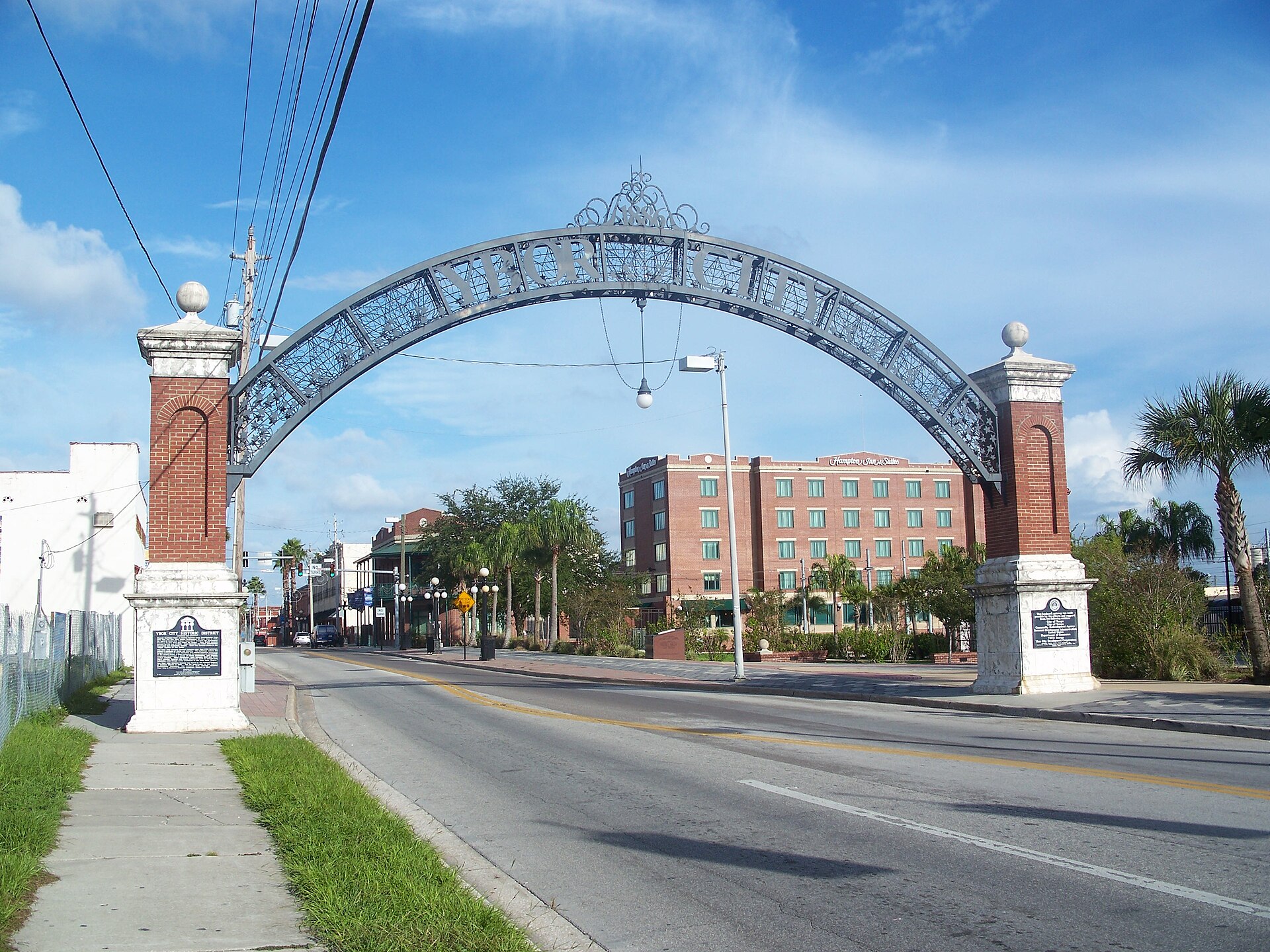
Ybor City is a historic neighborhood about two miles northeast of downtown Tampa, founded in 1885 by the Spanish-born cigar manufacturer Vicente Martinez Ybor and built by Cuban, Spanish, Italian and Eastern European Jewish immigrants around an industry that made it the Cigar Capital of the World. It was designated a National Historic Landmark district on 14 December 1990 and is one of only two in Florida.
The core is East 7th Avenue — La Séptima — between roughly 15th and 21st Streets. You can see the essential district in two hours on foot. It is free to walk, and the TECO Line Streetcar from downtown is also free, which makes a half day here one of the cheapest good things to do in Tampa.
The one paid attraction we would put money on first is the Ybor City Museum State Park at $4 per person. Everything else — the architecture, the chickens, the cigar shops, the mutual aid society buildings — costs nothing to look at.
What Ybor City costs
| What | Cost (checked September 2026) | Notes |
|---|---|---|
| Walking the district | Free | 7th Avenue and the surrounding grid, any time |
| TECO Line Streetcar from downtown | Free | Fare-free since 2018. 11 stations, every 15 minutes |
| Ybor City Museum State Park | $4 per person · under 5 free | 1818 E. Ninth Ave. Wed–Sun 9am–4pm only |
| Looking at the cigar rollers | Free | Several shops roll in the window. Buying is optional; tipping is decent |
| Columbia Restaurant, flamenco show | Ticketed separately from dinner | Siboney Room, nightly Monday to Saturday. Book ahead |
| Street parking and district lots | Varies by lot, time and event | Rates rise sharply on weekend nights |
A couple can spend a genuinely good half day in Ybor City for about $8 plus coffee. The same couple can spend $300 on dinner, a show, cigars and drinks. Both are legitimate versions of this neighborhood, and almost no guide tells you the first one exists.
What actually happened here
The history is the reason to come, and it is more specific and stranger than the plaques suggest.
The move from Key West
Vicente Martinez Ybor was a Spanish-born cigar manufacturer who had already moved his operation twice — out of Cuba during the Ten Years’ War, and then to Key West. Key West had labor unrest, fires, and no room to grow. In 1885 he bought land in a stretch of pine scrub and swamp about two miles northeast of what was then a small town of a few thousand people, and started building.
He was not just building a factory. He was building a company town with housing, and he was recruiting an entire skilled workforce to move to it. By the end of 1886, according to the National Park Service, the Ybor and Haya factories were in full operation, several hundred worker houses were completed and occupied, and commercial premises were open for business — all in the blocks between what are now 6th and 9th Avenues and 12th and 14th Streets. In 1887 the whole thing was annexed into the City of Tampa.
That is a neighborhood going from swamp to functioning industrial district in roughly eighteen months. Tampa’s population multiplied. The cigar industry it created ran at full strength until the 1930s.
Who lived here
This is the part that makes Ybor unusual among American immigrant neighborhoods. It was not one community. Cubans — both white and Afro-Cuban — came with the industry from Key West and Havana. Spaniards came from Asturias and Galicia, often into supervisory roles, which created a friction that lasted generations. Sicilians arrived in large numbers, initially outside the cigar trade, and moved into groceries, farming and eventually into the factories. Romanian and other Eastern European Jewish families ran much of the retail on 7th Avenue.
The National Park Service describes the district as the most outstanding collection of structures associated with late 19th- and early 20th-century Cuban and Spanish settlement in the United States, with strong Italian and other ethnic associations. That phrasing is doing a lot of work: this was a genuinely multilingual, multiethnic industrial neighborhood in the segregated American South, and it did not function like the rest of Florida.
The mutual aid societies
Each community built a club, and the clubs are the most important buildings in Ybor City after the factories. El Centro Español, El Centro Asturiano, L’Unione Italiana and El Círculo Cubano were not social clubs in the country-club sense. Members paid regular dues and received, in return, a cantina, a theater, a ballroom, a library, and — the significant part — medical care, including access to the society’s own doctors and hospital.
Historians frequently point to these societies as one of the earliest working examples of prepaid group medical care in the United States, decades before anything comparable existed nationally. Working-class immigrants organized it for themselves because nothing else was going to.
Several of the society buildings survive, and their scale is the surprise — these are large, ornate, purpose-built structures on ordinary neighborhood corners. Look up as you walk. The buildings are the argument.
The lector
Cigar rolling is quiet, repetitive handwork. In Ybor City’s factories, the workers hired and paid — out of their own wages, not the company’s — a lector who sat on a raised platform and read aloud all day: newspapers in the morning, novels and political writing in the afternoon. Workers voted on the material.
The result was a factory floor of manual laborers who were unusually well read and unusually politically organized, which is exactly why the practice was eventually suppressed by the manufacturers in the 1930s. José Martí came to Ybor City repeatedly to raise money and support for Cuban independence, and the cigar workers funded a meaningful share of it out of their pay.
The decline, and what nearly finished it
Machine-rolled cigars, the Depression, changing tastes and the loss of the lector tradition hollowed out the industry through the 1930s and 1940s. The population moved out to the suburbs. What happened next did more damage than the economics: mid-century urban renewal cleared large sections of the neighborhood, and the construction of Interstate 4 cut straight through it.
What you walk today is what survived that — a district described as three major enclaves rather than one continuous fabric, because the connecting parts were demolished. Knowing that changes how the gaps and parking lots between the historic blocks read. They are not undeveloped land. They are missing buildings.
National Historic Landmark designation came in 1990, and the revival that followed has been real but uneven, oscillating between heritage district and entertainment district depending on the decade and the hour.
The chickens
They are real, they are protected, and they are the single most photographed thing in the neighborhood.
The birds are generally held to be descendants of chickens brought north from Key West by Cuban cigar workers, kept for eggs and meat in backyards that have since become parking lots and bars. When the yards went, the chickens stayed. They are now a protected free-roaming population under city ordinance, and there is a volunteer group that looks after the flock’s welfare.
Practical notes. Do not feed them — it concentrates them on roads and shortens their lives. Do not chase them for a photograph; they are wild birds and they are faster than you. And if you are staying overnight anywhere near 7th Avenue, understand that roosters begin at first light and have no interest in your plans.
Getting oriented
The grid is simple once someone explains it, and nobody ever does. Numbered avenues run east to west and numbered streets run north to south. East 7th Avenue is the commercial spine, with 8th and 9th Avenues quieter and more residential to the north and the older industrial and warehouse fabric to the south.
The part you will walk sits roughly between 15th and 22nd Streets, with the museum a few blocks north at 9th Avenue and 19th Street. Interstate 4 runs along the northern edge, and it is the reason the district stops as abruptly as it does in that direction — the highway went through the neighborhood rather than around it.
Everything worth seeing on a first visit is within a rectangle you can cross on foot in fifteen minutes. You do not need a car once you are here, and having one is mostly a liability.
What to do, in the order we would do it
Ybor City Museum State Park — $4
Start here if you want the district to make sense. The museum occupies the historic Ferlita Bakery at 1818 E. Ninth Ave, a working Sicilian bakery that supplied the neighborhood’s Cuban bread. Admission is $4 per person, children five and under free, and it opens Wednesday to Sunday, 9am to 4pm.
Note those days carefully. It is closed Monday and Tuesday, and it closes at 4pm, which means a visitor who arrives in Ybor City in the late afternoon for dinner and a walk will never see it. This catches people constantly.
Inside are self-guided exhibits with written and audio interpretation plus a video presentation covering the cigar industry and the lives of the immigrant communities. There is an ornamental garden. It is a small museum, not a major institution, and it is priced accordingly — at $4 it is the best value per dollar of any paid attraction in Tampa.
Walk 7th Avenue slowly
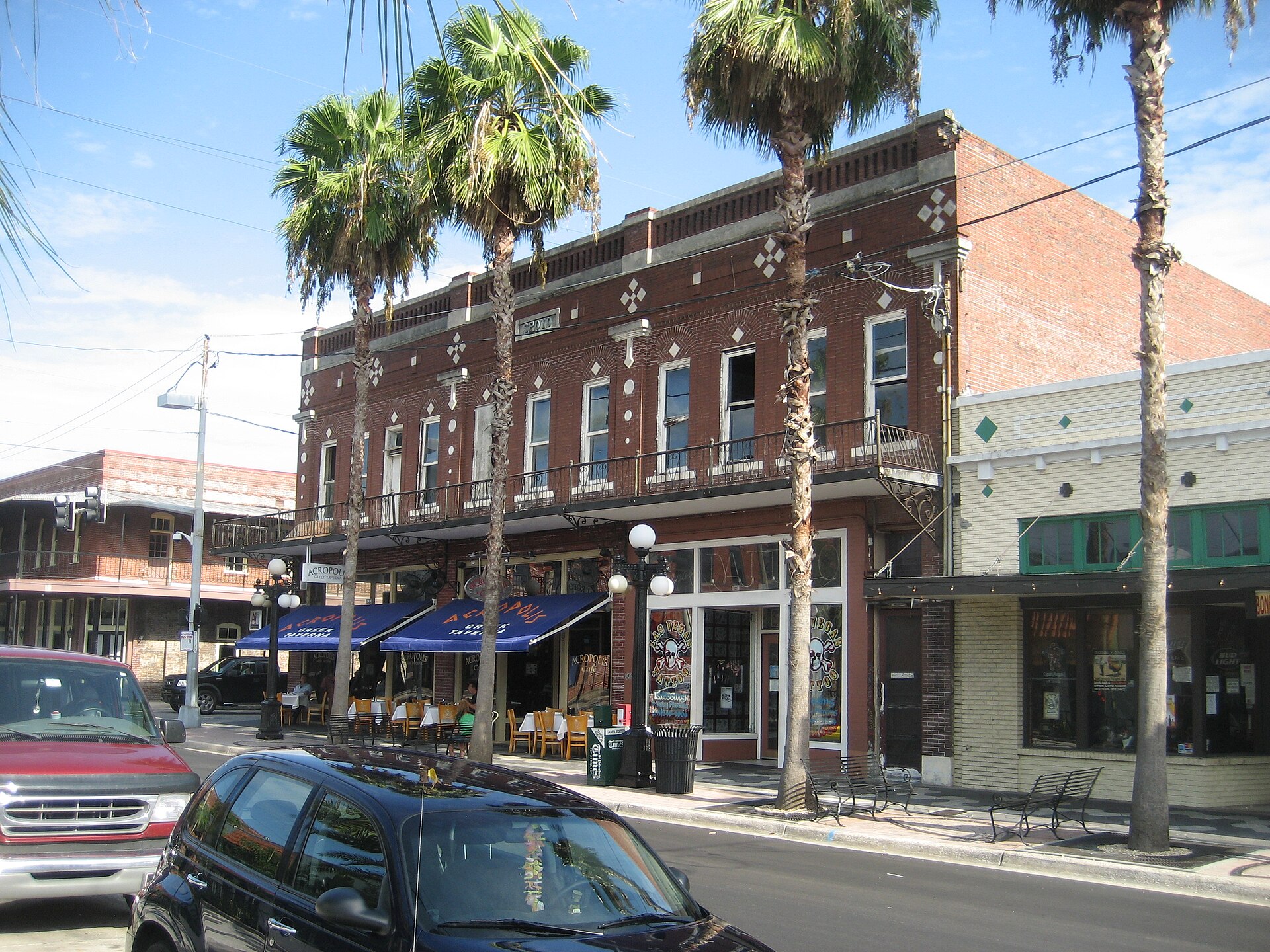
La Séptima between about 15th and 21st Streets is the spine. The architecture is the point: red brick, cast-iron and wrought-iron balconies, decorative brickwork, hand-painted tile, and a density of two- and three-story commercial buildings that almost nowhere else in Florida retains.
Walk it once on each side of the street, because the balconies and upper facades are what you are actually here to see, and you cannot see the side you are walking on. Read the historical markers. Look for the ghost signs.
The buildings to look for
Four kinds of building tell the story, and once you can distinguish them the walk stops being a shopping street.
The social clubs. The mutual aid societies built the grandest structures in the neighborhood, and their survivors are startlingly large for their corners — ballrooms, theaters and cantinas stacked into ornate multi-story buildings put up by working people out of weekly dues. El Centro Asturiano, El Círculo Cubano and L’Unione Italiana all left buildings behind. Several now operate as event venues, which means access depends entirely on what is booked; treat the exteriors as the reliable part and any interior as a bonus.
The factories. The cigar factories were big, plain, well-lit brick boxes with rows of tall windows, usually three stories, often with a corner tower. They were designed for daylight on the rolling floor. Most of the survivors have been converted to offices, apartments or event space. They read as anonymous until you know what the window pattern is for, and then you cannot stop spotting them.
The casitas. The small wooden shotgun cottages on the side streets were built as cigar-worker housing, often by the factory owners and sold or rented to the workforce. They are narrow, raised on piers, with a porch across the front. They are also lived in, so look from the sidewalk.
The 7th Avenue commercial frontage. Two and three stories, red brick, decorative brickwork at the parapet, and the wrought-iron and cast-iron balconies that give the street its character. The upper floors were apartments, offices and clubrooms; the ground floors were groceries, pharmacies, cafes and saloons. Walk both sides of the street, because the facades are the exhibit and you cannot see the one above your head.
The Columbia Restaurant
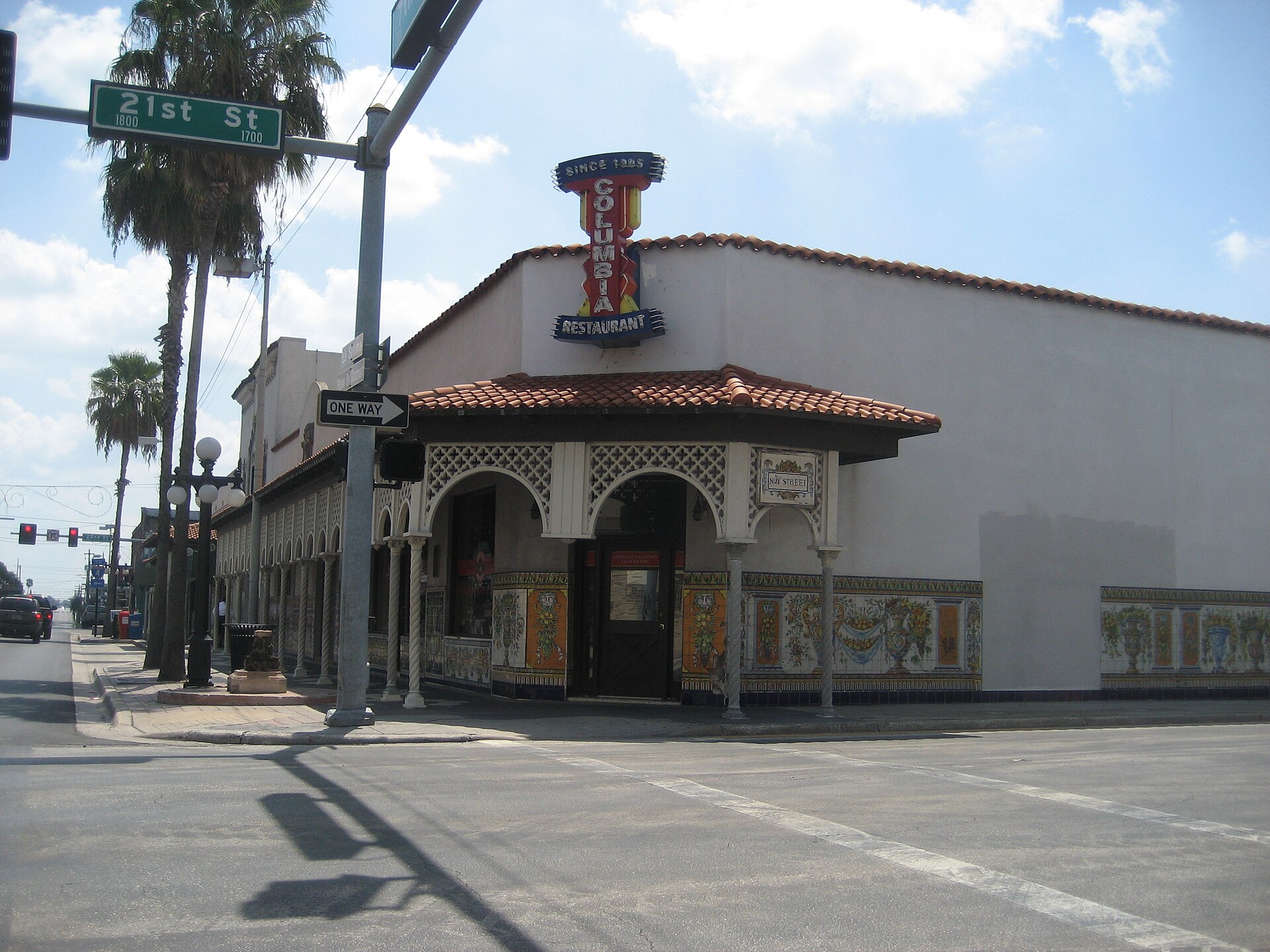
Opened in 1905, the Columbia is Florida’s oldest restaurant and describes itself as the largest Spanish restaurant in the world. It occupies an entire city block with around 1,700 seats across 15 dining rooms, and it is still run by the fifth generation of the founding family.
Even if you do not eat there, walk the exterior. The hand-painted tile work on the corner at 21st Street is extraordinary and it is free to look at.
A flamenco show runs nightly Monday through Saturday in the Siboney Room. It is ticketed separately from the meal and it books out, particularly at weekends and in season — reserve rather than turning up. Detailed restaurant comparison is beyond the scope of this page; this one is here as a historic entity rather than as a dining recommendation.
Watch a cigar being rolled
Several shops on and around 7th Avenue still hand-roll, usually in a window or at a bench near the front. Watching costs nothing and nobody minds, provided you behave like a guest rather than a tourist with a camera. If you spend ten minutes watching someone work, buy something small or tip; that is the courtesy.
If you do want to buy, the thing worth knowing is that “hand-rolled in Ybor City” and “made in Ybor City from scratch” are different claims, and so is the tobacco’s origin. Ask. Anyone rolling in a window will tell you exactly what they are working with, and the ones who are proud of it will tell you at length.
The Cuban sandwich, and why Tampa’s has salami
This is a history question disguised as a lunch question, which is why it belongs on this page rather than on a restaurant list.
The Tampa Cuban sandwich is built on Cuban bread with roast pork, ham, Swiss cheese, mustard and pickle — and Genoa salami, which Miami’s version does not include. The salami is the Sicilian contribution. Ybor City’s Italian community lived and worked alongside the Cuban and Spanish communities in a way that did not happen in Miami, and the sandwich records that. The argument between the two cities about which version is correct has been running for the better part of a century and is not going to be settled here.
The bread matters as much as the filling. Ybor City’s Cuban bread is a long, soft-crumbed loaf traditionally baked with a palmetto frond laid along the top, which splits the crust as it rises and leaves the seam down the middle. La Segunda Central Bakery, opened in Ybor City in 1915, still supplies the neighborhood and much of the region.
Where to eat one is a separate question and a matter of fierce local disagreement; we cover dining comparison elsewhere on this site rather than pretending there is a single right answer.
Centro Ybor
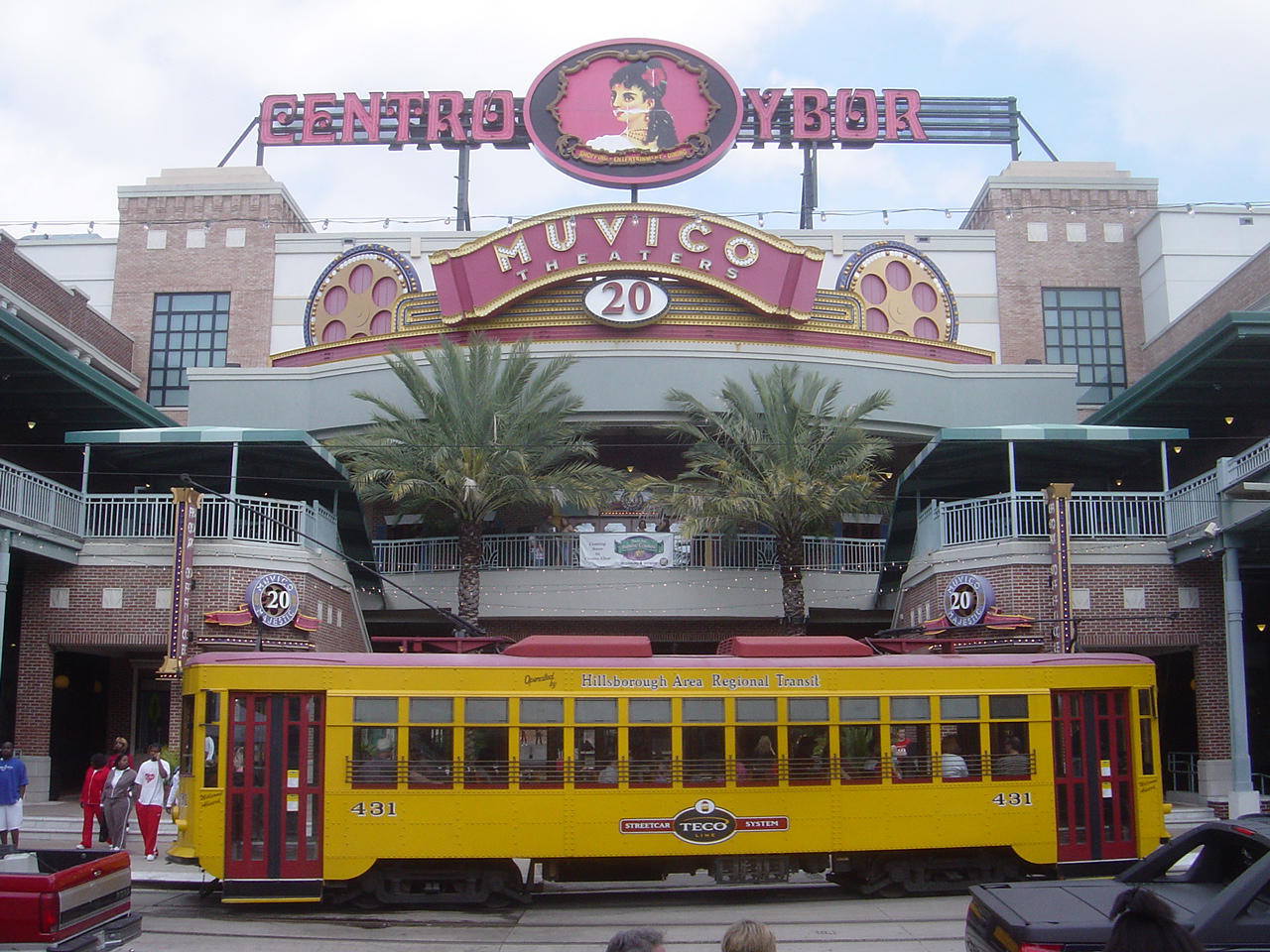
The Centro Ybor complex on 7th Avenue is the district’s modern commercial anchor — cinema, bars, restaurants and shops built around and into historic frontage. It is convenient, it is where the streetcar stops, and it is not the reason to come to Ybor City. Treat it as infrastructure rather than as an attraction.
José Martí Park
A small park on East 8th Avenue marks the site of a boarding house where José Martí stayed during his fundraising visits. Its oddity is that the land is widely reported to be held by the Republic of Cuba, deeded in the 1950s, which would make it an unusual piece of ground in the middle of Tampa. We have not verified the current title, and you should treat the detail as an interesting claim rather than a settled fact. The park itself is small, quiet and takes five minutes.
Ybor City by day and Ybor City by night
These are close to two different neighborhoods sharing a street, and being clear about it is more useful than pretending otherwise.
Daytime, roughly 10am to 6pm
Quiet, walkable, historic. Cigar shops, coffee, the museum, the architecture, the chickens. Families are comfortable here. Most of what is genuinely distinctive about Ybor City is open and visible. This is when we would bring anyone who is here for the history, and it is when the district is at its cheapest.
The limitation is that a fair number of businesses on 7th Avenue are bars that do not open until the evening, so the street can feel emptier than its reputation suggests on a Tuesday afternoon. That is not a problem — it is the reason you can actually look at the buildings.
Evening, roughly 6pm to 10pm
The best compromise window. Restaurants open, the street lights come on, the buildings look their best, and the heavier nightlife has not started. Dinner and a walk in this window is the single best way to experience Ybor City if you only get one visit.
Late night, 10pm onward, especially Friday and Saturday
7th Avenue becomes one of the largest concentrated bar districts in Florida. Sections of the street close to traffic, crowds are large and young, and the atmosphere is a nightlife strip rather than a heritage district. If that is what you came for, it delivers exactly that. If you came for a historic neighborhood, do not come at this hour and then be surprised.
Safety, honestly
Ybor City has a reputation that runs ahead of the experience most visitors actually have, and it is worth separating the two.
By day the district is straightforwardly fine. It is a busy commercial neighborhood with police presence, foot traffic and open businesses, and ordinary city awareness is all that is required.
Late at night it is a dense entertainment district with a large drinking crowd, and it carries the risks that any such district carries anywhere: alcohol-related incidents, occasional fights, crowded streets at closing time, and opportunistic theft from parked cars. There has been serious violence in the district in past years, as there has been in comparable entertainment districts in other American cities, and the city has responded with measures including increased policing and street closures on busy nights.
We are not going to quote crime statistics, because the ones circulating online are usually stale, badly geographically scoped, or both, and a number presented without context does more harm than good. The practical advice is simple and unglamorous: park in a lit, staffed lot rather than on a dark side street; leave nothing visible in the car; stay on 7th Avenue and the immediately adjacent blocks rather than wandering the residential grid at 2am; and use the same judgment about closing time that you would in any bar district.
Families visiting during the day do not need to think about any of this.
Getting there and parking
The free streetcar
The TECO Line Streetcar is free and has been since 2018. It runs 11 stations between Centennial Park in Ybor City and the Hattricks stop in downtown Tampa, comes about every 15 minutes, and takes roughly 25 minutes end to end. Service runs Monday to Thursday 7am–11pm, Friday 7am–2am, Saturday 9am–2am and Sunday 8:30am–11pm.
Those Friday and Saturday hours to 2am are not an accident — the streetcar is deliberately timed to serve Ybor City’s nightlife, which makes it the single best answer to the drinking-and-driving problem in this neighborhood. If you are staying downtown or in the Channel District, there is no good reason to drive here.
The streetcar also connects Ybor City directly to the Tampa Riverwalk, which makes a combined day genuinely easy: walk the Riverwalk, ride the streetcar to Ybor, walk 7th Avenue, ride back. Total transport cost, nothing.
Driving and parking
Ybor City has surface lots, a district garage and metered street parking. Rates and availability vary considerably by day and hour, and weekend nights are both expensive and scarce. We are not going to print a figure that will be wrong by the time you read it — check current rates before you go, and on a Friday or Saturday night assume you will pay a premium and walk further than you expected.
On a weekday daytime visit, parking is generally easy and cheap. That is another argument for coming in daylight.
Distances
- From downtown Tampa: about 2 miles. Free streetcar, roughly 25 minutes end to end, or under 10 minutes by car.
- From Tampa International Airport: about 11 miles east. See our airport guide for transfer costs; the $40 flat taxi rate applies to downtown, not to Ybor specifically.
- From Busch Gardens: roughly 7 miles south. Easy to combine, though both want a good chunk of a day.
- From St. Petersburg or Clearwater: 22 to 25 miles, and it means crossing Tampa Bay. Allow 40 to 60 minutes and more at peak.
Visiting a living neighborhood
Ybor City is not a heritage attraction with residents in it. It is a residential and working neighborhood with a heritage designation, and the distinction matters in practice.
- The houses are houses. The small wooden shotgun cottages on the side streets — casitas, built for cigar workers — are lived in. Photograph the street, not through the windows.
- Do not feed the chickens. It draws them onto roads and into conflict with traffic and with each other.
- Tip and buy. The cigar rollers, the musicians and the small independent shops are what keeps the district from becoming a strip of chains. Watching someone work for ten minutes and leaving with nothing is the one behavior locals actually mind.
- Respect the noise line at night. People sleep a block from the bars.
- Learn one thing before you come. Knowing who the lector was, or why the clubs matter, changes an hour on 7th Avenue from a shopping street into something considerably more interesting.
How long to give it
- 90 minutes: streetcar in, walk 7th Avenue both sides, coffee, streetcar out. Free.
- Half a day: add the Ybor City Museum State Park at $4 and the side streets, and eat somewhere on 7th. Wednesday to Sunday only, and finish the museum before 4pm.
- A full day: combine with the Riverwalk via the free streetcar — Ybor in the morning while the museum is open, the river in the afternoon, dinner back in Ybor.
- An evening: arrive around 6pm, walk while the light goes, eat, and decide at about 10pm whether you want the other version of the neighborhood.
Frequently asked questions
Why are there chickens in Ybor City?
They are held to be descendants of chickens kept by Cuban cigar workers who brought them from Key West in the 1880s, when backyard poultry was normal in a working neighborhood. The yards went; the chickens did not. The free-roaming flock is now protected by city ordinance and looked after by volunteers. Do not feed them.
Is Ybor City worth visiting?
Yes, and particularly if you have any interest in immigrant, labor or industrial history. It is one of only two National Historic Landmark districts in Florida, it is free to walk, and the free streetcar from downtown makes it essentially a no-cost half day. If you want only nightlife, it delivers that too — but you are then skipping the reason it is nationally significant.
Is Ybor City safe?
By day, yes, with ordinary city awareness. Late at night it is a large, busy bar district and carries the risks that go with one: crowds at closing time, alcohol-related incidents and theft from parked cars. Park in lit, staffed lots, keep to 7th Avenue and the adjacent blocks, and use the same judgment you would in any nightlife district.
How do I get to Ybor City from downtown Tampa?
Take the TECO Line Streetcar. It is free, runs every 15 minutes, takes about 25 minutes end to end, and runs until 2am on Friday and Saturday nights. It is the best option by a distance and it removes the parking problem entirely.
What is Ybor City famous for?
Cigars. Vicente Martinez Ybor founded it in 1885 and it became known as the Cigar Capital of the World, sustained by Cuban, Spanish, Italian and Eastern European Jewish immigrant communities. It is also known for the mutual aid societies those communities built, for the lector tradition on the factory floors, for José Martí’s fundraising visits, and today for the free-roaming chickens and the 7th Avenue nightlife.
How much does the Ybor City Museum cost?
$4 per person, with children five and under free. It is open Wednesday to Sunday from 9am to 4pm, at 1818 E. Ninth Ave, and it is closed Monday and Tuesday. It is housed in the historic Ferlita Bakery.
How long do you need in Ybor City?
Ninety minutes covers 7th Avenue and gives you the feel of the place. Half a day lets you add the museum and the side streets properly. A full day works well if you pair it with downtown Tampa using the free streetcar.
Can you still buy hand-rolled cigars in Ybor City?
Yes. Several shops on and around 7th Avenue roll on the premises, often in the front window, and watching costs nothing. If you plan to buy, ask where the tobacco is from and where the cigar was rolled — reputable shops answer both questions without hesitating.
Is Ybor City good for families?
During the day, yes — the museum, the architecture, the chickens and the cigar-rolling windows all work well with children, and the streetcar is its own attraction for younger ones. After about 10pm on a weekend it is an adult nightlife district and not a family environment.
What is the best time of day to visit Ybor City?
Late afternoon into early evening, roughly 4pm to 9pm, gives you open businesses, good light on the brickwork and dinner, without the late-night crowds. If the museum matters to you, come earlier — it closes at 4pm and is shut Monday and Tuesday.
How far is Ybor City from Tampa airport?
About 11 miles. The taxi flat rate published for downtown Tampa does not apply to Ybor City, so expect a metered fare or a rideshare plus the airport’s $5.00 service fee.
Related Tampa Guides
- Tampa Riverwalk and Downtown Visitor Guide — the other end of the free streetcar, and the natural pairing for a full day.
- Best Things to Do in Tampa — where Ybor City sits against everything else in the city.
- Tampa International Airport Visitor Guide — transfer costs and options if you are arriving by air.
- Busch Gardens Tampa Bay Vacation Guide — about 7 miles north, and a full day in its own right.
- Best Things to Do in St. Petersburg Florida — across the bay: a free pier, a museum cluster and a mural district.
- Best Restaurants and Food in Tampa Bay — the Michelin list, the deviled crab, and what a meal really costs once tax and tip are on it.
- Tampa Bay Events and Festivals Guide — Gasparilla 2027 dates, road closures, and the full annual calendar.
- Tampa Nightlife and Live Entertainment Guide — the 3am last call, the 2am streetcar, and how to get home without paying surge.
- Shopping in Tampa Bay — the districts and formats compared, with the sales tax rules and what is worth buying.
- Gasparilla Pirate Festival Guide — including the Sant’Yago Knight Parade, which runs through Ybor.
- Cruises from Tampa and Port Tampa Bay Guide — the three terminals sit in the Channel District, a short ride on the free streetcar, which makes Ybor an easy pre-cruise night.
Sources and verification
Checked in September 2026:
- National Park Service — the founding sequence from Key West to Tampa in 1885, the state of the district by the end of 1886, annexation into Tampa in 1887, the National Historic Landmark designation of 14 December 1990, the count of surviving historic buildings, the three-enclave structure of the district, and the assessment of its national significance. Checked 19 September 2026.
- Florida State Parks (floridastateparks.org) — Ybor City Museum State Park admission of $4 per person, free entry for children five and under, opening Wednesday to Sunday 9am–4pm, the address at 1818 E. Ninth Ave, the Ferlita Bakery building, and the self-guided exhibit and video format. Checked 19 September 2026.
- TECO Line Streetcar (tecolinestreetcar.org) — fare-free operation, 11 stations, 15-minute frequency and the daily service hours including the 2am Friday and Saturday finish. Checked September 2026.
- Columbia Restaurant — the 1905 opening, the full-block footprint, the family ownership and the nightly Monday-to-Saturday flamenco in the Siboney Room. Checked September 2026.
What we have deliberately not done: quoted crime statistics for the district, because the figures in circulation are typically outdated or drawn at a geographic scope that does not match the area a visitor actually walks; verified the current title to the José Martí Park parcel, which is widely reported to be held by the Republic of Cuba but which we could not confirm; or listed restaurants and bars beyond the Columbia as a historic entity, since dining belongs elsewhere on this site.
We have not visited this neighborhood on your behalf, interviewed anyone, taken original photographs or tested any business described here, and nothing above should be read as implying that we did. This is a desk-researched guide built from the National Park Service’s and Florida State Parks’ own published material, operators’ published information, and openly licensed photography, dated so you can judge how current it is. Prices and opening days in Florida move — confirm before you travel.
Photo credits
East 7th Avenue in Ybor City: photo by Infrogmation of New Orleans, CC BY-SA 3.0, via Wikimedia Commons.
The Columbia Restaurant at 21st Street: photo by Infrogmation of New Orleans, CC BY-SA 3.0, via Wikimedia Commons.
Centro Ybor with a TECO Line streetcar: photo by Bobak, CC BY-SA 2.5, via Wikimedia Commons.