The usual answer to the best time to visit tampa is “March,” and the usual answer is wrong for most people. According to the National Weather Service’s own 1991–2020 climate normals for Tampa International Airport, the driest month of the year here is November, at 1.40 inches of rain — barely half of what March gets and less than a sixth of August. November also has a normal mean temperature of 69.8°F, sits after hurricane season closes, and falls before the holiday price surge.
Almost no travel page will tell you that, because almost no travel page looks at the numbers. This one does. Below is the full official normals table, what it actually means for a trip, when the water is warm enough to swim in, and a month-by-month verdict that weighs weather against crowds, prices and what is on.
The short answer
- Best overall: November. Driest month of the year, comfortable temperatures, hurricane season ending, and the crowds and prices have not arrived yet.
- Best for the beach: May or October. The water is warm, the rain has not started or has just stopped, and spring break is over or has not begun.
- Best weather, worst crowds: March. Superb conditions, and everybody knows it.
- Cheapest: late August and September — and there is a reason, which is that this is the hottest, wettest, stormiest stretch of the year and the peak of hurricane season.
- Avoid if you can: September for weather risk, and the last weekend of January if you want a quiet Tampa, because that is Gasparilla.
The official numbers
These are the National Weather Service 1991–2020 climate normals for Tampa International Airport, the standard 30-year reference period, read from the NWS Tampa Bay office’s own published tables. Degrees Fahrenheit, inches of rain.
| Month | Normal high | Normal low | Normal mean | Normal rainfall |
|---|---|---|---|---|
| January | 71.3 | 52.8 | 62.0 | 2.65 in |
| February | 74.0 | 55.5 | 64.7 | 2.62 in |
| March | 77.8 | 59.3 | 68.6 | 2.52 in |
| April | 83.0 | 64.8 | 73.9 | 2.55 in |
| May | 88.3 | 70.6 | 79.5 | 2.60 in |
| June | 90.5 | 75.4 | 82.9 | 7.37 in |
| July | 91.0 | 76.6 | 83.8 | 7.75 in |
| August | 91.2 | 76.8 | 84.0 | 9.03 in |
| September | 90.2 | 75.3 | 82.7 | 6.09 in |
| October | 85.6 | 69.2 | 77.4 | 2.34 in |
| November | 78.9 | 60.7 | 69.8 | 1.40 in |
| December | 73.9 | 55.9 | 64.9 | 2.56 in |
| Annual | 49.48 in |
The single most useful thing in that table
June, July, August and September account for 30.24 inches of the year’s 49.48 — about 61 percent of Tampa’s annual rainfall in four months. The remaining eight months share 19.24 inches between them.
That is not a city with a rainy season and a dry season in the usual sense. It is a city with a four-month wet season of near-daily convective storms and eight months of genuinely dry weather. Once you understand that, the whole calendar falls into place — and so does the fact that Tampa’s outdoor event season runs from October to April and effectively stops in between.
Two seasons, not four
The dry season, roughly October to May
Warm to hot days, comfortable nights, low humidity by Florida standards, and rain that arrives as occasional frontal systems rather than daily storms. Monthly rainfall sits between 1.40 and 2.65 inches for all eight of these months — remarkably consistent.
This is when the region is at its best and when it is busiest. Every major outdoor festival, spring training, the full sports calendar and the entire snowbird season all sit inside this window.
The wet season, roughly June to September
Hot, humid, and wet in a specific way that surprises visitors. The rain is not all-day drizzle; it is a near-daily afternoon convective thunderstorm — often violent, often brief, frequently followed by sunshine. Mornings are commonly clear.
The practical implication is that a wet-season day is not a write-off; it is a day with a different shape. Beach and outdoor activity in the morning, indoors from roughly 2pm to 5pm, back outside in the evening. Locals plan this way as a matter of course.
What does not work in the wet season is a fixed afternoon outdoor plan with no alternative, and that includes long open-water boat trips and unshaded theme park days.
Lightning, which is the actual hazard
Tampa’s nickname as a lightning capital is earned, and it is the part of the wet season to take seriously. The storms are genuinely electric, and the rule is the unglamorous one: if you can hear thunder, you are close enough to be struck. Get off the beach, off the water and out of the open, and stay inside for half an hour after the last thunder.
This matters more here than in most vacation destinations, because the storms build fast and a Gulf beach is exactly the wrong place to be under one.
Why the storms happen, and why they happen in the afternoon
The mechanism is worth understanding because it makes the whole wet season predictable rather than random.
Florida is a narrow peninsula with warm water on both sides. On a summer morning the land heats faster than the sea, and by late morning cooler air starts pushing inland from both coasts — a sea breeze from the Gulf on the west and another from the Atlantic on the east. Where those two boundaries collide somewhere over the middle of the peninsula, the air has nowhere to go but up, and it goes up through an atmosphere loaded with moisture.
That is the afternoon thunderstorm. It is not weather blowing in from somewhere else; it is manufactured locally, on site, almost every summer day, and it fires at roughly the same time because the heating follows the sun.
Three practical consequences fall out of this:
- Mornings really are reliably clear in the wet season, because the engine has not started yet.
- The exact position of the storms shifts daily with the wind, which is why one beach gets soaked while another ten miles away stays dry.
- It usually clears in the evening, once the heating stops and the convection collapses.
It is also why Florida leads the United States in lightning. Sea-breeze convergence produces exactly the kind of tall, vigorous storm cell that generates a great deal of it.
Reading a Tampa forecast
A “60 percent chance of rain” in a Tampa July does not mean what a visitor from a temperate climate assumes. It does not mean a 60 percent chance of a wet day; it means roughly that 60 percent of the forecast area is expected to see measurable rain at some point — almost certainly in a short window during the afternoon.
Between June and September, treat any forecast percentage below about 70 as “there will be a storm somewhere this afternoon, quite possibly not on top of you, and it will pass.” Plan the morning and the evening, keep the afternoon flexible, and do not cancel anything on the strength of a percentage.
The number that deserves more attention in summer is not the rain probability but the heat index, and any excessive heat advisory the National Weather Service issues for the day.
Water temperature
Air temperature is not what determines whether you swim. These are approximate seasonal averages for Tampa Bay and the adjacent Gulf, drawn from sea-temperature records compiled from NOAA buoy and satellite observations. They are not official NWS normals and we are labeling them as approximate rather than presenting them as equivalent to the table above.
| Season | Approx. average water temperature | What that means |
|---|---|---|
| Winter (Dec–Feb) | around 65.8°F, with January the coldest at about 63.9°F | Cool. Northern visitors swim; Floridians generally do not |
| Spring (Mar–May) | around 74.8°F | Comfortable and warming fast. May is excellent |
| Summer (Jun–Sep) | around 85.8°F, peaking in August at about 86.7°F | Bath-warm. Genuinely too warm to be refreshing |
| Autumn (Oct–Nov) | around 79°F | The sweet spot. Warm water, dry air, no crowds |
The insight here: the water lags the air by about a month in both directions. October water is still warm from the summer while the air has already cooled and the rain has stopped — which is why October is a much better beach month than its position in the calendar suggests, and why April water is cooler than April air would lead you to expect.
How Tampa compares with the rest of Florida
Visitors often choose between Florida destinations without realizing the climates genuinely differ, and Tampa sits in a specific place on that spectrum.
Against Miami and the southeast coast: Tampa is meaningfully cooler in winter. It sits about three degrees of latitude further north and on the Gulf rather than the Atlantic, which means winter cold fronts reach it with more force. A January night in the 40s happens here and is rare in Miami. In summer the two are broadly comparable in heat, though the storm patterns differ.
Against Orlando and the interior: Orlando is inland, about 85 miles away, and has no coastal moderation. That makes it hotter on a summer afternoon than the Tampa coast, where a Gulf sea breeze takes the edge off, and it sits close to where the sea-breeze collisions most often fire. Tampa’s winters are marginally milder.
Against the Panhandle: Pensacola and Destin are several hundred miles northwest and genuinely colder in winter — a different proposition entirely between December and February, with water temperatures to match. Their summers are comparable.
Against the Keys: warmer year-round, with the smallest seasonal swing in the continental United States, and swimmable water in January.
The short version: Tampa has a real winter by Florida standards — mild, dry and pleasant rather than tropical — and a summer that is as hot and wet as anywhere in the state. If you want to swim in January, you want to be further south.
Month by month
January — 71.3°F / 52.8°F, 2.65 in
Cool, dry and bright. Genuinely cold snaps happen — nights in the 40s are not rare — so bring a layer. Peak snowbird season begins, hotel prices are high, and the beaches are pleasant for walking rather than swimming at around 64°F water.
The catch: the last Saturday of January is the Gasparilla Pirate Fest, which closes Bayshore Boulevard and much of downtown and fills every hotel in the city. Either come for it deliberately or pick another weekend.
Verdict: good for city sightseeing, museums and Ybor City; not a swimming month.
February — 74.0°F / 55.5°F, 2.62 in
Arguably the best weather of the year: warm days, cool nights, low humidity, minimal rain. The Florida State Fair runs for twelve days, spring training starts in the second half, and the Gasparilla Outbound Voyage falls at the end of the month.
Verdict: superb for everything except swimming. Our pick if you want the best conditions and do not care about the water.
March — 77.8°F / 59.3°F, 2.52 in
The month everybody recommends, and the weather deserves it. It is also spring break, which means the beaches, the parking, the restaurants and the hotel rates are all at their worst. The Florida Strawberry Festival runs in Plant City and spring training is in full swing.
Verdict: excellent weather, genuinely difficult crowds. If you can only travel in March, book everything early.
April — 83.0°F / 64.8°F, 2.55 in
Warm, dry and calmer than March once spring break ends. Baseball season opens, festival season is on the downtown riverfront, and the humidity has not yet arrived.
Verdict: one of the best all-round months, and underrated because it sits next to March.
May — 88.3°F / 70.6°F, 2.60 in
Hot but still dry — the last month before the rain arrives, and the water has warmed to genuinely swimmable. Crowds have thinned and prices soften.
Verdict: the best beach month of the first half of the year, and our pick if the water matters.
June — 90.5°F / 75.4°F, 7.37 in
The wet season starts, and the jump is abrupt: rainfall nearly triples from May. Hot, humid, near-daily afternoon storms. Hurricane season opens on the 1st, though June is rarely the problem month.
Verdict: workable with a morning-and-evening plan. Prices drop.
July — 91.0°F / 76.6°F, 7.75 in
Peak heat and peak school holidays — busy despite the weather. Afternoon storms most days, water at bath temperature, and the Fourth of July brings fireworks over the water in Tampa, St. Petersburg and Clearwater.
Verdict: busy and uncomfortable. Come for family reasons rather than weather reasons.
August — 91.2°F / 76.8°F, 9.03 in
The hottest and by a distance the wettest month of the year. Nine inches of rain, a normal mean of 84°F, and humidity that makes the heat index considerably worse than the air temperature suggests.
Verdict: cheap, and there is a reason. If you come, plan around the middle of the day rather than through it.
September — 90.2°F / 75.3°F, 6.09 in
Still hot and wet, but crowds collapse once schools return. The significant issue is that this is the statistical peak of Atlantic hurricane season, and the region’s recent history — Hurricane Milton destroyed the Tropicana Field roof in October 2024 — is not abstract.
Verdict: the cheapest month and the riskiest. Buy insurance that covers weather disruption, and buy it before a storm has a name.
October — 85.6°F / 69.2°F, 2.34 in
The turn. Rainfall drops by more than half from September, the humidity breaks, and the water is still warm from summer at around 79°F. Howl-O-Scream runs at Busch Gardens, stone crab season opens on the 15th, and the festival calendar restarts.
Verdict: the best beach month of the year on the numbers, and one of the best months overall.
November — 78.9°F / 60.7°F, 1.40 in
The driest month of the year, at less than a third of the rainfall of June and less than a sixth of August. Comfortable days, cool nights, hurricane season ends on the 30th, and the holiday crowds have not arrived.
Verdict: our pick for the best month to visit Tampa, and almost nobody says so.
December — 73.9°F / 55.9°F, 2.56 in
Cool, pleasant and dry, with Christmas Town at Busch Gardens, boat parades on the water and holiday lighting downtown. Prices climb hard toward the New Year.
Verdict: lovely for the city, cold for the water, expensive for the last fortnight.
Best time for the specific thing you came for
The beach
October, then May. Both have warm water, low rainfall and manageable crowds. October wins narrowly because the water is warmer and the air is cooler. Avoid March unless you enjoy circling a full parking lot; our beaches guide covers the parking reality, and red tide conditions — which vary week to week and by beach — are covered there too.
Theme parks
November, or February. Queueing in 91°F with 77 percent humidity is genuinely unpleasant, and an afternoon thunderstorm closes outdoor rides. The cool months give you full operating days without the heat.
The wrinkle is that the park’s own event calendar changes what is on — see our Busch Gardens guide for how Howl-O-Scream, Christmas Town and the rest change both the experience and the ticket price.
City sightseeing, museums and neighborhoods
Anything from November to April. Walking the Riverwalk or Ybor City is a pleasure in 75°F and a slog in 91°F, and neither has much shade.
Cruises
November to April. The Caribbean itineraries run year-round, but hurricane season affects both the departure port and the ports of call, and the winter months are the reliable ones. Our Port Tampa Bay guide covers how disruption actually plays out.
The lowest prices
Late August and September. Accommodation rates are at their annual low. So are the conditions and so is the weather risk. It is a real trade, not a free one.
Avoiding crowds
Early December, or the first half of November. After hurricane season and before the holidays, with good weather and normal prices — the quietest good window of the year.
Hurricane season, without the hand-waving
Atlantic hurricane season runs from 1 June to 30 November, with the statistical peak in late August and September. Three things are worth separating out.
The probability of your specific week being hit is low. Most trips in hurricane season are completely unaffected. The season is six months long and direct impacts on any one stretch of coast are infrequent.
The consequences if it happens are large. Tampa Bay is shallow and the region is low-lying, which makes it unusually exposed to storm surge. A significant storm closes Tampa International Airport and Port Tampa Bay entirely, cancels events, shuts attractions, and takes days rather than hours to unwind afterward. Hurricane Milton’s destruction of the Tropicana Field roof in October 2024 is the local reference point.
What to actually do about it:
- Buy travel insurance that covers weather disruption, and buy it before a storm is named. Once a system exists, it is excluded.
- Prefer refundable or flexible bookings for June-to-November travel.
- Leave slack in flights at both ends rather than connecting tightly.
- Follow official evacuation guidance rather than a hotel’s reassurance. Barrier islands evacuate first and for good reason.
- Watch the airport’s and the port’s own announcements as well as your airline’s — they usually move first.
Heat, and why the air temperature understates it
A normal high of 91.2°F in August does not sound extreme to anyone who has been to Arizona. The difference is the humidity, which in a Tampa summer is high enough that the heat index — what the combination of temperature and humidity actually feels like, and how it affects the body’s ability to cool itself — runs well above the air temperature through the middle of the day.
Practical consequences that catch visitors out:
- Sweat does not evaporate efficiently, so you do not cool down the way you expect.
- Shade helps far less than in a dry climate.
- Dehydration happens faster than it feels like it should.
- Walking distances that are trivial in November are genuinely taxing in August.
The local adaptation is simple and worth copying: do outdoor things before 11am and after 5pm, use air conditioning in between, and drink more water than feels necessary. Nobody in Florida walks anywhere at 2pm in August by choice.

Daylight
Tampa sits at about 28 degrees north, which means the swing between midwinter and midsummer daylight is much smaller than in the northern US or Europe. Sunset runs from roughly 5.35pm around the winter solstice to roughly 8.25pm in late June, and sunrise moves correspondingly.
Two practical points. In December and January, the day ends early — a 5.30pm sunset means the beach empties by five and an evening plan starts in the dark. And in June and July the long evenings are genuinely usable, because that is when the heat breaks and the afternoon storm has passed, which is why so much of Tampa’s summer social life happens after seven.
Check exact times for your dates rather than relying on the approximations above; they move by nearly three hours across the year.
Crowds and prices
| Period | Crowds | Prices | Why |
|---|---|---|---|
| Mid-December to early January | High | Highest | Holidays |
| January to March | High | High | Snowbird season, best weather, spring training |
| March | Highest | High | Spring break |
| April to May | Moderate | Moderate | Post-spring-break lull |
| June to early August | Moderate to high | Lower | Family summer travel despite the heat |
| Late August to September | Lowest | Lowest | Heat, rain, hurricane peak, schools back |
| October to November | Moderate | Moderate | Good weather returning, before the holidays |
One fixed distortion to plan around: Gasparilla weekend, the last Saturday in January, fills the city and prices accordingly regardless of anything else in this table. See our events guide for the confirmed dates.
Snowbirds, and why January feels different
One factor that does not appear in any weather table but shapes a winter trip significantly: the Tampa Bay region gains a large seasonal resident population between roughly November and April — retirees and part-year residents from the northern US and Canada, universally called snowbirds locally.
The effects are concrete. Traffic is heavier. Restaurant waits are longer, particularly early in the evening. Popular parking fills sooner. And rental accommodation prices reflect months-long seasonal leases rather than nightly tourism demand, which is part of why winter rates are so high.
None of this makes winter a bad time to come — the weather genuinely is at its best — but it does mean that “off-season weather” and “off-season prices and crowds” do not coincide here the way they do in a lot of destinations. The quiet months are the hot ones.
What to pack, by season
Derived from the normals above rather than from a generic Florida packing list.
December to February
Normal lows of 52.8 to 55.9°F mean evenings are genuinely cool. Bring a proper layer — a fleece or a light jacket, not just a cardigan — and long trousers for the evening. Days in the low 70s are shirt-sleeve weather. A cold snap into the 40s is entirely possible, so one warm layer is not wasted. Rain gear is barely needed.
March to May
Warm and dry, climbing from a normal high of 77.8°F in March to 88.3°F in May. Summer clothes with one light layer for evenings early in the window. Serious sun protection from March onward — the UV index here is high long before the temperature feels extreme, and this is the stretch when visitors get burned because it does not feel hot enough to worry.
June to September
The hardest to pack for. Light, loose, quick-drying clothing, and more changes than you think, because you will sweat through them. A compact rain layer rather than an umbrella — the storms come with wind and an umbrella is useless in them. Waterproof phone protection. And a light long-sleeve layer for indoors, because American air conditioning is aggressive and the contrast between 91°F outside and a chilled restaurant is substantial.
October and November
The easiest. Summer clothes for the day, one light layer for the evening in November as normal lows drop to 60.7°F, and very little rain gear. This is the packing list everybody wishes Florida always needed.
All year
High-SPF sunscreen, a hat, sunglasses, and more water capacity than you think. Insect repellent for anywhere near mangroves or standing water, particularly at dawn and dusk in the wet season. And shoes you can walk distances in — the good things here are spread out and mostly flat.
Honest notes
- November is the driest month and nobody says so. 1.40 inches against an annual 49.48. It is the most useful single number on this page.
- August is hotter than July, marginally, and much wetter — 9.03 inches against 7.75.
- A wet-season day is not a lost day. Mornings are usually clear. Plan around the afternoon rather than writing it off.
- The water lags the air by about a month. October water is warmer than April water, even though April air is cooler than October air.
- Thunder means get indoors. Tampa’s storms are genuinely electrical and a beach is the wrong place to be.
- March is the best weather and the worst value. Both are true at once.
- Do not skip September on probability alone — most September trips are fine — but do buy the insurance, and buy it early.
Frequently asked questions
What is the best month to visit Tampa?
November. It is the driest month of the year on the NWS 1991–2020 normals at just 1.40 inches of rain, with a comfortable normal mean of 69.8°F, hurricane season ending on the 30th, and the holiday crowds and prices not yet arrived. February and April are close behind.
What is the rainy season in Tampa?
June through September. Those four months bring 30.24 of Tampa’s 49.48 annual inches — about 61 percent of the year’s rain in a third of the year. The rain comes as near-daily afternoon thunderstorms rather than continuous drizzle, and mornings are usually clear.
When is the hottest month in Tampa?
August, with a normal high of 91.2°F, a normal low of 76.8°F and a normal mean of 84.0°F. July is within a fraction of a degree. High humidity makes the heat index considerably worse than the air temperature alone.
How warm is the water in Tampa Bay?
Approximately 63.9°F at its coldest in January, rising to around 86.7°F at its warmest in August, with seasonal averages of roughly 65.8°F in winter, 74.8°F in spring, 85.8°F in summer and 79°F in autumn. These are approximations from NOAA buoy and satellite observations rather than official normals.
When is the cheapest time to visit Tampa?
Late August and September, when accommodation rates are at their annual low. That is also the hottest, wettest stretch of the year and the statistical peak of hurricane season, so the saving is a genuine trade rather than a bargain.
Is it worth visiting Tampa during hurricane season?
For most trips, yes — the season runs six months and the great majority of visits are unaffected. The risk is not frequency but consequence: a significant storm closes the airport and the port, cancels events and takes days to unwind. Buy weather-disruption insurance before a storm is named, prefer flexible bookings, and follow official evacuation guidance.
When is the best time to go to the beach near Tampa?
October and May. Both have warm water, low rainfall and manageable crowds, with October narrowly ahead because the water is still warm from summer while the air has cooled and the rain has stopped. March has excellent weather and the year’s worst beach parking.
Does it rain every day in Tampa in summer?
Close to it in the afternoons, but not all day. The pattern is a convective thunderstorm that builds in the early afternoon, is often intense for thirty to sixty minutes, and then clears. Mornings are commonly sunny, and so are many evenings. Plan around the afternoon rather than assuming the day is lost.
How cold does it get in Tampa in winter?
The normal January low is 52.8°F and the normal high is 71.3°F, but cold snaps push nights into the 40s and occasionally lower. Bring a jacket for evenings between December and February; it is not a tropical winter.
When should I avoid Tampa?
September, if weather risk matters to you, and the last weekend of January if you want a quiet city — that is Gasparilla, which closes Bayshore Boulevard and much of downtown and fills every hotel. March is superb but crowded and expensive.
What is the best time to visit Tampa for families?
Late October into November, or April. Warm enough for the beach, cool enough for a theme park day, dry, and outside both the spring break crush and the peak of hurricane season. If you are tied to school holidays, the Easter window in April beats summer on every measure except water temperature.
Related Tampa Guides
- Tampa Bay Events and Festivals Guide — what is on in each month, with verified dates and the date they were checked.
- Best Beaches Near Tampa — verified parking fees, honest drive times and how to check conditions before you go.
- Busch Gardens Tampa Bay Vacation Guide — the ticket math, and how the park’s seasonal events change it.
- Tampa Riverwalk and Downtown Visitor Guide — free, flat and largely unshaded, which is why the month matters.
- Cruises from Tampa and Port Tampa Bay Guide — how hurricane season actually affects a sailing.
- Best Things to Do in Tampa — what to do once you have picked your month.
- Tampa Bay Itineraries for Every Trip — once your dates are fixed, the day-by-day plans, including the mornings-outdoors summer version.
- Tampa Bay Sports Guide — which sporting seasons line up with which months, and why spring training sits in the best weather of the year.
- Tampa with Kids Family Vacation Guide — how the heat and rainfall figures translate into a workable family day.
- Best Museums, Art and Culture in Tampa Bay — the indoor answer to a Tampa summer afternoon.
Sources and verification
Checked in September 2026:
- National Weather Service, Tampa Bay Area forecast office (weather.gov/tbw) — the complete 1991–2020 climate normals for Tampa International Airport, from the office’s own published ASOS normals tables. Every monthly high, low, mean and rainfall figure in the table above is taken directly from that source, as is the 49.48-inch annual total. Checked 19 September 2026.
- Florida Fish and Wildlife Conservation Commission — stone crab season opening 15 October. Checked 19 September 2026.
- Busch Gardens Tampa Bay — Howl-O-Scream running on select nights 11 September to 31 October 2026. Checked 19 September 2026.
- Gasparilla (gasparillapiratefest.com) — the Pirate Fest falling on the last Saturday in January, 30 January 2027 for the next edition. Checked 19 September 2026.
- Sea temperature records compiled from NOAA buoy and satellite observations — the approximate seasonal and monthly water temperatures. These are not official NWS normals and are presented as approximations.
What we did not verify, and are flagging rather than guessing: exact sunrise and sunset times, which are given as approximations and move by nearly three hours across the year; heat index values, which depend on conditions on the day; hotel pricing, which we describe as a seasonal pattern rather than in figures; and current or forecast conditions of any kind, which should be checked against the National Weather Service for your dates.
Climate normals describe a 30-year average, not a forecast. Any individual week can and will depart from them, sometimes substantially. They are the right tool for deciding which month to book and the wrong tool for deciding what to pack the night before.
We have not visited Tampa on your behalf, interviewed anyone, or taken original photographs, and nothing here should be read as implying that we did. This is a desk-researched guide built on official climate data and openly licensed photography, dated so you can judge how current it is.
Photo credits
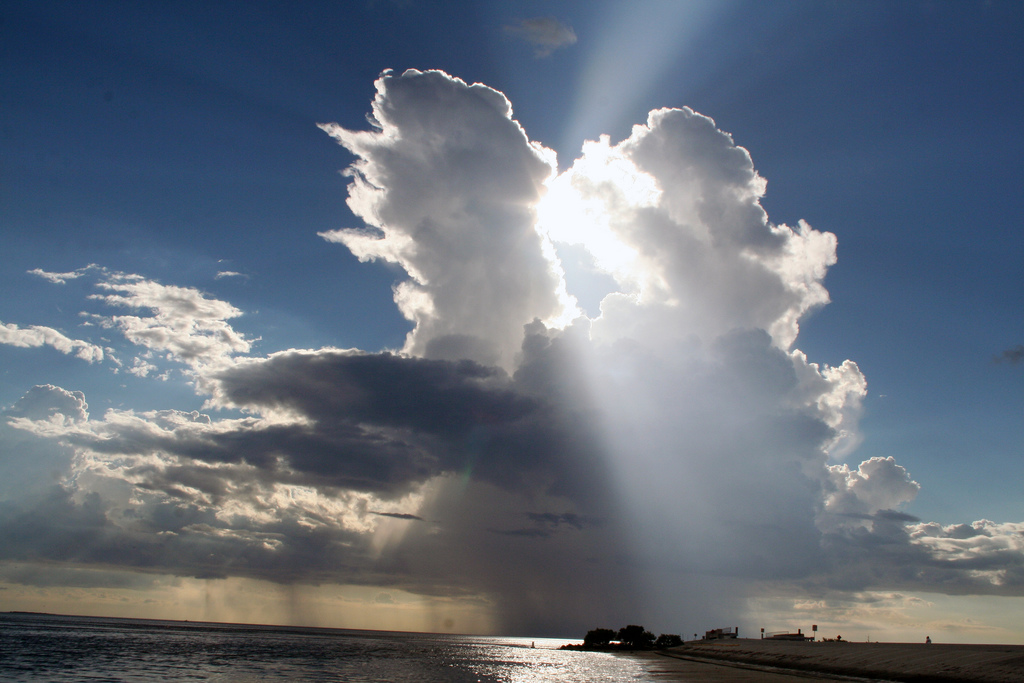
A cumulonimbus over the Gulf of Mexico in Florida: photo by Googie man, CC BY-SA 3.0, via Wikimedia Commons.
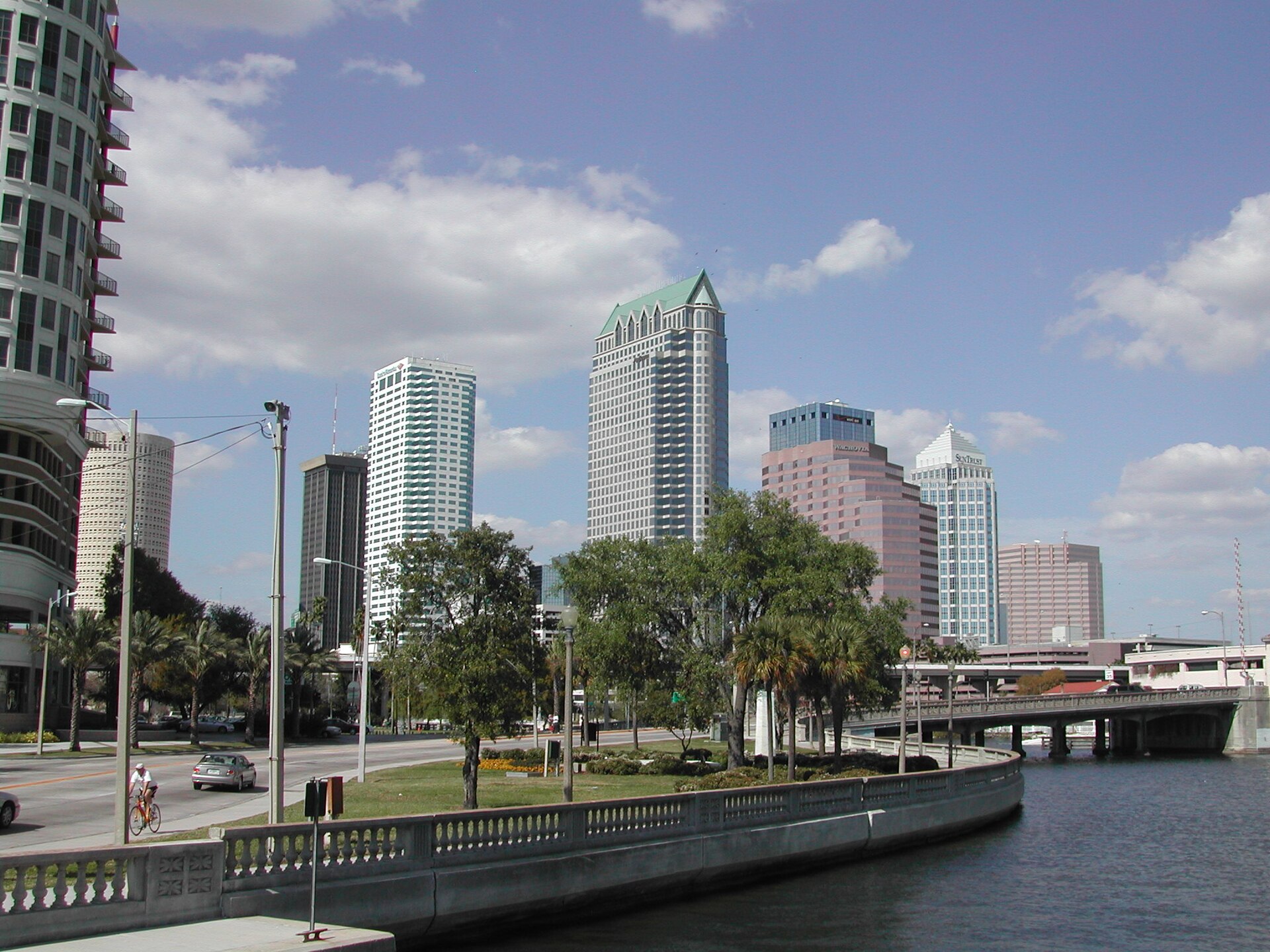
The Tampa skyline from Bayshore Boulevard: photo by Tampa Gator, Public domain, via Wikimedia Commons.