Florida’s outdoor season is the opposite of everywhere else’s. The best hiking months here run from November to April, and July is the month you stay indoors — which means most of the outdoor activities Tampa is known for are being recommended to visitors at precisely the wrong time of year. The boardwalk that is magnificent in January is a hot, buggy slog in August. The free manatee viewing center that everyone photographs is closed for half the year. Getting the season right matters more here than getting the destination right.
The short answer
Within 40 minutes of downtown Tampa you can reach genuine Class II river rapids, a cypress boardwalk with an observation tower over a floodplain full of alligators and wading birds, a mountain-biking network built on reclaimed phosphate mining land, and a free manatee sanctuary at a power station outfall. The state park charges $6 per vehicle. Several of the best options charge nothing at all.
Go between November and April if you have any choice. If you are here in summer, be on the trail by 7am and off it by 11, carry more water than seems reasonable, and treat afternoon thunderstorms as a certainty rather than a risk. This page covers land — trails, parks and wildlife viewing. For paddling, boating and fishing see Tampa Bay water activities, and for sand see the best beaches near Tampa.
At a glance: distance, surface and season
The thing most roundups leave out is what the ground is actually like underfoot and whether there is any shade on it. Drive times below are typical outside rush hour and are approximate — Tampa traffic is unforgiving between 4pm and 6:30pm, and anything involving Interstate 275 or the Howard Frankland can double.
| Site | From downtown Tampa | Surface | Shade | Fee | Best months |
|---|---|---|---|---|---|
| Tampa Riverwalk | In the city | Paved, level | Patchy | Free | Year-round, early or late |
| Bayshore Boulevard | In the city | Paved, level | Almost none | Free | Oct–Apr, or at sunrise |
| Lettuce Lake Conservation Park | ~20 min northeast | Boardwalk and short paths | Good under canopy | Check — see below | Nov–Apr |
| Flatwoods / Wilderness Park | ~25 min northeast | Paved loop, plus unpaved spurs | Moderate | Check — see below | Nov–Apr |
| Hillsborough River State Park | ~30–35 min northeast | Mixed: paved paths, dirt trail, boardwalk | Good | $6 per vehicle | Nov–Apr |
| Alafia River State Park | ~40 min southeast | Singletrack dirt, technical | Good | State park fee | Nov–Apr, dry only |
| TECO Manatee Viewing Center | ~30 min south | Boardwalk, level | Limited | Free, parking included | 1 Nov – 15 Apr only |
| Upper Tampa Bay Trail | ~25 min northwest | Paved rail-trail | Patchy | Free | Oct–Apr |
The season decides everything
November to April is the real outdoor season
The National Weather Service’s 1991–2020 normals for Tampa International Airport put November at 1.40 inches of rain, the driest month of the year, with an average high of 78.9°F. January averages 71.3°F by day and 52.8°F at night. That is close to perfect hiking weather, the mosquitoes thin out, and the humidity drops to something a visitor from a temperate climate recognizes.
It is also when the wildlife cooperates. Manatees move into warm-water refuges as the bay cools. Migratory birds are present. Alligators are visible basking rather than hidden in the shade. If you have a choice of dates and the outdoors is the point of your trip, come in winter.
May to October: dawn or nothing
August averages a daily high of 91.2°F with an overnight low of 76.8°F, so there is no cool part of the night to recover in. June through September deliver 30.24 inches of rain between them — 61% of the year’s total in four months — and it arrives as a violent afternoon thunderstorm rather than a gentle drizzle.
The workable summer pattern is simple and locals all follow it. Start at first light. Be finished by late morning. Carry two liters of water per person minimum, more if you are cycling. Assume the afternoon is gone. Central Florida sees more lightning than anywhere else in the United States, and an exposed paved trail in an open flatwoods is a genuinely poor place to be at 3pm in July.
Prescribed burns close trails, and they do not announce themselves well
Florida’s parks and conservation lands are fire-dependent ecosystems, and land managers burn them deliberately — mostly in the drier, cooler months, which is to say exactly when you want to be hiking. A burn can close a trail or a whole section of park at short notice, and signage on the ground is more reliable than anything published in advance. Call the park the morning you go if you have driven any distance for a specific trail. This is the single most common reason a planned Tampa hike does not happen.
Hillsborough River State Park
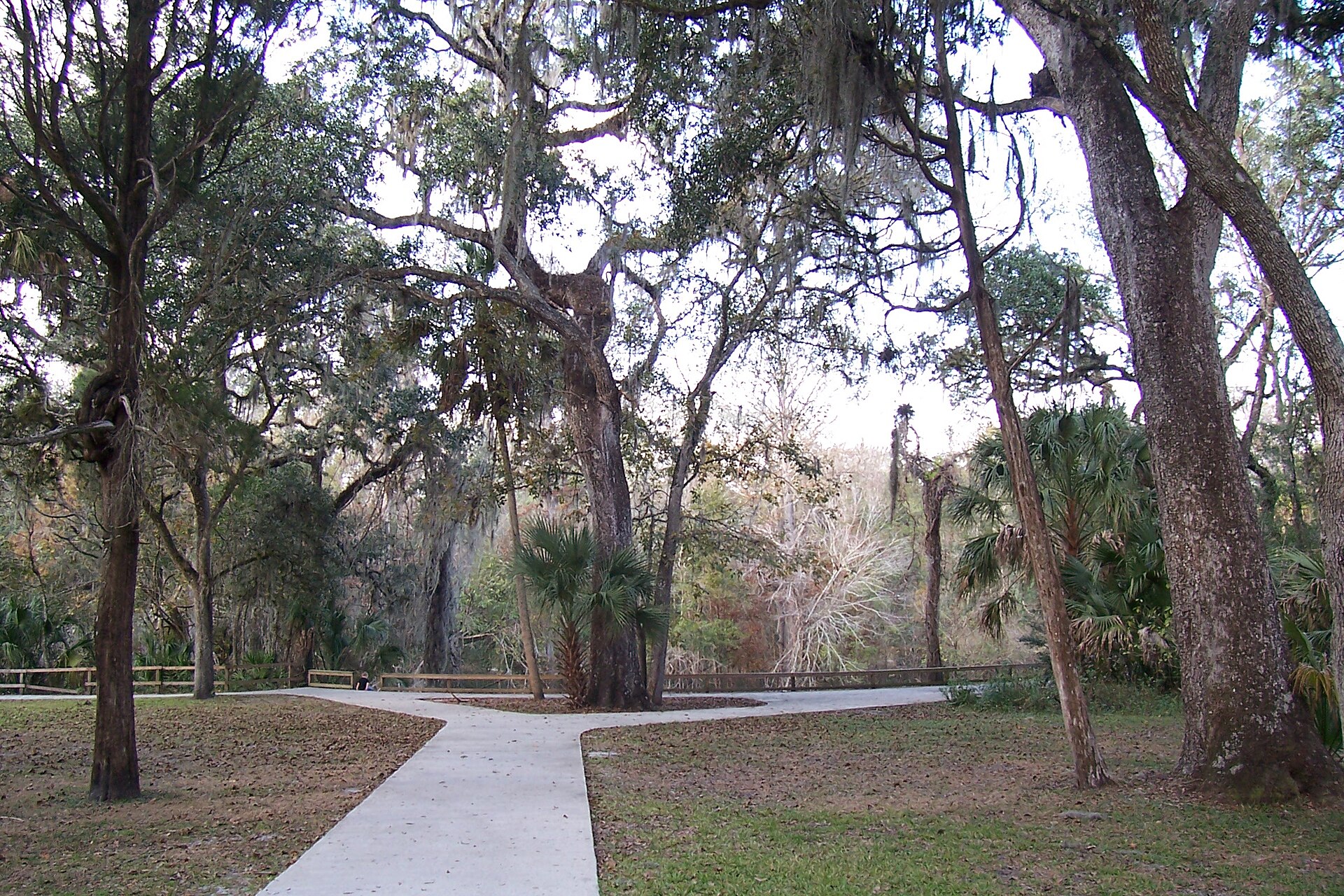
This is the flagship, and it is genuinely unusual. The park holds Class II rapids on the Hillsborough River — a rarity in a state with almost no gradient — along with seven miles of nature trails, a suspension bridge over the river, and picnic pavilions built by the Civilian Conservation Corps in the 1930s that are still in use.
The practical details, checked September 2026: $6 per vehicle, open 8am to sunset, 365 days a year, at 15402 U.S. 301 North, Thonotosassa FL 33592. The park office is on 813-688-9500.
Now the part other guides do not tell you. The park reopened on 24 February 2025 after storm damage, but it did not reopen fully. The park’s own notice still lists the café, the recreation hall, several campsites, two pavilions, the Seminole trail and portions of the Rapids Trail as closed. If the Seminole trail was the reason you were driving out there, check before you go rather than after.
There is a second wrinkle worth flagging because it is confusing rather than hidden. A notice effective 4 August 2026 changed the canoe, kayak and bicycle concession hours to Monday through Thursday 9am to 5pm and Friday through Sunday 8am to 6pm, last launch an hour before close — and then, in the same notice, states that Tuesday and Wednesday are closed. Those two statements contradict each other. We are reporting the park’s own published text rather than guessing which half is right; if you are planning around a rental, phone 813-688-9500 and get it confirmed.
Fort Foster State Historic Site
Inside the park is a full-scale reconstruction of Fort Foster, a Second Seminole War fort built to defend the bridge crossing on the Hillsborough River and to act as a resupply point for troops in the field. It was garrisoned on and off from December 1836 to April 1838. Access is by tour rather than by wandering in, and the schedule is seasonal, so check with the park rather than turning up hopeful.
Lettuce Lake Conservation Park
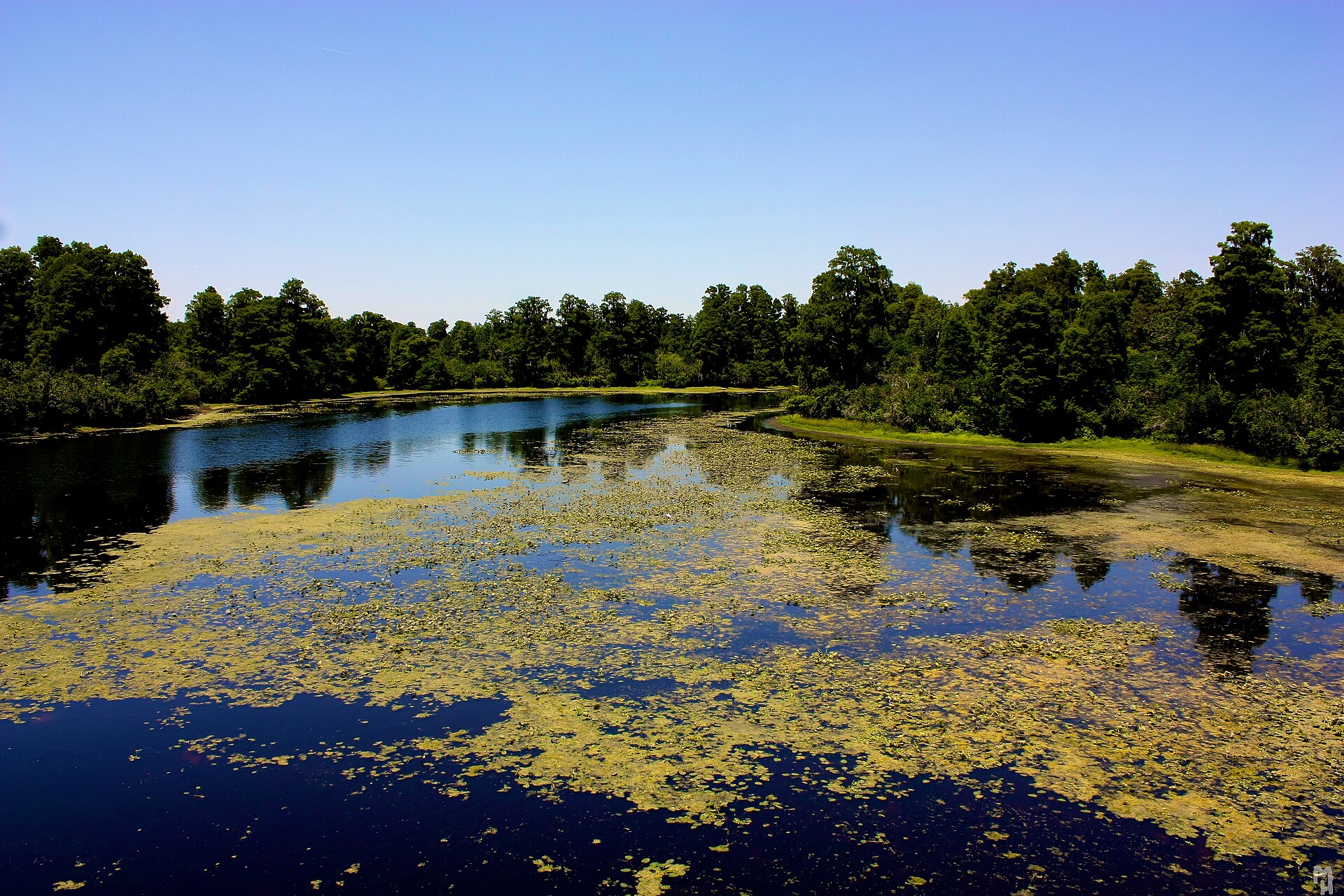
If you have one morning and want the highest wildlife return for the least effort, this is it. The park sits on the Hillsborough River floodplain about twenty minutes northeast of downtown, and its centerpiece is a boardwalk that carries you out over cypress swamp and open water without your feet ever touching mud. There is an observation tower at the end of it.
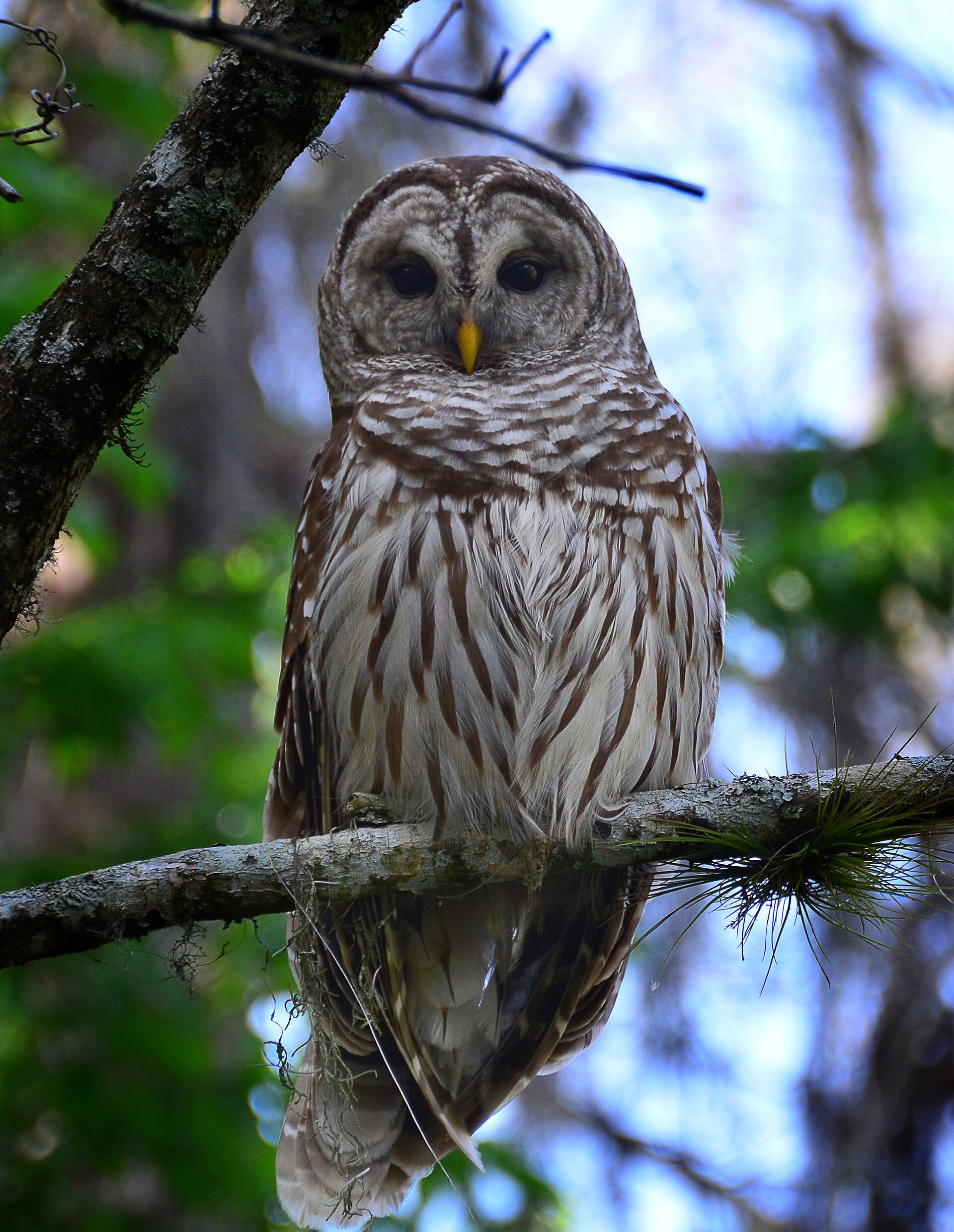
What you reliably see: alligators, great blue herons, anhingas drying their wings, ibis, turtles stacked on logs. What you see if you are patient and early: barred owls, which are resident here and much easier to find than their reputation suggests. Bring binoculars; the boardwalk puts you at a sensible distance rather than a close one, which is how it should be.
The boardwalk is level and the main loop is short, which makes this one of the few genuinely accessible wildlife sites in the county. It is also the one we would send a first-time visitor to over anything else on this page.
Flatwoods and the Wilderness Park trails
Off Morris Bridge Road northeast of the city, Hillsborough County’s Wilderness Park strings together several conservation areas along the upper Hillsborough River. Flatwoods Conservation Park is the best known of them, and its paved loop is the standard local training ride — flat, wide, and busy with cyclists at dawn on a weekend.
The unpaved trails in the surrounding tracts are a different proposition: sandy, sometimes wet, and easy to underestimate in summer. Shade is moderate rather than good, and there is no reliable water once you are away from the trailhead. Go early, tell someone where you are, and do not treat “flat” as a synonym for “easy” when it is 90°F with 80% humidity.
Alafia River State Park
The region’s mountain-biking site, and a genuinely odd one: the terrain is reclaimed phosphate mining land, which gave it more vertical relief than anything else in the Tampa area has. For Florida, the descents are real. For a visitor from anywhere with actual hills, the fun is in how technical and twisty the trails are rather than how long the drops last.
It is roughly 40 minutes southeast of downtown, a state park entrance fee applies, and the trails close when they are wet — riding saturated singletrack wrecks it for everyone who comes after you. Check the park’s own page before driving out, particularly in the wet season.
Paved trails you can walk or ride without a plan
- The Tampa Riverwalk — 2.6 miles along the Hillsborough River from Armature Works in Tampa Heights to Sparkman Wharf in the Channel District. Free, open 24 hours, paved and level throughout, linking Cotanchobee, Curtis Hixon Waterfront, Julian B. Lane and Water Works parks. It is the easiest outdoor hour in the city and it is genuinely good.
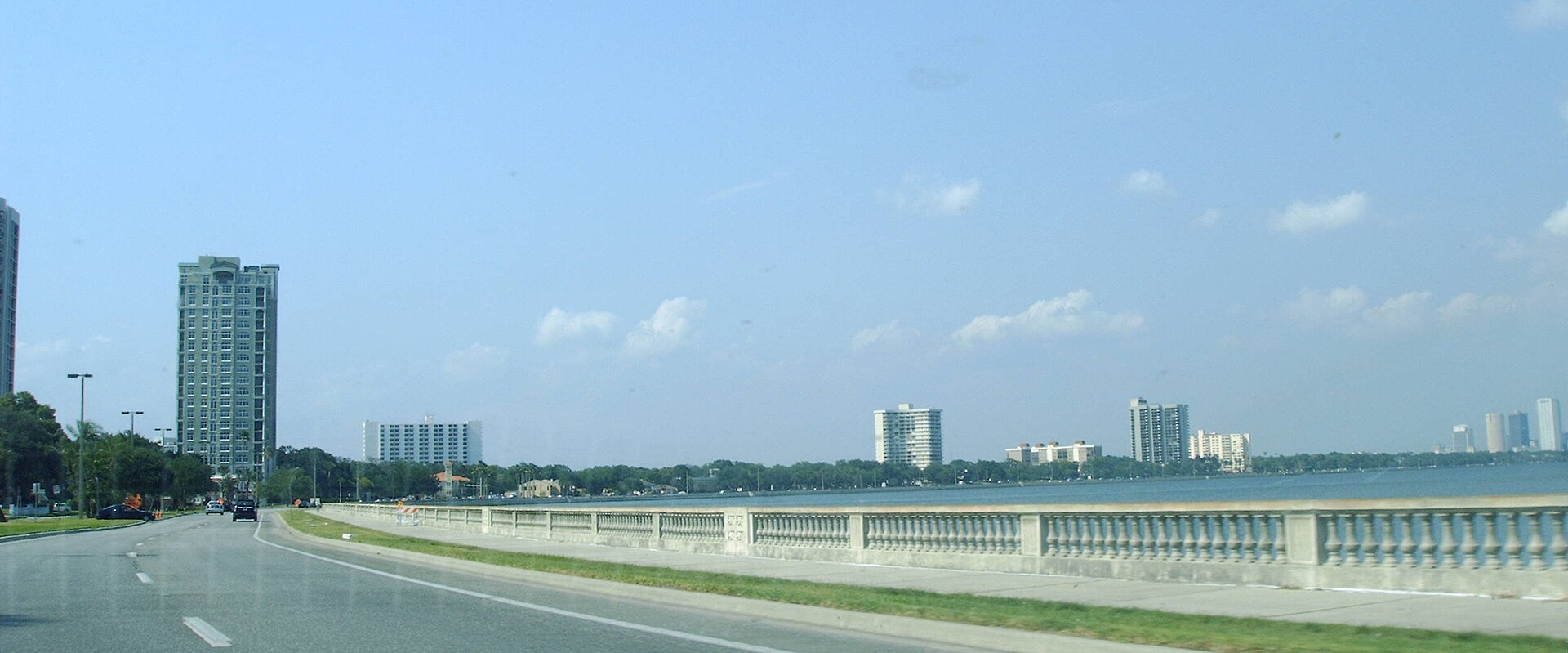
- Bayshore Boulevard — 4.5 miles of balustraded waterfront sidewalk, ten feet wide, from Platt Street to Gandy Boulevard. Tampa markets it as the world’s longest continuous sidewalk; Galveston’s Seawall Boulevard is longer and the claim does not really hold up. It is still a superb sunrise run. There is essentially no shade, which matters a great deal from May onwards.
- The Upper Tampa Bay Trail — a paved rail-trail through northwest Hillsborough County, quieter than the Riverwalk and better for a long, uninterrupted ride.
- The Suncoast Trail — more than 40 miles of paved trail running north alongside the Suncoast Parkway, well outside the city but the obvious choice if you want distance without traffic.
The Pinellas side: preserves worth crossing the bay for
Everything above is on the Tampa side of the bay. Pinellas County — St. Petersburg, Clearwater and the barrier islands — has its own network of preserves, and two or three of them are better than anything in Hillsborough for specific things. Crossing takes 25 to 45 minutes on the Gandy, Howard Frankland or Courtney Campbell causeway, and rather longer on a Friday afternoon.
Weedon Island Preserve, on the bay north of downtown St. Petersburg, is a large coastal preserve of mangrove, salt marsh and upland hammock threaded with boardwalks and an observation tower, with a cultural and natural history center on site covering the area’s precolumbian occupation. It is the best place in the region to walk through mangrove without getting in a boat.
Sawgrass Lake Park, also in St. Petersburg, is a boardwalk through a red maple swamp with an observation tower — small, easy, and disproportionately good for birds and alligators given how little walking it requires.
Brooker Creek Preserve, in the northern part of the county, is the biggest natural area in Pinellas and the least developed, with an environmental education center and genuine hiking trails rather than boardwalks. It is the option for someone who wants distance and quiet rather than a guaranteed alligator.
Boyd Hill Nature Preserve on Lake Maggiore in St. Petersburg is the outlier: it charges a small admission, which is unusual for a city nature preserve and catches people out. Check the current rate before you drive over.
We have not quoted hours or fees for these because they are set by different agencies and change; each preserve publishes its own. Our guide to things to do in St. Petersburg covers the city they sit in.
The Osprey Trail at Honeymoon Island
Worth singling out, because it is a real trail rather than a beach walk and most visitors never find it. Honeymoon Island State Park is $8 per vehicle, open 8am to sunset, 365 days a year, and its three-mile trail runs through one of the few remaining virgin slash pine stands in South Florida — genuinely old-growth, with nesting ospreys overhead and an entirely different character from the sand a few hundred yards away.
One safety note that is still in force: a notice effective 9 April 2024 records that erosion has separated the northernmost mile of the beach, and the park’s guidance on that section should be followed rather than worked around. The trail itself is the draw here; the beach is covered in our beaches guide.
Wildlife viewing that actually works
Manatees, and the one honest season
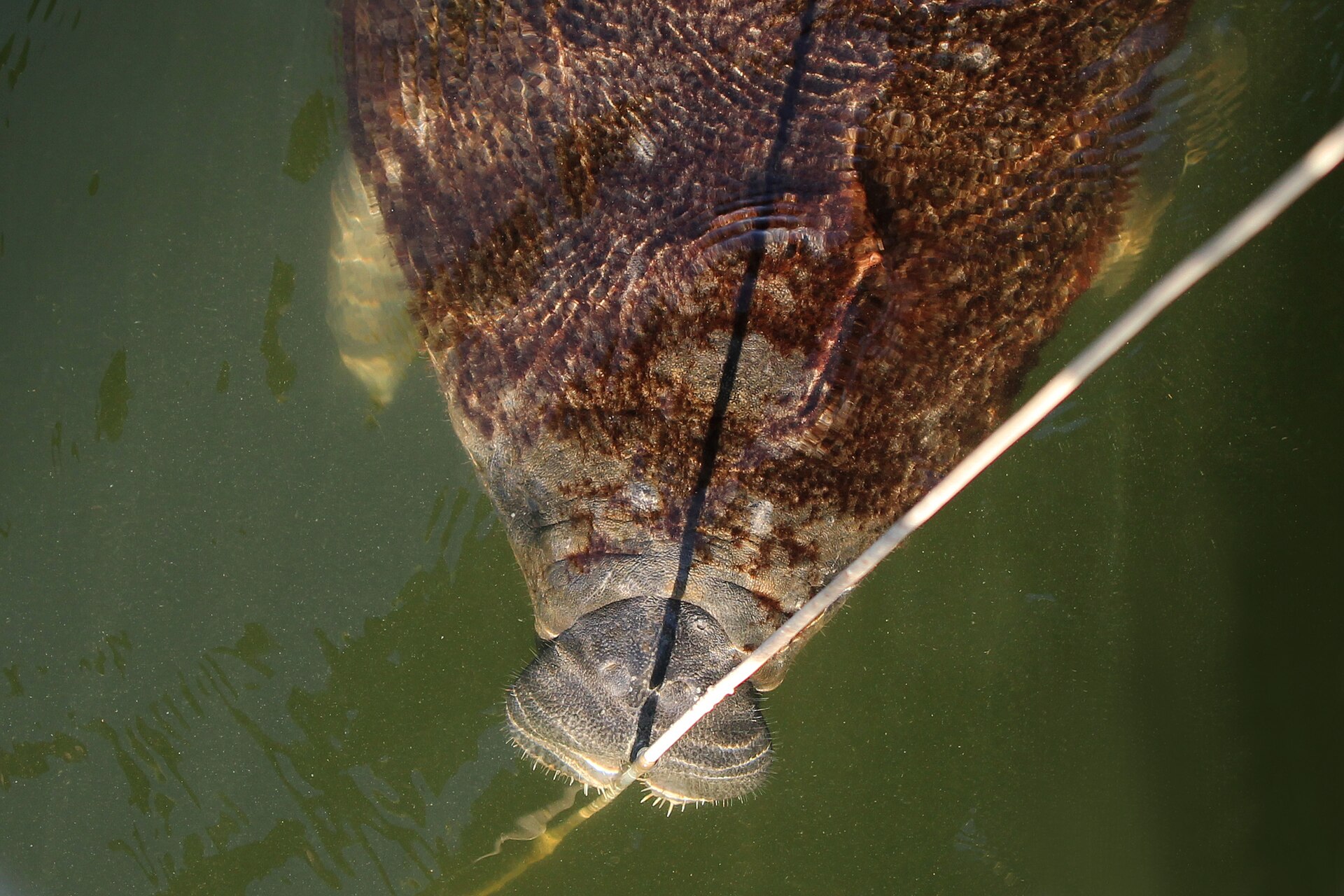
The TECO Manatee Viewing Center in Apollo Beach is the best free wildlife experience in the Tampa Bay area and the most frequently mis-recommended. Manatees gather in the warm-water discharge from the Big Bend Power Station when the bay cools, which means the center is open daily from 1 November to 15 April only, 10am to 5pm, with the trails closing at 4pm. Outside those dates it is shut and there would be nothing to see anyway.
Admission and parking are both free. The site has a 900-foot boardwalk called the Tidal Walk, a stingray touch tank and a 50-foot observation tower. It is at 6990 Dickman Road, Apollo Beach, roughly half an hour south of downtown. The best viewing is on genuinely cold mornings — a January cold snap fills the outfall, while a mild December week can leave it nearly empty.
Birds
Tampa Bay is on a major migratory corridor and the wading birds are present year-round. You do not need a specialist site: great blue herons, great egrets, snowy egrets, white ibis, anhingas, ospreys and roseate spoonbills all turn up in ordinary county parks. Lettuce Lake’s boardwalk and observation tower are the easiest place to see a lot in an hour.
Bring binoculars rather than expecting to get close. Nesting colonies are protected, and approaching one can cause adults to flush and leave eggs or chicks exposed to sun and predators — which is the real reason the distance rules exist, not squeamishness.
Alligators
You will see them, and that is fine. Alligators live in essentially every fresh water body in Florida, including retention ponds behind hotels. At a distance and from a boardwalk they are one of the better things about a Tampa morning.
Three rules, and they are not negotiable. Do not swim in fresh water at dusk or dawn. Do not let a dog swim, drink or wade at a freshwater edge — dogs are the size and shape of natural prey and this is how nearly every serious incident starts. And never, under any circumstances, feed one. Feeding alligators is a crime in Florida specifically because it teaches an animal that avoids people to associate them with food, and a fed alligator usually ends up destroyed.
Gopher tortoises
You will see burrows in sandy, open, scrubby ground — a half-moon-shaped entrance with a fan of loose sand in front of it. The gopher tortoise is a state-listed threatened species in Florida and both the animals and their burrows are legally protected, because the burrow is shared habitat for dozens of other species. Do not poke anything down a burrow, do not let a dog dig at one, and give a tortoise crossing a path room to keep going rather than picking it up.
A rough wildlife calendar
Nothing in nature runs to a timetable, and a warm December or a cold March will shift all of this. Treat it as the shape of the year rather than a schedule.
| Months | What is happening | Where to be |
|---|---|---|
| November–March | Manatees in warm-water refuges. Peak wading-bird numbers. Best hiking weather and fewest insects. | TECO Manatee Viewing Center, Lettuce Lake, any river park |
| February–April | Wading birds move into breeding plumage and begin nesting. Roseate spoonbills at their most striking. | Boardwalk parks and coastal preserves |
| April–May | Alligator courtship. Males bellow audibly, and animals move around far more than usual. | Freshwater parks — keep dogs well back from the water |
| March–May | Spring bird migration through the Gulf coast corridor. | Coastal hammocks and preserves |
| May–October | Sea turtle nesting season on Gulf beaches, with hatchlings from midsummer. Beach lighting rules apply at night. | Gulf beaches — see our beaches guide |
| June–July | Alligator nesting. Females guard nests and are far more defensive than at any other time. | Stay on boardwalks and marked trails |
| September–November | Fall migration. Heat begins to break in late October. | Everywhere, from mid-October onward |
Wildlife ethics: the rules that are actually laws
Florida draws harder legal lines around wildlife than most visitors expect, and “I did not know” is not a defense anyone enjoys testing.
- Manatees are protected under state and federal law. It is illegal to harass, pursue, touch, chase or feed one. If you are in the water and a manatee approaches you, the correct response is to stay still and let it pass.
- Feeding alligators is illegal, and so is feeding most other wildlife on conservation land.
- Gopher tortoises and their burrows are protected.
- Nesting shorebirds are roped off for a reason in spring and summer. Walking through a posted area can cost a whole colony’s season.
- Drones are prohibited in Florida State Parks without written authorization, which catches out a lot of visitors.
Beyond the law, the ordinary ethics apply and they are worth stating plainly: stay on the trail, take everything out with you, keep dogs leashed where dogs are allowed at all, and do not bait an animal into a better photograph.
Heat, water and shade: the practical safety section
Heat is the risk that actually gets people here, and it does it quietly. Visitors consistently underestimate how much water a Florida morning costs them, and the humidity means sweat evaporates poorly, so the body’s normal cooling works less well than it does in a dry climate.
- Carry at least two liters per person for anything over an hour, and more for cycling. Most conservation parks have water at the trailhead and nothing beyond it.
- Start at first light in summer. Being back at the car by 11am is not caution, it is the standard local practice.
- Shade is scarcer than the photographs suggest. Flatwoods, Bayshore and most paved trails are exposed; the river parks and boardwalks are not.
- If you hear thunder you are close enough to be struck. Go in, and give it half an hour after the last rumble.
- Insect repellent matters at dawn and dusk anywhere near standing water, which in Florida is everywhere.
- Check yourself for ticks after any off-trail or tall-grass walking, and for chiggers after sitting on the ground.
Accessibility outdoors
The flat terrain helps, and boardwalks are the single best accessibility feature this region has. Three things we can say with confidence:
The Tampa Riverwalk is paved and level for its full 2.6 miles and is the most reliably accessible outdoor route in the city. The TECO Manatee Viewing Center’s boardwalk is level. At Fort De Soto Park in Pinellas County there is a 2,200-foot Barrier-Free Nature Trail, self-guided and built for visitors regardless of physical ability — and Pinellas County waives its $6 parking fee for a vehicle displaying a valid disabled parking permit or tag, which is rarely published anywhere and is worth knowing.
What we would not do is assume. Surfaces on conservation-park trails vary from boardwalk to deep sand within a single loop, and county park pages do not consistently describe them. Call the park. Our Tampa travel guide covers trip-wide accessibility and the costs around it.
What the county does not publish, and why that matters
Here is an honest gap. Hillsborough County runs an extensive network of conservation parks and nature preserves through its Conservation and Environmental Lands Management department, and it is genuinely good. But the county does not publish a consolidated, park-by-park table of hours, fees, trail surfaces and closures in one place. Its main conservation page points you to a locations directory and a passes portal rather than to the numbers.
We are not going to invent fees to fill that hole. Several of these parks are free, some charge per vehicle, and the arrangement can differ by site and by day of the week. The reliable route is the individual park’s page or the Conservation Parks Administration Office on (813) 829-2626. Any guide quoting a single confident countywide figure is guessing.
What we would skip, and what to be careful about
- Big Cat Rescue. It closed permanently to the public on 4 November 2023 after 31 years. The cats were moved to a refuge in Arkansas by the end of that year and most of the land has since been sold. It is still listed on an extraordinary number of Tampa outdoor and wildlife roundups. You cannot visit it.
- Any summer midday hike. Not because it is unpleasant, though it is, but because heat illness in Florida humidity arrives faster than people expect.
- Roadside airboat and “gator show” operations judged purely on a billboard. Standards vary enormously. Look for an operator that keeps distance from wildlife rather than one that promises contact with it.
- Trails after heavy rain. The Alafia singletrack in particular should be left alone when wet, and low-lying county trails flood and stay flooded for days.
Building an outdoor morning that works
The mistake visitors make is treating a Tampa park like a park at home — arrive mid-morning, wander, see what happens. That works in October. It does not work in July, and it wastes the best two hours of any day in any month.
The shape locals use is straightforward. Leave the hotel before sunrise. Be at the trailhead as the light comes up, which is when birds are active, alligators are basking, and the temperature is still tolerable. Walk for two to three hours. Be back in the car by mid-morning in summer, or by lunchtime from November to April. That single adjustment does more for the quality of a Tampa outdoor day than any choice of destination.
A worked example for a first visit, from downtown: start at Lettuce Lake at opening for the boardwalk and the tower, drive twenty minutes further out to Hillsborough River State Park for the rapids and a stretch of the river trail, eat something you brought with you at one of the 1930s pavilions, and be back in the city by early afternoon. That is one $6 parking fee, two genuinely different habitats, and a realistic chance of alligators, wading birds and an owl.
In manatee season — 1 November to 15 April — substitute a cold morning at the Apollo Beach viewing center for the state park, and you have spent nothing at all.
What to take
- More water than you expect to drink. Two liters per person is a floor, not a target.
- Binoculars. They change a boardwalk from pleasant to genuinely interesting, and they keep you at a distance that is better for the animals.
- Insect repellent, and long sleeves for dawn near standing water.
- Closed shoes with grip. Boardwalks are fine in anything; dirt river trails have roots, and sand trails are hard work in sandals.
- A hat and reef-safe sunscreen, including in January. The UV index here does not really take a winter off.
- A downloaded map. Cell coverage is generally good but not universal in the larger preserves.
Frequently asked questions
What is the best free outdoor activity in Tampa?
The Tampa Riverwalk year-round, and the TECO Manatee Viewing Center between 1 November and 15 April. Both cost nothing, and the manatee center includes free parking, which is unusual enough to be worth saying twice.
Are there alligators in Tampa parks?
Yes, in essentially any fresh water. Lettuce Lake, the Hillsborough River parks and most county conservation areas all have them. They are not a reason to stay away — they are a reason to keep dogs away from the water’s edge and to never feed one.
Can you hike in Tampa in summer?
Early, yes. From June to September, plan to start at first light and be done by late morning. Afternoon heat and near-daily thunderstorms make the second half of the day a poor bet, and lightning on an exposed trail is a serious risk rather than a theoretical one.
Where can you see manatees near Tampa?
The TECO Manatee Viewing Center at Apollo Beach, free, daily from 1 November to 15 April, 10am to 5pm with trails closing at 4pm. Cold mornings are much better than mild ones. Outside that window the center is closed.
Is Hillsborough River State Park worth the drive?
Yes, for the rapids and the CCC-era park architecture, which you will not find elsewhere in the region. But check the closure list first — the café, recreation hall, several campsites, two pavilions, the Seminole trail and parts of the Rapids Trail were still listed as closed following the February 2025 reopening.
Do I need a car for outdoor activities in Tampa?
For the Riverwalk and Bayshore, no. For everything else on this page, realistically yes — the conservation parks and state parks are not well served by transit. Getting around Tampa covers the options.
What about day trips to bigger natural areas?
Weeki Wachee Springs, Myakka River State Park and Circle B Bar Reserve are all excellent and all further afield than this page covers. We treat them properly in day trips from Tampa, including the summer capacity closures that catch people out at the springs.
Related Tampa Guides
- Tampa Bay Water Activities — paddling, boating and fishing, including license rules.
- Best Beaches Near Tampa — which stretch of sand is worth the drive.
- Day Trips from Tampa — springs, bigger parks and the wider region.
- Tampa Travel Guide — costs, safety, accessibility and packing across a whole trip.
- The Best Time to Visit Tampa — month by month, with the climate data.
- Tampa Riverwalk and Downtown — the 2.6-mile spine in detail.
- Best Things to Do in Tampa — the full picture, indoors and out.
- Tampa with Kids — which of these work with small children.
- Tampa Christmas Events — what is on outdoors in December, when the weather is at its best.
Sources and verification
- Hillsborough River State Park — floridastateparks.org park page, checked 19 September 2026: $6 per vehicle, 8am to sunset, 365 days, seven miles of nature trails, Class II rapids, 15402 U.S. 301 North, Thonotosassa, 813-688-9500. The closure list and the 4 August 2026 concession notice are quoted from the park’s own “Know Before You Go” text, including the internal contradiction about Tuesday and Wednesday, which we have reported rather than resolved.
- Fort Foster State Historic Site — floridastateparks.org: Second Seminole War fort defending the Hillsborough River bridge crossing, garrisoned on and off December 1836 to April 1838.
- TECO Manatee Viewing Center — tampaelectric.com, checked September 2026: free including parking, daily 1 November to 15 April, 10am to 5pm, trails close 4pm, 900-foot Tidal Walk, 50-foot tower, 6990 Dickman Road, Apollo Beach.
- Hillsborough County conservation parks — hcfl.gov/departments/conservation, checked 19 September 2026. The county publishes no consolidated fee and hours table; Conservation Parks Administration is on (813) 829-2626. We have deliberately not quoted countywide fees.
- Fort De Soto accessibility and parking — pinellas.gov, checked 19 September 2026, including the disabled-permit parking fee waiver.
- Climate — National Weather Service Tampa Bay, 1991–2020 ASOS normals for Tampa International Airport.
- Tampa Riverwalk and Bayshore Boulevard — tampa.gov parks information, checked September 2026.
A note on method. We have not walked these trails on your behalf, interviewed rangers, or photographed anything ourselves — this guide is compiled and verified from the managing agencies’ own published information, and the photographs are credited below to the people who took them. Where an agency does not publish a figure, we have said so instead of supplying a plausible one. Trail conditions, burn closures and seasonal hours change quickly in Florida, so call the park the morning you go if a specific trail is the reason for the trip.
Photo credits
Barred owl at Lettuce Lake Park: photo by Trish Hartmann from Tampa, Florida, USA, CC BY 2.0, via Wikimedia Commons.
Lettuce Lake: photo by Marcus Quigmire from Florida, USA, CC BY-SA 2.0, via Wikimedia Commons.
Hillsborough River State Park: photo by User:Wknight94, CC BY-SA 3.0, via Wikimedia Commons.
Bayshore Boulevard: photo by user:Dbroadwell, CC BY-SA 2.5, via Wikimedia Commons.
Florida manatee at the Big Bend Power Station, Apollo Beach: photo by Judy Gallagher, CC BY 2.0, via Wikimedia Commons.