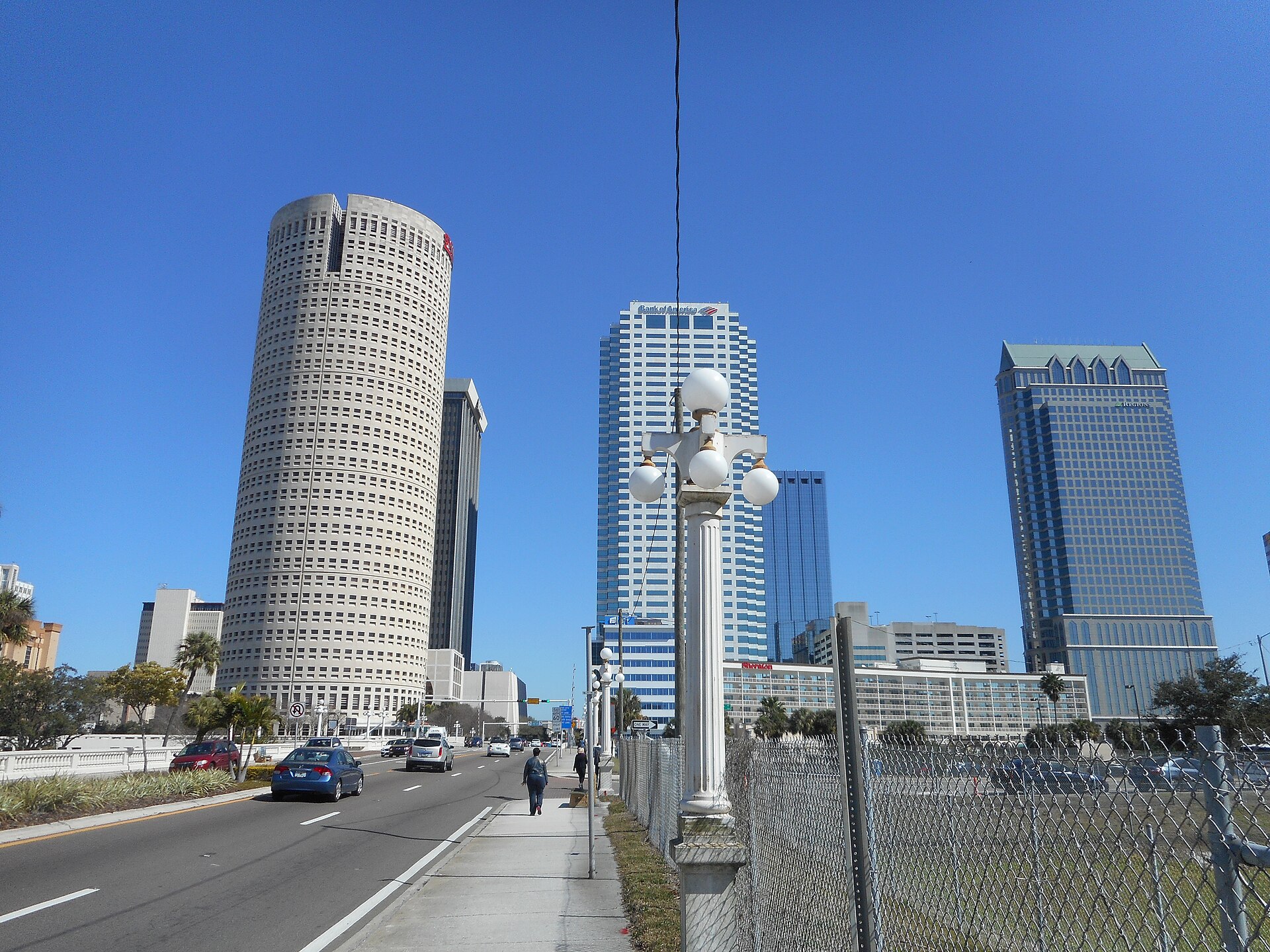
The advertised room rate is not what you will pay. A hotel room in Tampa carries roughly 13.5% in tax before anything else — a 6% Hillsborough County tourist development tax on top of 7.5% sales tax — and then parking, which at a downtown hotel is a nightly charge rather than a courtesy. Work out where to stay in tampa on headline rates alone and the number at checkout will be twenty to thirty percent higher than the one that made you book.
What follows is an area chooser rather than a hotel list. We do not review individual properties on this site and we will explain why further down. What we can do is tell you honestly which part of the region suits which trip, what each area costs once the extras are counted, and which choice quietly commits you to a car.
Short answer: pick your area by what your trip is actually about
| If your trip is about… | Stay in… | Because |
|---|---|---|
| The city — museums, restaurants, the Riverwalk | Downtown or the Channel District | Walkable, on the free streetcar, next to the aquarium and the arena |
| A cruise | Channel District | The three terminals are all on Channelside Drive and McKay Street |
| An early flight or a late arrival | Westshore | Airport-adjacent; downtown is 9 miles, Westchase 14 |
| Busch Gardens with children | Downtown, not north Tampa | 16 miles from the airport either way, and downtown gives you something to do on the other days |
| Beaches, mainly | Across the bay | Clearwater Beach is 20–25 miles from the airport; do not commute to it daily |
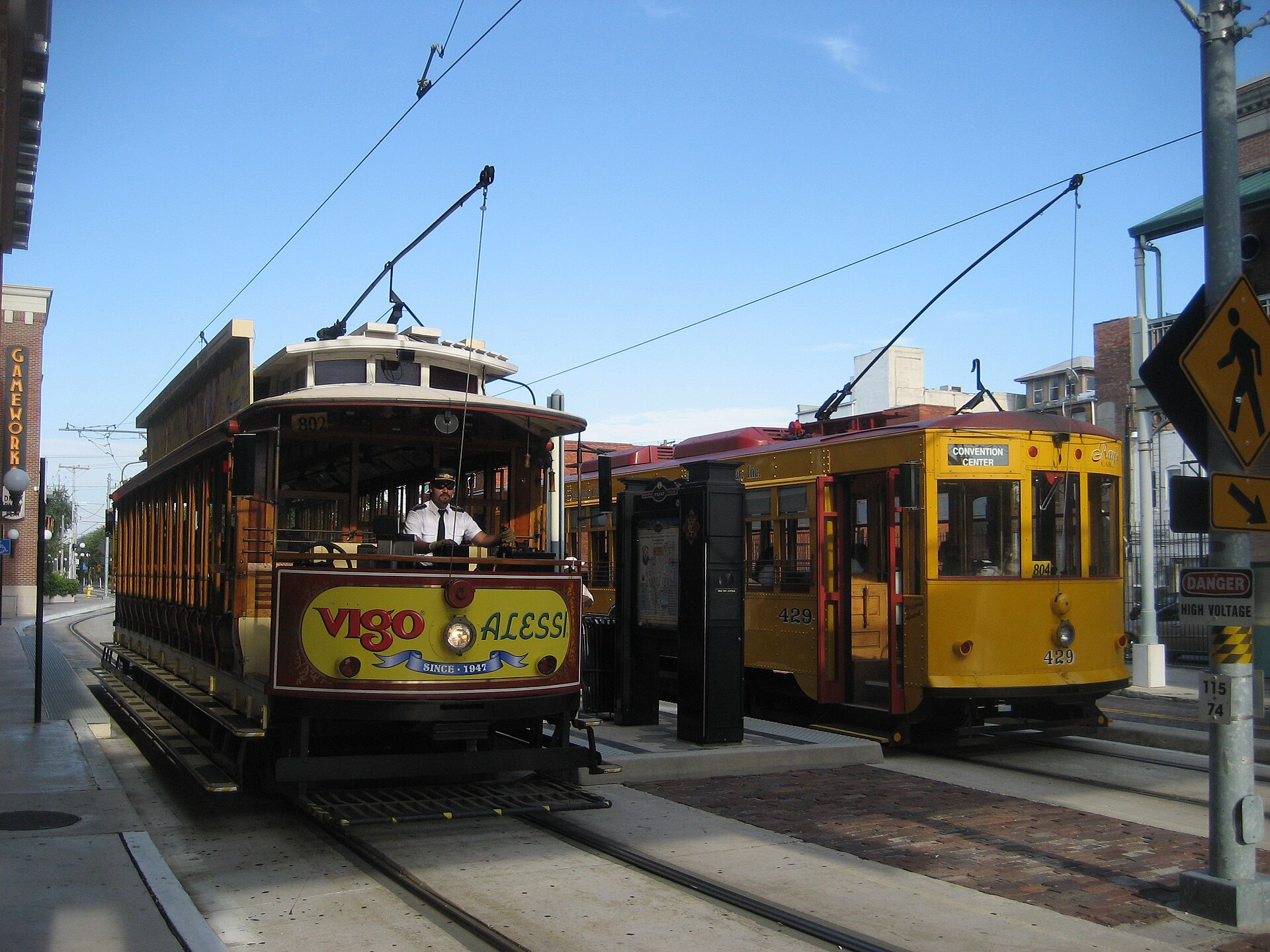
| A night out | Downtown or Ybor City | On the free streetcar, which runs to 2am Fridays and Saturdays |
| Not renting a car at all | Downtown or the Channel District | The only genuinely car-free choice in the region |
The single most consequential line in that table is the last one. Downtown and the Channel District are the only parts of Tampa where a visitor can function without a car. Everywhere else — Westshore, Hyde Park, north Tampa, Brandon, the beaches — commits you to driving, parking and paying for both, every day of your stay.
What a Tampa hotel room really costs
Tax, which is not optional and is rarely in the headline
Two taxes stack on every short-term stay in Tampa:
- Hillsborough County tourist development tax: 6.0%, per the Florida Department of Revenue’s own local option transient rental tax schedule. It applies to any accommodation let for six months or less — hotels, motels, condos, vacation rentals, rooming houses, even vessels.
- Sales tax: 7.5% in Tampa, being the 6% state rate plus a 1.5% Hillsborough surtax.
Call it roughly 13.5% all in. On a $200 room that is $27 a night, or $189 across a week, and it is not a figure most people have in their heads when they compare two listings.
And here is the finding that surprised us: Pinellas County — St. Petersburg, Clearwater, the Gulf beaches — charges exactly the same 6.0% tourist development tax. So do Manatee and Sarasota. Only Polk County, inland toward Lake Wales, comes in lower at 5.0%. Its local sales surtax differs slightly from Hillsborough’s, so the all-in totals land within about half a percentage point of each other. Tax is not a reason to pick one side of Tampa Bay over the other. Ignore anyone who tells you otherwise and choose on geography instead.
Resort fees, and the rule that changed them
This is worth knowing in some detail, because it is recent and it is in your favor.
The FTC’s Rule on Unfair or Deceptive Fees (16 C.F.R. Part 464) took effect on 12 May 2025. It covers short-term lodging and live-event ticketing, and it binds hotels, third-party booking platforms, resellers and travel agents alike. In substance it requires that:
- the total price including all mandatory fees is disclosed up front;
- the nature, purpose and amount of any excluded charge is disclosed before you are asked to pay;
- the final amount payable is displayed at least as prominently as the headline total;
- and that what a business says about its own fees is true.
The practical effect: a resort fee that only materializes at checkout is now a violation, not merely irritating. The advertised total should already contain it. Taxes may still be shown separately, which is why the 13.5% above still deserves its own line in your budget.
What this does not do is abolish resort fees. It makes them visible. So the sensible move is unchanged — compare the total at the point of payment rather than the nightly rate — but you should now be able to see that total before you commit, and a property that hides one is worth walking away from on principle.
Parking, the cost nobody plans for
Downtown Tampa hotels overwhelmingly charge for parking, nightly, often with a valet-only arrangement. That is not unusual for an American downtown, but visitors arriving from places where hotel parking is free are routinely caught by it.
For scale, here is what the city itself charges, which is the floor your hotel’s rate sits above:
| Option | Rate | Daily max |
|---|---|---|
| Central Business District meter | $4 first hour, $3 after | Enforced 8am–midnight, 7 days |
| Other city zones (Ybor, Channel District, Hyde Park) | $3 first hour, $2 after | — |
| Ft. Brooke, W.F. Poe, Pam Iorio, Convention Center garages | $3/hr | $18 |
| Twiggs, Centro Ybor, Palm Ave garages | $2/hr | $14 |
Two pieces of fine print: the daily maximum resets once you exit the facility, and next-day charges start at 6am. Event rates override the standard table entirely and can run $5 to $50. A car you are not using is costing you money every single night, which is a genuine argument for not renting one if your trip is downtown-shaped.
Area by area
Downtown Tampa
Best for: first-time visitors, car-free trips, culture, nightlife, anyone who wants to walk.
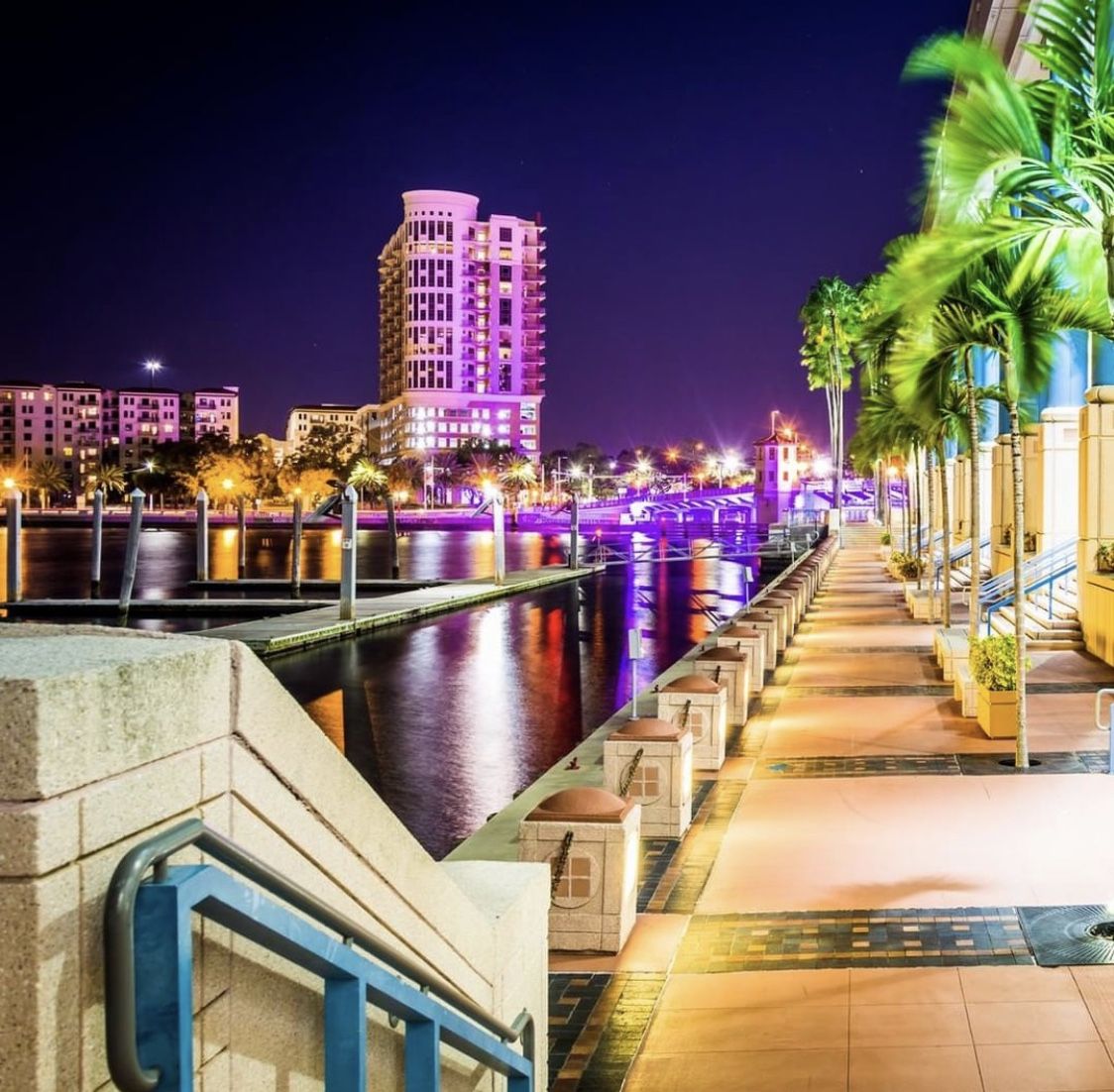
Downtown puts you on the Tampa Riverwalk — 2.6 miles along the Hillsborough River from Armature Works to Sparkman Wharf, free and open 24 hours — with the Tampa Museum of Art, the Tampa Bay History Center, the Straz Center’s five theaters, the Tampa Theatre and Benchmark International Arena (called Amalie Arena until August 2025) all on it or a block off it. The fare-free TECO Line Streetcar runs from here to Ybor City in about 25 minutes, every 15 minutes, eleven stations.
- Distance to the airport: 9 miles by TPA’s own published figure. A Yellow Cab runs a $40 flat rate between the two, which frequently beats both the meter and a rideshare once the $5 airport service fee is added.
- Distance to the cruise terminals: walking, more or less.
- Distance to Busch Gardens: a drive. Nothing useful connects them.
- The catch: parking is a nightly charge, meters run until midnight, and this is the most expensive area per square foot of room.
The Channel District and Water Street
Best for: cruise passengers, hockey, a newer and more polished stay.
Immediately southeast of downtown, this is the most recently developed part of the city and it feels it. The Florida Aquarium at 701 Channelside Drive, Sparkman Wharf, Benchmark International Arena and the cruise terminals are all here, and the streetcar runs through it.
For cruise passengers this is the obvious choice. Port Tampa Bay’s three terminals are Cruise Terminal 2 at 651 Channelside Drive, Cruise Terminal 3 at 815 Channelside Drive — the central one — and Cruise Terminal 6 at 1333 McKay Street. Staying here turns embarkation morning from a logistics problem into a short walk or a five-minute ride. Our Port Tampa Bay cruise guide covers the parking prepay flow and the rest of it.
Ybor City
Best for: nightlife, character, travelers who want somewhere that feels like somewhere.
One of only two National Historic Landmark Districts in Florida, with over 950 historic buildings, a real Cuban-Spanish-Italian immigrant history, and the highest concentration of late-night venues in the region — the city’s last call is 3am. Lodging inventory here is thinner and more characterful than downtown’s, and the streetcar connects it to everything else for nothing.
The honest caveat: it is loud at weekends, and that is not a flaw, it is the district working as designed. If you want an early night on a Saturday, stay somewhere else. Our Tampa nightlife guide covers the mechanics of an evening here, including the gap between the 2am last streetcar and the 3am last call.
Hyde Park and SoHo
Best for: couples, a quieter and more residential stay, good food within walking distance.
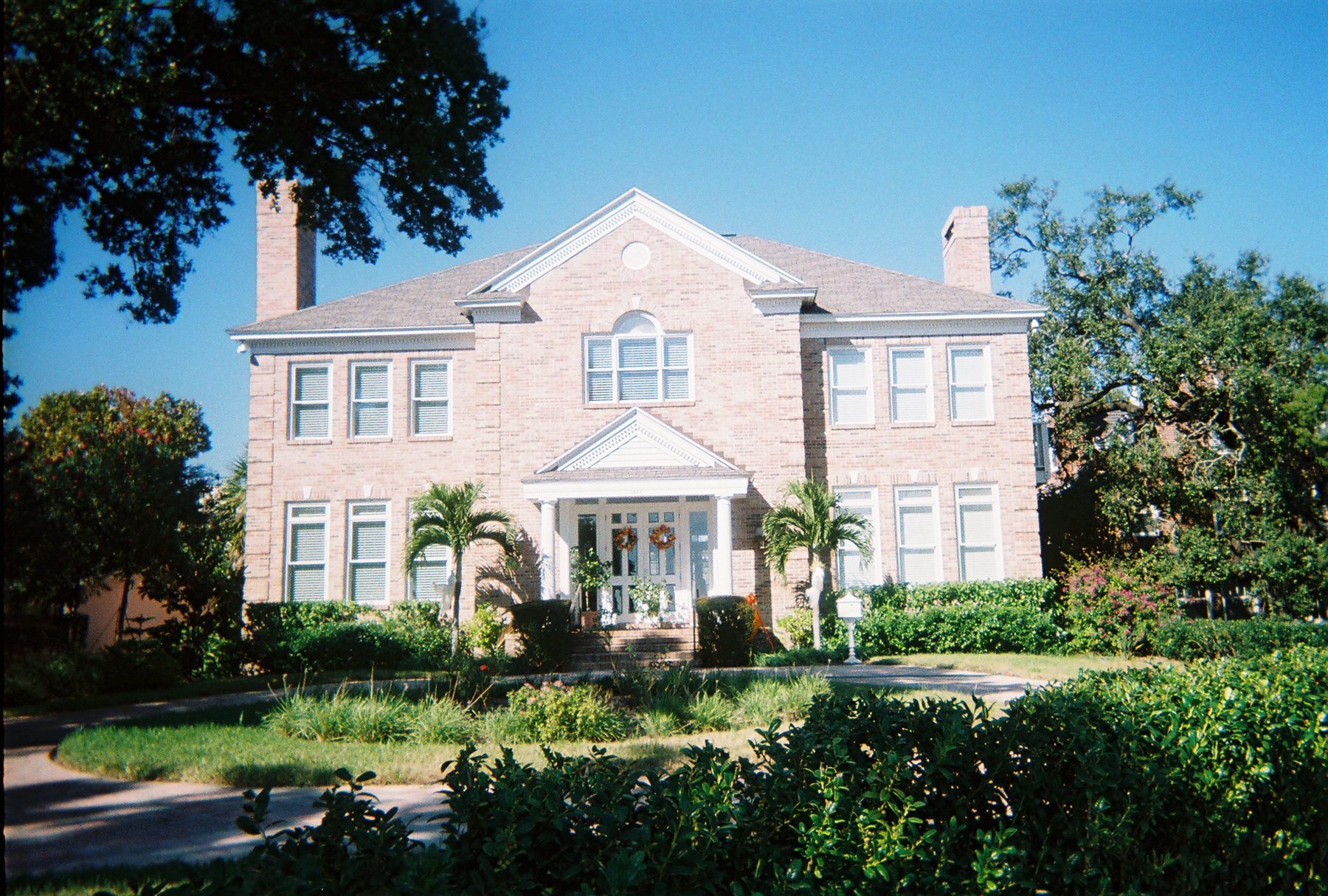
South of downtown across the river, Hyde Park is a genuinely handsome historic neighborhood of oaks and early twentieth-century houses, with Hyde Park Village for shopping and South Howard Avenue — SoHo — for dinner and drinks. Bayshore Boulevard’s 4.5-mile balustraded waterfront sidewalk runs from Platt Street down to Gandy, and it is the best free hour in Tampa at sunrise.
The catch, and it is a real one: Hyde Park is not on the streetcar. Every trip downtown is a rideshare or a drive. It is close enough that this is manageable and far enough that it adds up across a week.
Westshore and the airport
Best for: early flights, late arrivals, business travel, and anyone prioritizing rate over location.
Tampa’s main business district sits immediately around the airport, and it carries the region’s largest concentration of hotel rooms. Rates are usually lower than downtown’s and parking is more often included or cheap, which for a driving trip changes the arithmetic considerably.
Useful distances, all TPA’s own: downtown 9 miles, the cruise port 9.5, Westchase 14, Busch Gardens 16, St. Petersburg 20, Clearwater 20. Westshore is genuinely central to the region even though it does not feel central to the city.
The catch: there is nothing to walk to. This is an office-park district with hotels in it, and every evening becomes a drive. Choose it for what it is — an efficient base — not for a holiday.
North Tampa, near Busch Gardens and USF
Best for: a trip that is genuinely only about the theme park.
Busch Gardens is 16 miles from the airport and USF is 19, on the Fowler Avenue corridor. Rates up here are typically the lowest in the city.
We would generally steer you away from it. Nothing here connects to downtown by any transit a visitor would use, so you have chosen a base that is convenient for one attraction and inconvenient for every other thing in this guide. Given that Busch Gardens is one day of a trip even for enthusiasts, trading six days of walkability for one day of a shorter drive is a poor bargain. Stay downtown and drive up for the day.
Across the bay: St. Petersburg, Clearwater and the Gulf beaches
Best for: trips where the beach is the point rather than an outing.
From the airport it is 20 miles to St. Petersburg, 20 to 25 to Clearwater Beach and 27 to St. Pete Beach, every one of them across water on a causeway or bridge. That crossing is the whole decision.
The rule we would give anyone: do not commute to the beach daily. If you want beach days, base yourself there for those days. If you want a city trip with one beach day in it, stay in Tampa and make the crossing once. What does not work is a Tampa hotel and a daily drive to the Gulf, or a beach hotel and a daily drive into the city — both turn a holiday into two hours a day on a bridge.
Our guides to St. Petersburg and Clearwater cover those destinations properly, and the beaches guide sorts the coast by what each stretch is actually good at.
By traveler type
Cruise passengers
Channel District, one night before and ideally one after. The terminals are on Channelside Drive and McKay Street; the port describes the airport as a 15-minute drive and Yellow Cab runs a $40 flat rate from the airport to the cruise terminal. Port parking is at the Channelside Parking Garage, 810 Channelside Drive, and is prepaid online by cruise line — rates are quoted in that flow rather than published, so budget from the booking page and not from this one. And the structural fact about this port: every ship must pass under the Sunshine Skyway, working air draft around 180 feet, which is why Tampa is a midsize-ship port and cannot be otherwise.
Families
Downtown, with a pool. The Glazer Children’s Museum at 110 W. Gasparilla Plaza and the Florida Aquarium are both walkable from downtown hotels, the Riverwalk is flat and fully stroller-friendly for 2.6 miles, and the streetcar is free and — for a small child — an attraction in its own right. A pool matters more than the room does between June and September, when the afternoon structure is outdoors before noon and indoors from one. Our Tampa with kids guide has the rest.
Couples
Hyde Park or SoHo if dinner and quiet are the priority; downtown if you want to walk everywhere and not think about it. Both work. Hyde Park is prettier and costs you a rideshare each way.
Business travelers
Westshore, for the obvious reasons, unless your meetings are downtown — in which case downtown, because crossing the city twice a day in Tampa traffic is worse than the rate difference.
Budget travelers
North Tampa and the outer Westshore fringe carry the lowest rates, and both cost you in transport and time. The genuinely cheap way to do Tampa is not a cheaper room in a worse place — it is a downtown room and no rental car at all, using the free streetcar, the 2.6-mile Riverwalk and Bayshore Boulevard, which are the best things in the city and cost nothing. Add the Pirate Water Taxi’s $34 all-day pass across 10 stops if you want to move further without driving.
An overnight before a flight
Westshore. And know the airport’s own parking rates in case you drive yourself instead: Economy Parking is $22 for 24 hours, the Long Term Garage $26 and the Short Term Garage $32, with the first hour free at all three and a 45-day maximum stay. The Cell Phone Waiting Lot is free. Our airport guide has the airside layout, which matters because TPA clears security in the main terminal at the shuttle entrance rather than at your gate concourse.
When you are paying, and when you are not
Tampa’s lodging rates move with the season, and the season is driven by weather and by events rather than by school holidays alone.
- Peak: roughly February through April. The best weather of the year — February and March are also when three Major League Baseball organizations hold spring training in the region — and consequently the highest rates.
- Event spikes: Gasparilla, on 30 January 2027 with Children’s Gasparilla on 23 January 2027, fills downtown hotels and closes the streets around them. The Florida State Fair runs 4 to 15 February 2027. Book months ahead for those dates or avoid them deliberately.
- Low: June through September. This is when the region delivers 61% of its annual 49.48 inches of rain and August averages a normal high of 91.2°F. Rates drop for a reason, but the reason is manageable if you structure days around the afternoon storm rather than against it.
- The sweet spot: November. The driest month at 1.40 inches, the heat broken, and before the winter season pushes rates back up. Our best time to visit guide has the full month-by-month.
Hotels or a vacation rental?
One thing to clear up first, because it is a common misconception: a vacation rental does not escape the tourist development tax. Hillsborough County’s 6% applies to any living quarters let for six months or less, and the county’s own wording is explicit about the range — hotels and motels, apartments and condominiums, rooming houses, tourist and trailer camps, timeshares, boats and resort accommodations all fall inside it. Platforms generally collect and remit it, which means it is inside your total rather than absent from it.
Where rentals genuinely win is on space, a kitchen and parking. A downtown apartment with its own space beats a hotel room plus $35 a night of valet, and for a family that wants breakfast at home before a theme park day the kitchen is worth real money — a family of four eating one meal a day in is saving $60 to $90 daily.
Where hotels win is on flexibility and recourse. Cancellation terms are usually better, there is a front desk when something goes wrong, and in hurricane season — which is a live consideration here from summer into fall — a hotel’s cancellation policy is generally more forgiving than a rental’s.
A practical middle path for longer stays: hotel for the cruise night or the airport night, rental for the block in between.
Three trips, priced properly
Same city, same week, three different decisions. Figures are the verifiable components only — tax at the confirmed 13.5% and parking at published city rates — with the room itself left as a variable, because rates move daily and any number we printed would be wrong by the time you read it.
| Downtown, no car | Downtown, with a car | Westshore, with a car | |
|---|---|---|---|
| Room | Highest rate | Highest rate | Lower rate |
| Tax | +13.5% | +13.5% | +13.5% |
| Parking | $0 | Hotel nightly charge, every night | Often included |
| Rental car | $0 | Daily rate plus fuel plus tolls | Daily rate plus fuel plus tolls |
| Getting around | Free streetcar, free Riverwalk | Paying to park at the other end too | Driving to everything |
| Day trips and beaches | One-off rental or rideshare | Easy | Easy |
| Best for | City trips of 2–4 days | Trips mixing city and beaches | Driving trips, early flights, business |
The pattern that falls out of it: the highest room rate is frequently the cheapest trip, because downtown is the one area where the car — and its nightly parking, its fuel and its tolls — becomes optional. If your itinerary includes beach days or Busch Gardens, rent a car for those days specifically rather than for the whole stay.
Accessibility: what to establish before you book
Accessible rooms are a finite and separately managed inventory almost everywhere, and booking platforms are an unreliable way to secure one. Call the property directly and confirm in writing.
Questions worth asking that are specific to this region rather than generic:
- Is parking valet-only? Many downtown Tampa hotels are, which matters if you travel with a converted vehicle or need to access equipment in your own car at will.
- How far is the accessible entrance from the streetcar stop? The streetcar itself is level-boarding, but the walk to it varies a great deal by property.
- Is there a step-free route to the Riverwalk? The Riverwalk is flat, paved and curb-cut for its full 2.6 miles, which makes it the best accessible route in the city — but getting onto it from a given hotel is not always level.
- What is the cooling situation in common areas? Heat is an accessibility issue here, not just a comfort one. An August afternoon is a normal 91.2°F.
Hurricane season, and what it means for a booking
Atlantic hurricane season runs from summer into the fall, and it overlaps precisely with Tampa’s cheapest lodging rates. That is not a coincidence and it is worth pricing honestly rather than ignoring.
Most years, most trips are unaffected. When a storm does affect the region the disruption is real and regional — the effects on Tampa Bay’s own infrastructure in recent years have been substantial, with Tropicana Field losing its roof in October 2024 and Caladesi Island only reopening for day use on 29 June 2026 after Hurricane Helene.
Three practical responses. Read the cancellation terms before the rate, particularly on a vacation rental. Consider travel insurance for a late-summer or fall trip in a way you would not for a February one. And do not book non-refundable for the sake of a small saving in the months when the saving exists because of the risk.
Why this page does not name hotels
A fair question, since most pages answering this one do nothing else.
We have not stayed in any Tampa hotel. We have not inspected one, interviewed a manager, or sent anyone to test a room. Publishing a ranked list of properties would require pretending otherwise, and the ranking would in practice be assembled from the same booking-platform reviews you can read yourself, with an affiliate link attached.
What we can do honestly is the part that is verifiable and that the hotel lists skip: the tax rate, the parking economics, the distances from the airport’s own published figures, the transit that does and does not reach each area, the FTC rule that governs how fees must now be shown, and the trade-off each neighborhood involves. That is the decision that actually determines whether your trip works. Which building you sleep in, once you have the area right, matters much less than the listings imply.
When we can review individual properties on evidence rather than aggregation, we will. Until then we would rather leave the gap visible.
Mistakes to avoid
- Comparing nightly rates without the 13.5% tax and the parking. A $180 downtown room with $35 valet is a $239 room. A $150 Westshore room with free parking is $170.
- Booking a beach hotel for a city trip. Twenty to twenty-seven miles, across a bridge, twice a day, for a week.
- Booking north Tampa to be near Busch Gardens. It is one day of the trip. You have optimized the wrong variable.
- Renting a car for a downtown stay. It will cost you a nightly parking charge to sit unused while you take a free streetcar everywhere.
- Assuming Tampa and St. Petersburg are interchangeable. They are separate cities on opposite sides of a large bay, and the tax rate — identical at 6% — is the only thing about them that is genuinely the same.
- Booking Gasparilla weekend by accident. Late January, downtown, several hundred thousand people. Wonderful if you meant to. Expensive and disruptive if you did not.
Frequently asked questions
What is the best area to stay in Tampa for a first visit?
Downtown or the Channel District. They are the only parts of the region where you can walk to real attractions and use the free TECO Line Streetcar instead of driving, and they put the Riverwalk, the Florida Aquarium, the museums, Benchmark International Arena and the cruise terminals within reach without a car. They are also the most expensive, and the saving from staying elsewhere is usually consumed by parking and rideshares.
How much tax is added to a Tampa hotel room?
About 13.5%. That is a 6.0% Hillsborough County tourist development tax — confirmed against the Florida Department of Revenue’s own transient rental tax schedule — on top of 7.5% sales tax, being the 6% state rate plus a 1.5% county surtax. Pinellas, Manatee and Sarasota counties all charge the same 6% tourist development tax, so crossing the bay does not save you tax.
Do Tampa hotels charge resort fees?
Some do. Since the FTC’s Rule on Unfair or Deceptive Fees took effect on 12 May 2025, hotels and booking platforms must disclose the total price including all mandatory fees up front, state the nature, purpose and amount of any excluded charge before asking for payment, and show the final amount at least as prominently as the headline total. A resort fee appearing only at checkout is now a rule violation. Taxes may still be listed separately.
Should I stay in Tampa or Clearwater Beach?
Depends on what the trip is for. Clearwater Beach is 20 to 25 miles from Tampa International Airport, across the bay — fine as a base if the beach is the point, poor as a base if the city is. Do not try to do both from one hotel; you will spend two hours a day on a causeway. Either split the stay or accept one crossing rather than seven.
Where should I stay before a cruise from Tampa?
The Channel District. Port Tampa Bay’s three terminals are at 651 and 815 Channelside Drive and 1333 McKay Street, all within the district, and the port describes the airport as a 15-minute drive. Yellow Cab runs a $40 flat rate from the airport to the cruise terminal. Port parking is prepaid online by cruise line at the Channelside Parking Garage, 810 Channelside Drive, with rates quoted in that flow rather than published.
Can you visit Tampa without a car?
Yes, if you stay downtown or in the Channel District. The fare-free TECO Line Streetcar covers downtown, the Channel District and Ybor City across 11 stations every 15 minutes, the Riverwalk is 2.6 walkable miles, and the Pirate Water Taxi adds 10 more stops on a $34 all-day pass. Busch Gardens, the beaches and anything across the bay need a car or a run of rideshares — but those are day trips, not daily commutes.
Is it cheaper to stay near Busch Gardens?
Usually yes on the room rate, and usually a false economy. North Tampa is not connected to downtown by any transit a visitor would use, so you save on one night’s rate and pay in driving and parking on every other day of the trip. Busch Gardens is one day even for enthusiasts. Stay downtown and drive up.
When are Tampa hotel rates lowest?
June through September, which is also when the region gets 61% of its annual rainfall and August averages a normal high of 91.2°F. The best value against weather is November — the driest month at 1.40 inches, with the heat broken and before winter rates climb. Avoid Gasparilla weekend in late January and the Florida State Fair in early February unless you are coming for them.
Related Tampa Guides
- Tampa Bay Itineraries for Every Trip — what each area puts you next to, day by day.
- Tampa International Airport Guide — the published distances, parking rates and ground transport quoted above.
- Cruises from Tampa and Port Tampa Bay Guide — terminals, parking and the Skyway air-draft limit.
- Tampa Riverwalk and Downtown Visitor Guide — the case for staying downtown, in detail.
- Ybor City Visitor Guide — the district with the most character and the most noise.
- Tampa Nightlife and Live Entertainment Guide — why the streetcar timetable should shape where you sleep.
- Tampa with Kids Family Vacation Guide — why a pool matters more than the room in summer.
- Best Beaches Near Tampa — before you book a beach hotel.
- Best Things to Do in St. Petersburg Florida — the other side of the bay.
- Best Things to Do in Clearwater Florida — where beach lodging is covered properly.
- Best Time to Visit Tampa — the seasonal rate logic, with the weather behind it.
- Tampa Bay Events and Festivals Guide — the dates that fill every downtown hotel.
- Best Things to Do in Tampa — what you will actually be walking to.
- Getting Around Tampa Bay — what reaches each area, with fares, tolls and a car-free worked example.
- Shopping in Tampa Bay — which bases put shopping within walking distance, and what parking costs elsewhere.
- Tampa Cruise Port Parking — including how to judge a hotel park-and-cruise package.
Sources and verification
Everything below was checked in September 2026 against the issuing authority’s or operator’s own published information. Tax rates and fee rules change by statute and ordinance; confirm at the point of booking.
- Tourist development tax rates — Hillsborough 6.0%, Pinellas 6.0%, Manatee 6.0%, Sarasota 6.0% and Polk 5.0%, all county-collected, extracted directly from the Florida Department of Revenue’s DR-15TDT Local Option Transient Rental Tax Rates schedule, checked 19 September 2026. Hillsborough’s bed tax was raised in a recent 1 August change, so confirm the current figure at booking.
- Tampa sales tax — 7.5%, being the 6% state rate plus a 1.5% Hillsborough County surtax, checked 19 September 2026. The combined figure of approximately 13.5% is our arithmetic on those two published rates, not a single published number.
- FTC Rule on Unfair or Deceptive Fees — 16 C.F.R. Part 464, effective 12 May 2025, covering short-term lodging and live-event ticketing including third-party platforms, resellers and travel agents, with its total-price, excluded-charge and prominence requirements, from ftc.gov, checked 19 September 2026.
- City of Tampa Parking Division — on-street zone rates, Central Business District enforcement hours, garage daily maximums, the $5–$50 event range, the 6am next-day start and the daily-max reset on exit, tampa.gov/parking, checked 19 September 2026.
- Tampa International Airport — published driving distances to downtown, the cruise port, Westchase, Busch Gardens, USF, St. Petersburg, Clearwater, Clearwater Beach and St. Pete Beach; on-airport parking rates and 24-hour maximums; the free Cell Phone Waiting Lot; the 45-day maximum stay; Yellow Cab flat rates; and the rideshare airport service fee — tampaairport.com, checked 19 September 2026.
- Port Tampa Bay — the three cruise terminal addresses, the Channelside Parking Garage location and prepay-by-cruise-line arrangement, the 15-minute airport drive and the Sunshine Skyway air-draft constraint, porttb.com, checked 19 September 2026.
- TECO Line Streetcar — fare-free status, 11 stations, 15-minute frequency and full timetable, tecolinestreetcar.org, checked 18 September 2026.
- Pirate Water Taxi — all-day pass rates and 10 stops, piratewatertaxi.com, checked 19 September 2026.
- Event dates — Gasparilla 2027 from gasparillapiratefest.com and the Florida State Fair from floridastatefairgrounds.com, checked 19 September 2026.
- Climate normals — National Weather Service Tampa Bay, 1991–2020 ASOS normals for Tampa International Airport.
A note on method, and on the deliberate gap. This guide is researched and written from authorities’ and operators’ published information and public records. It is not based on a stay, a site inspection, an interview, or original photography, and it names no individual hotel — which is a choice, explained in its own section above, rather than an omission. We have not quoted typical nightly hotel parking charges or resort fee amounts, because those are per-property figures we have not verified and would have had to estimate. Where an operator declines to publish a rate, as Port Tampa Bay does with cruise parking, we have said so and pointed you at the flow that quotes it. The combined 13.5% tax figure is our own arithmetic on two separately published rates and is stated as such.
Photo credits
Downtown Tampa seen along Kennedy Boulevard: photo by DanTD, CC BY-SA 4.0, via Wikimedia Commons.
A house in the Hyde Park Historic District, Tampa: photo by Ebyabe, CC BY 2.5, via Wikimedia Commons.